5 Common Misconceptions About Trauma Scene Cleaning
When tragedy strikes and trauma scenes need cleaning, misinformation can spread faster than facts. Families facing these devastating situations may encounter advice from well-meaning friends or misleading online sources that can lead to dangerous decisions.
Common misconceptions about trauma scene cleaning create confusion during already stressful times.
These myths can put people at risk, waste money, and cause additional emotional trauma for those already suffering.
Use our list below to get familiar with the most persistent myths surrounding trauma cleanup. We’ll break down the facts with straightforward information that helps you make smart decisions when professional cleaning becomes necessary.
Myth 1: It’s Just Like Regular Cleaning
Many people assume trauma scene cleaning involves the same techniques you’d use for everyday household messes. This couldn’t be further from the truth.
Trauma scenes contain biohazardous materials that pose serious health risks. Blood, bodily fluids, and tissue can harbor dangerous pathogens like HIV and hepatitis.
Regular cleaning supplies and household disinfectants won’t eliminate these threats.
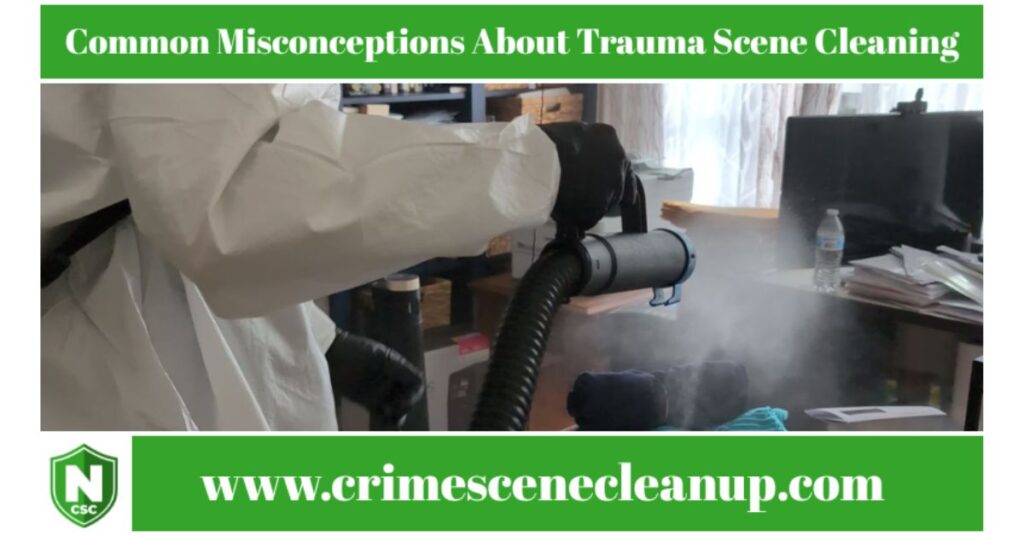
Professional trauma cleaners use hospital-grade disinfectants and specialized equipment designed for biohazard removal. They wear personal protective equipment that creates barriers against contamination. Their tools include ozone generators, foggers, and industrial-strength cleaners that aren’t available to consumers.
Professional cleaners have the expertise to identify all affected areas and the proper equipment to remediate them safely.
Myth 2: It’s a Quick and Easy Job
The misconception that trauma scene cleaning happens quickly undermines the complexity of the process. Professional remediation involves multiple phases that can take hours or even days to complete properly.
The process begins with a thorough assessment to identify all contaminated areas.
Cleaners must remove damaged materials like carpet or drywall that are unsalvageable. They then clean and disinfect all surfaces, test for remaining contamination, and properly dispose of biohazardous waste.
Why Trauma Cleaning Is Difficult
Each step requires meticulous attention to detail. Missing even small amounts of biological material can create ongoing health hazards and odor problems.
You also shouldn’t overlook the emotional toll on professional cleaners.
These technicians witness traumatic scenes regularly and must maintain their mental health while delivering compassionate service to grieving families. A single trauma scene in a bedroom might require removing carpet padding, treating subflooring, cleaning walls and furniture, and testing air quality.
This process could take 8-12 hours or span multiple days, depending on the extent of contamination.
Myth 3: All Cleaning Companies Can Handle It
Not every cleaning service can legally or safely handle trauma scenes.
This specialized work requires specific certifications, training, and licensing that most general cleaning companies don’t possess. Trauma scene cleaners must understand bloodborne pathogen regulations, proper disposal procedures for medical waste, and decontamination protocols.
They need training in hazmat handling and knowledge of state and federal laws governing biohazardous material removal.
Legal and ethical considerations also come into play. Improper handling or disposal of biohazardous materials can result in significant fines and legal liability.
Only certified professionals understand these requirements fully.
When selecting a company, ask about their technicians’ training and request proof of proper licensing and insurance coverage. Look for companies that specialize specifically in biohazard remediation rather than general cleaning services that claim to handle trauma scenes as a side service.
Myth 4: Professional Cleaning Is Unaffordable
Cost concerns can drive people toward cheaper alternatives or DIY attempts. However, professional trauma scene cleaning costs less than many people expect, especially when insurance coverage comes into play.
Several factors may influence pricing, depending on the service provider you choose: the size of the affected area, types of biohazardous materials present, level of contamination, and accessibility of the location.
However, talk to the trauma cleaning company about pricing options; you may be quickly surprised by how willing they are to help you cover costs.
Stress Less, Save More
Homeowner’s insurance policies frequently cover trauma scene cleanup, particularly when the incident occurs on the property. Contact your insurance provider to understand your coverage before assuming you’ll pay out of pocket.
Your chosen trauma cleaner may even be able to handle the insurance claims directly, so you don’t have to worry about them.
The long-term costs of improper cleanup far exceed professional service fees. Inadequate cleaning can lead to structural damage, persistent odors, and ongoing health risks that require expensive remediation later.
Property values also suffer when trauma scenes aren’t properly addressed. Professional cleaning and certification help protect your investment and provide documentation for future property transactions.
Myth 5: DIY Cleaning Saves Money
The most dangerous misconception suggests that property owners can handle trauma scene cleanup themselves to save money.
This approach puts people at serious risk and creates more problems than it solves. Exposure to bloodborne pathogens during DIY cleanup can lead to life-threatening infections.
Without proper protective equipment and training, individuals risk contracting diseases that medical professionals spend years learning to prevent.
Improper disposal of biohazardous materials carries legal consequences. Most municipalities have strict regulations about medical waste disposal.
Violating these laws can result in hefty fines and criminal charges.
The Emotional Costs & Hidden Dangers
The emotional trauma of cleaning up after a loved one’s tragic death or violent crime shouldn’t be underestimated. Family members who attempt DIY cleanup may develop long-lasting psychological effects that require professional counseling.
Professional cleaners also know how to identify hidden contamination that untrained individuals miss.
Blood and bodily fluids can travel through floorboards, behind walls, and into HVAC systems. Missing these areas creates ongoing health hazards and odor problems.
The Truth About Professional Trauma Scene Cleaning
Professional trauma scene cleaning provides more than just cleaning services. These companies offer compassionate support during devastating times while protecting your health and property value.
Certified technicians understand the science behind biohazard remediation.
They use proven methods and professional-grade equipment to completely eliminate health risks. Their work meets or exceeds industry standards and regulatory requirements.
Talk to Experts Now
Remember that you can talk to certified experts about trauma scene cleanup 24/7.
The peace of mind that comes with professional service isn’t something you can measure in dollars. Knowing that your property is truly safe and clean allows families to begin healing without worrying about hidden dangers or persistent reminders of traumatic events.
Understanding common misconceptions about trauma scene cleaning helps families make quick, smart decisions during crisis situations.
Don’t let myths and misinformation put your health, finances, or emotional well-being at risk. Professional expertise exists for good reasons, and tragedy isn’t the time to cut corners on safety.
