First Steps To Take After a Suicide in the Home
Losing a loved one to suicide is a profoundly painful experience. When this tragedy occurs in your home, the emotional weight can feel overwhelming, leaving you unsure of what to do next.
You’re not alone, and there are resources to help you through this difficult time.
One thing to remember is that you should not attempt to clean the scene yourself. This walkthrough outlines the first steps to take after a suicide in the home, offering a path forward when the way is unclear.
Follow our list now to learn how you should respond, and how each step will help you heal.
Immediate Actions
Your first priority is your own well-being.
Before you do anything else, move to a space where you feel safe. This might be a different room, a neighbor’s house, or a quiet spot outside.
Once you are in a secure location, call 911. The dispatcher will send emergency services, including police and paramedics. It’s their job to manage the scene, and they will guide you through the initial procedures.
They will ask questions, but remember to breathe and take your time answering.
After contacting the authorities, reach out for immediate emotional support. Call a trusted friend, family member, or a crisis hotline. Having someone to lean on during these first moments can provide a small but significant measure of comfort.
Authorities will not handle the cleanup themselves, but, as you’ll learn later in this guide, there are experts who are available to help.
Processing Grief and Trauma
Grief is a complex journey, and everyone navigates it differently. You might experience a range of emotions, including denial, anger, deep sadness, or even numbness.
All of these feelings are valid. There is no right or wrong way to grieve.
It’s vital to practice self-compassion during this period.
Be kind to yourself and allow yourself the space to feel whatever comes up without judgment. Your mind and body are processing an immense shock and loss.
Engaging in small acts of self-care can also help. This could be as simple as drinking a glass of water, wrapping yourself in a warm blanket, or listening to a calming song.
These activities won’t erase the pain, but they can provide moments of grounding when you feel lost.
Cleaning and Restoration
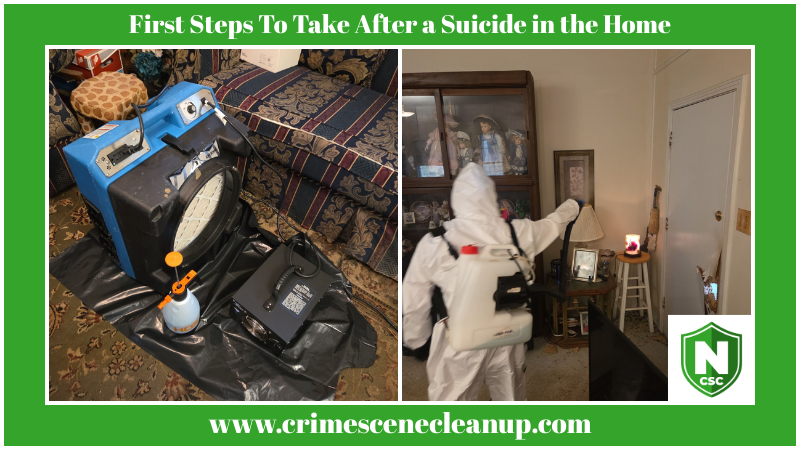
The aftermath of a suicide at home involves more than just emotional healing; there is a physical aspect that needs to be quickly addressed. The scene will require a thorough and specialized cleaning.
It is strongly recommended to seek professional suicide cleanup from a specialized biohazard cleaning service.
These experts have the necessary training to handle sensitive situations with discretion and precision. Professional cleaning companies also have the proper equipment and knowledge to safely clean, disinfect, and restore the area, ensuring the removal of all biohazardous materials.
Attempting to clean the scene yourself can be emotionally traumatic and pose health risks. A professional service can lift that burden, allowing you to focus on your emotional needs and those of your family.
They understand the importance of handling personal items with care and will work with you to decide what can be kept and what needs to be disposed of.
Memorializing and Healing
Finding ways to honor the memory of your loved one can be a meaningful part of the healing process.
Creating a memorial can provide a tangible connection to the person you lost and celebrate their life. This may involve creating a scrapbook full of photos and memories.
You could also plant a tree in their honor, a living tribute that grows over time.
Maybe your loved one was passionate about fashion; you could create a memory box with their favorite clothing items or accessories. If they loved music, compiling a playlist of their favorite songs can be a powerful way to feel connected to them.
These acts of remembrance allow you to focus on the positive aspects of their life and the love you shared.
Seeking Professional Help
While support from friends and family is invaluable, professional help can offer specialized guidance. Therapists, counselors, and support groups experienced in grief and trauma can provide a safe space to process your feelings.
Don’t hesitate to seek out a professional who specializes in this area. You don’t have to walk this path by yourself.
Group therapy and support groups offer another beneficial avenue for seeking professional help. Being surrounded by others who have faced similar losses can create a sense of community and understanding.
Sharing your experiences, hearing their journeys, and learning from one another can help diminish feelings of loneliness while fostering hope.
Legal and Financial Considerations
Navigating the legal and financial aspects after a death can be confusing. You may have obligations regarding the property that need to be addressed.
It’s a good idea to understand what’s required.
Contact your insurance company to see what your policy covers. Many homeowner’s insurance policies include provisions for biohazard cleanup, which can help offset the cost.
If there are estate matters to handle, seeking advice from a lawyer can be beneficial.
They can help you understand your responsibilities and guide you through any legal processes, making a complex situation a bit more manageable.
Community Support
Connecting with a community can be a source of strength. There are local and online support groups specifically for individuals and families who have experienced loss due to suicide.
Sharing your experience with others who have gone through something similar can reduce feelings of isolation.
These groups offer a space for mutual support and understanding. Participating in events that raise awareness for mental health and suicide prevention can also be a way to channel your grief into positive action.
Finding Your Way Forward
Navigating life after such a profound loss is a journey, not a destination. It’s about taking one small step at a time. The path to healing is unique for everyone, and it’s okay to move at your own pace.
By understanding the first steps to take after a suicide in the home, you create a foundation for healing. Remember to be patient with yourself and lean on the support available to you.
There is hope and help available as you find your way forward.
