Biohazard Remediation Planning: How Professionals Assess a Scene Before Cleanup Begins
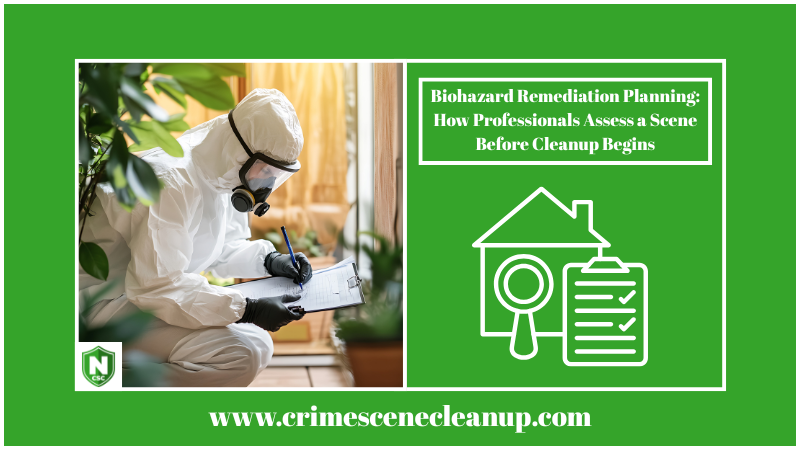
Before anything is cleaned, removed, or disinfected, there’s a quieter but far more important step: understanding the scene.
Biohazard remediation is not just about responding—it’s about reading a space correctly. Every stain, odor, and surface tells a story about what happened and how far contamination may have spread. That’s why planning is never rushed. It’s deliberate, layered, and grounded in experience.
At National Crime Scene Cleanup, our approach to biohazard remediation begins with a structured evaluation designed to answer one question clearly: what needs to be done to make this environment truly safe again?
To see how this process moves from planning into action, our biohazard cleaning services provide a closer look at what follows assessment..
The Role of Planning in Biohazard Remediation
Planning is where uncertainty gets replaced with structure.
A scene may look straightforward at first glance, but biohazard remediation rarely is. What’s visible is often only part of the picture. Fluids travel. Odors settle. Contaminants spread into materials that appear untouched.
A proper assessment answers critical questions early:
- Where has contamination actually reached?
- What materials are affected beneath the surface?
- What risks exist for anyone entering the space?
- What level of intervention is required?
Without this step, cleanup becomes reactive. With it, every action is intentional, controlled, and aligned with the realities of the environment.
First Impressions Matter—But They’re Not Enough
The initial walkthrough sets the tone, but it’s not about quick conclusions. It’s about observation.
Professionals enter a scene looking for patterns, not just obvious signs.
Early indicators that shape the plan:
- Subtle discoloration along edges of flooring
- Odor intensity changes between rooms
- Warping or softening of materials
- Airflow patterns that may carry contamination
It’s not uncommon for the most important findings to be the least visible. A faint odor near a doorway can signal migration. A small stain can point to a much larger affected area beneath.
This stage is quiet, but it’s where effective biohazard remediation truly begins to take form.
Understanding What Type of Biohazard Is Present
Not all scenes behave the same way. The nature of the contamination changes everything about how remediation is approached.
Common scenarios professionals assess:
Biological contamination (blood, bodily fluids)
Requires strict containment and disinfection protocols.
Decomposition-related exposure
Often involves deep saturation, strong odor, and bacterial growth that spreads beyond the immediate area.
Chemical residues
Seen in tear gas or certain incidents where airborne particles settle into surfaces.
Infectious material
Requires careful handling, protective equipment, and targeted disinfection methods.
Each type carries its own risks. Effective biohazard remediation planning adjusts accordingly, ensuring that no assumption leads to incomplete cleanup.
Looking Beyond the Surface
One of the most misunderstood parts of biohazard remediation is how far contamination can travel.
It rarely stays where it starts.
Hidden spread often occurs through:
- Flooring seams and sublayers
- Porous materials like carpet and drywall
- Air movement through vents and open spaces
Professionals rely on both tools and experience to track this movement:
- Moisture detection equipment
- Surface testing methods
- Visual inspection refined through field experience
What this means in practice:
| Material | What It Reveals | Likely Decision |
| Carpet | Absorbs quickly | Full removal |
| Hardwood | Can trap fluids between seams | Targeted removal/clean |
| Drywall | Pulls contamination upward | Sectional removal |
| Tile | Resists absorption | Surface disinfection |
The goal is simple: identify the full scope before remediation begins, not after.
Risk Isn’t Assumed—It’s Measured
Every scene carries a level of risk. Planning defines it clearly.
That includes:
- Exposure to biological hazards
- Airborne particles during disturbance
- Structural concerns in damaged areas
From that, a safety approach is built.
A typical safety plan includes:
- Specific protective equipment for the situation
- Clearly defined work zones
- Controlled entry and exit paths
- Decontamination procedures after exposure
This level of structure ensures that biohazard remediation is performed without introducing additional risk to technicians or the surrounding environment.
Containment: Controlling the Environment Before Cleanup
Before anything is removed or cleaned, the space itself is managed.
Containment is what prevents a contained problem from becoming a larger one.
Common containment strategies:
- Sealing off affected areas
- Creating negative air pressure environments
- Limiting movement between zones
Without proper containment, even well-intentioned cleanup can extend contamination. In professional biohazard remediation, control always comes before action.
Deciding What Stays and What Goes
One of the most practical parts of planning is determining what can be restored and what cannot.
This decision isn’t emotional—it’s based on material behavior.
Quick way to understand it:
- Non-porous surfaces (tile, metal): usually salvageable
- Semi-porous materials (wood): depend on depth of exposure
- Porous materials (carpet, insulation): often removed
Removing too little creates risk. Removing too much creates unnecessary damage. The balance comes from understanding how contamination interacts with each material during biohazard remediation.
Odor Isn’t Just a Symptom—It’s a Clue
Odor tells you where contamination has settled.
It also tells you where it hasn’t been fully addressed.
During assessment, professionals track:
- Where odor is strongest
- How it shifts across spaces
- Whether it has entered ventilation systems
Planning may include:
- Air filtration systems
- Targeted odor treatments
- Cleaning or isolating HVAC components
In many cases, odor mapping becomes one of the most revealing aspects of biohazard remediation planning, guiding deeper investigation into affected areas.
Compliance Isn’t Optional
Biohazard remediation operates within strict guidelines.
Planning ensures everything aligns with:
- OSHA safety standards
- Local and state regulations
- Proper biohazard disposal procedures
This protects everyone involved—from technicians to future occupants of the space. Compliance is not an added step in biohazard remediation; it is built into the process from the start.
Building the Scope of Work
Once the scene is fully understood, everything is documented.
This becomes the roadmap for the entire biohazard remediation process.
A strong scope of work outlines:
- Exactly which areas are affected
- What materials will be removed or treated
- The equipment required
- The sequence of work
Clarity here ensures that the remediation process remains consistent, efficient, and complete.
How Costs Are Determined
Costs are not guessed—they are defined during planning.
Several factors shape the final scope:
- Size of the affected area
- Depth of contamination
- Materials requiring removal
- Time and labor involved
- Safety and containment measures
Situations involving responsibility and financial planning often connect back to questions like Who Pays After an Unattended Death, especially when the complexity of a scene directly influences the level of biohazard remediation required.
Establishing the Order of Work
A well-planned remediation doesn’t happen all at once. It follows a sequence.
Typical progression:
- Set containment
- Remove heavily affected materials
- Perform deep cleaning and disinfection
- Address odor and air quality
- Conduct a final inspection
This structure ensures that biohazard remediation progresses logically, without skipping critical steps or revisiting areas unnecessarily.
Why Biohazard Remediation Is Not Standard Cleaning
It’s easy to underestimate the difference.
But the gap is significant.
| Element | Standard Cleaning | Biohazard Remediation |
| Depth | Surface-level | Structural and deep |
| Risk management | Minimal | Highly controlled |
| Equipment | Basic tools | Specialized systems |
| Regulation | None | Strict compliance required |
Biohazard remediation is about eliminating risk—not just improving appearance. It is a disciplined process built on planning, not reaction.
How Location Influences Planning
Where a scene occurs changes how it’s handled.
Planning adjusts based on:
- Climate (heat accelerates decomposition)
- Building layout (apartments vs standalone homes)
- Local regulations
- Population density and access
These planning decisions are informed in part by federal guidance, such as OSHA Appendix C, which outlines best practices for assessing hazardous waste operations and emergency response environments.
A scene in a dense urban area requires a different containment approach than one in a rural setting. In the same way, warmer climates can accelerate biological processes, increasing the urgency and complexity of biohazard remediation.
The Final Check Before Work Begins
Before any remediation starts, everything is reviewed one last time.
- All affected areas confirmed
- Safety measures in place
- Containment secured
- Equipment ready
- Plan aligned with the scope of work
This final pause ensures that the transition from planning to action is seamless. In professional biohazard remediation, preparation defines performance.
What This All Comes Down To
A well-executed biohazard remediation process doesn’t start with cleaning—it starts with understanding.
When the assessment is done right:
- Nothing is missed
- Risk is controlled
- The process stays efficient
- The outcome is complete
That’s the difference between addressing a problem and resolving it fully.
Moving Forward
Every situation is different. Every scene requires its own approach. What stays consistent is the need for a clear, structured plan before anything begins.
If you need guidance or want to understand how this process applies to a specific situation, you can reach out directly to National Crime Scene Cleanup.
