How Does the Insurance Claim Process Work for Crime Scene Cleanup?
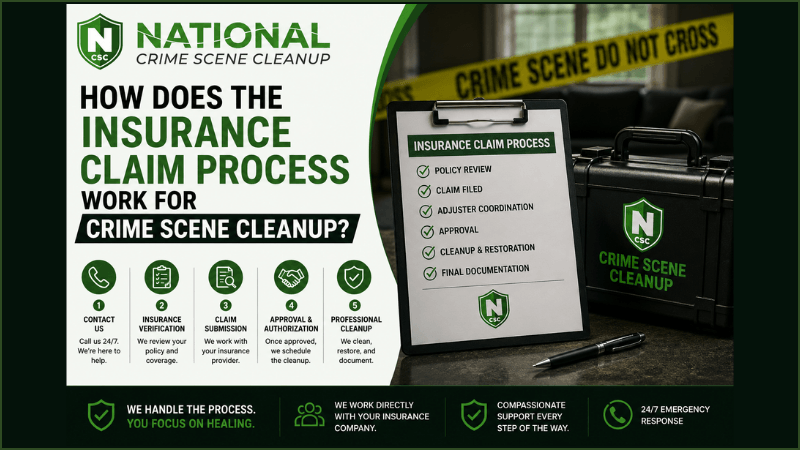
A Step-by-Step Guide from National Crime Scene Cleanup
After a homicide, suicide, unattended death, accident, or other traumatic event, dealing with an insurance claim may feel like one more thing you don’t have the energy to manage.
At National Crime Scene Cleanup, we understand that. Our goal is to make the insurance portion of the cleanup process as straightforward as possible while your family, employees, or organization focuses on what matters most.
Many insurance policies may provide coverage for professional biohazard or crime scene cleanup, but coverage depends on the specific policy, the circumstances of the loss, exclusions, deductibles, and coverage limits.
We can help with the documentation and communication involved in the cleanup claim, but your insurance company ultimately determines coverage under your policy.
24/7 Emergency Response: (844) 255-2461
How Does a Crime Scene Cleanup Insurance Claim Work?
While every insurance claim is different, the process generally involves several steps:
- The incident occurs and emergency responders investigate.
- Authorities release the property.
- You notify your insurance company.
- A cleanup company assesses the affected property.
- The scope of remediation is documented.
- The insurance company reviews the claim.
- Professional cleanup and remediation are performed.
- Documentation and billing are submitted.
- The claim is finalized according to the insurer’s determination.
At National Crime Scene Cleanup, we can assist with the insurance-related portion of the process while coordinating the professional remediation.
Step 1: Make Sure the Property Has Been Released
Before arranging cleanup, make sure law enforcement, the medical examiner, or another appropriate authority has released the property.
Police and investigators are responsible for their investigation. They generally do not perform the professional biohazard remediation required after a scene has been released.
If you’re unsure what to do once authorities leave, read: When the Police Leave: What Happens Next?
If you are still dealing with an active emergency, our Emergency Crime Scene Cleanup Guide provides additional guidance.
Step 2: Contact Your Insurance Company
Once the property has been released, contact your insurance provider and report the incident according to your policy’s requirements.
Ask your insurer:
- What coverage may apply?
- What is my deductible?
- What are my coverage limits?
- Do you need an estimate before cleanup begins?
- Is there a preferred remediation provider?
- What documentation do you need?
- What is my claim number?
- Who is my claims adjuster?
Write down the name and contact information of everyone you speak with.
Your insurance company may also explain whether additional information or documentation is required before the claim can be evaluated.
Step 3: Gather Your Insurance Information
Having your insurance information available can help move the process forward.
When you contact National Crime Scene Cleanup, useful information may include:
- Insurance company name
- Policyholder’s name
- Policy number
- Claim number, if one has already been assigned
- Insurance adjuster’s name and contact information
- Property address
- Date of the incident
- Basic information about what occurred
Don’t worry if you don’t have every piece of information immediately available. Our representatives can explain what information is needed to get started.
National Crime Scene Cleanup’s current process describes gathering information during the initial response so the team can prepare for the cleanup and insurance billing process.
Step 4: Have the Property Professionally Assessed
After the property has been released, a professional biohazard remediation company can assess the affected areas.
The assessment helps determine:
- Where contamination is present
- What materials are affected
- Whether contaminated materials need to be removed
- What cleaning and disinfection procedures are necessary
- Whether odor remediation is required
- What equipment and protective measures are needed
- The anticipated scope of the cleanup
This information helps establish what remediation is necessary.
National Crime Scene Cleanup documents the scope of work and provides information that can help insurance representatives understand the services performed.
Step 5: The Insurance Company Reviews the Claim
Once a claim is opened, the insurer may assign an adjuster to review the loss.
The adjuster may evaluate:
- The cause of the loss
- Your policy
- Applicable coverage
- Exclusions
- Deductibles
- Coverage limits
- Property damage
- Cleanup documentation
- The scope and cost of remediation
It’s important to remember that a cleanup company’s estimate does not determine whether your claim is covered.
Your insurer makes that determination according to the terms of your policy.
If you want to understand the broader coverage question first, read: Does Insurance Cover Crime Scene Cleanup?
Step 6: Work With the Insurance Adjuster
Your adjuster may request information from you or from the cleanup company.
Depending on the circumstances, National Crime Scene Cleanup may be able to provide information such as:
- Scope of work
- Itemized invoices
- Photographs or documentation
- Description of remediation performed
- Disposal documentation
- Other records relevant to the cleanup
Detailed documentation can help establish what work was necessary after a covered event. NCSC’s current insurance guidance specifically notes the value of photographs, itemized invoices, disposal records, and summaries of work performed.
Step 7: Professional Cleanup Begins
Insurance questions and cleanup don’t always happen in a neat sequence.
Once the property has been released, biological contamination may require prompt professional remediation.
Depending on the incident, National Crime Scene Cleanup may provide:
- Crime Scene Cleanup
- Biohazard Cleanup
- Blood Cleanup
- Suicide Cleanup
- Unattended Death Cleanup
- Tear Gas Cleanup
- Odor Removal
Our technicians use appropriate protective equipment, cleaning procedures, and remediation practices based on the circumstances of the job.
Our goal is to restore the affected property safely while treating the people involved with discretion and compassion.
Step 8: Documentation and Billing Are Completed
After the cleanup is completed, the necessary documentation and billing information can be finalized.
National Crime Scene Cleanup states that it works with insurance providers as part of the claims process and can assist with insurance billing.
Depending on your policy and the arrangements made for the job, your financial responsibility may include a deductible or other costs that are not covered by insurance.
What Happens If Insurance Doesn’t Cover the Entire Cleanup?
Insurance coverage is not always all-or-nothing.
Depending on the policy and circumstances, an insurer may determine that:
- The claim is covered in full.
- The claim is partially covered.
- Certain services or expenses are excluded.
- The policy deductible applies.
- Coverage is limited by a policy limit.
- The loss is not covered.
If your insurer determines that some or all of the cleanup is not covered, ask for the decision and the applicable policy language in writing.
You can also ask whether additional documentation may change the determination.
What If My Insurance Claim Is Denied?
A denied claim does not necessarily mean the conversation is over.
Start by asking your insurer:
- Why was the claim denied?
- What policy provision applies?
- Is the entire claim denied or only part of it?
- Can additional documentation be submitted?
- Is there an internal appeal or review process?
- What is the deadline for requesting a review?
Keep copies of your correspondence and documentation.
If the dispute is significant, you may also want to consult an insurance professional or qualified attorney who can advise you about your specific policy and circumstances.
Do I Have to Wait for Insurance Approval Before Cleanup?
Not necessarily.
After a traumatic event, the property may contain biological contamination that requires professional attention. Waiting indefinitely for an insurance coverage decision may not be appropriate when remediation is necessary for health and safety.
National Crime Scene Cleanup can discuss the cleanup process and insurance documentation with you while your claim is being handled.
Your insurance company determines coverage, while the remediation company addresses the cleanup itself.
What Information Should I Keep for My Claim?
Create a file—physical or digital—for everything related to the incident and cleanup.
Keep copies of:
- Insurance policy information
- Claim number
- Adjuster’s contact information
- Emails and letters from your insurer
- Estimates
- Invoices
- Photographs
- Cleanup documentation
- Disposal records
- Receipts for related expenses
- Notes from conversations with insurance representatives
How National Crime Scene Cleanup Helps With Insurance Claims
You shouldn’t have to become an insurance expert while dealing with the aftermath of a traumatic event.
National Crime Scene Cleanup can help make the process easier by:
Gathering Information
Our representatives collect information about the situation and the property so the appropriate team can prepare for the job.
Documenting the Cleanup
We document the remediation work and the scope of services provided.
Communicating With Insurers
When appropriate, we work directly with insurance providers as part of the cleanup claims process.
Providing Billing Documentation
We provide the documentation associated with the professional remediation.
Helping You Understand the Process
We can explain what information we need and what to expect from the cleanup side of the claim.
Our current public information describes this as part of our overall response process, including working with insurance during job finalization.
We cannot guarantee insurance coverage or claim approval. Only your insurance company can make a coverage determination under your policy.
Frequently Asked Questions
How long does an insurance claim take?
There is no universal timeline. Claim processing depends on the insurer, complexity of the loss, required documentation, policy questions, and other circumstances.
A straightforward claim may move relatively quickly, while a disputed or complex claim can take longer.
Should I contact my insurance company before calling a cleanup company?
You can contact your insurer first, but you don’t necessarily have to wait for the insurer to complete its review before seeking professional remediation after the property has been released.
If immediate cleanup is necessary, explain the situation to both your insurer and the cleanup provider.
Will National Crime Scene Cleanup contact my insurance company?
National Crime Scene Cleanup states that it works directly with insurance providers to assist with the claims process.
The exact process can vary depending on the circumstances and your insurance policy.
Will I have to pay a deductible?
Possibly.
If your policy covers the loss, your deductible may still apply. Your insurance company can explain your specific financial responsibility.
What if I don’t know who my insurance adjuster is?
If you have already filed a claim, contact your insurance company and ask for the adjuster’s name and contact information.
If you have not yet filed a claim, ask the insurer how to initiate one.
Can National Crime Scene Cleanup tell me whether my claim will be approved?
No.
We can help document the remediation and communicate with your insurer when appropriate, but coverage decisions are made by your insurance company according to your policy.
We’re Here When You Need Us
An insurance claim is only one part of what you’re dealing with after a traumatic event. At National Crime Scene Cleanup, our priority is helping you navigate the cleanup process with as little additional stress as possible.
We provide professional biohazard and crime scene remediation with 24/7 emergency response and insurance assistance.
If the property has been released by the appropriate authorities and you need help, we’re here.
Call National Crime Scene Cleanup at (844) 255-2461.
