How Do You Know if a House Is Safe After Biohazard Cleanup?
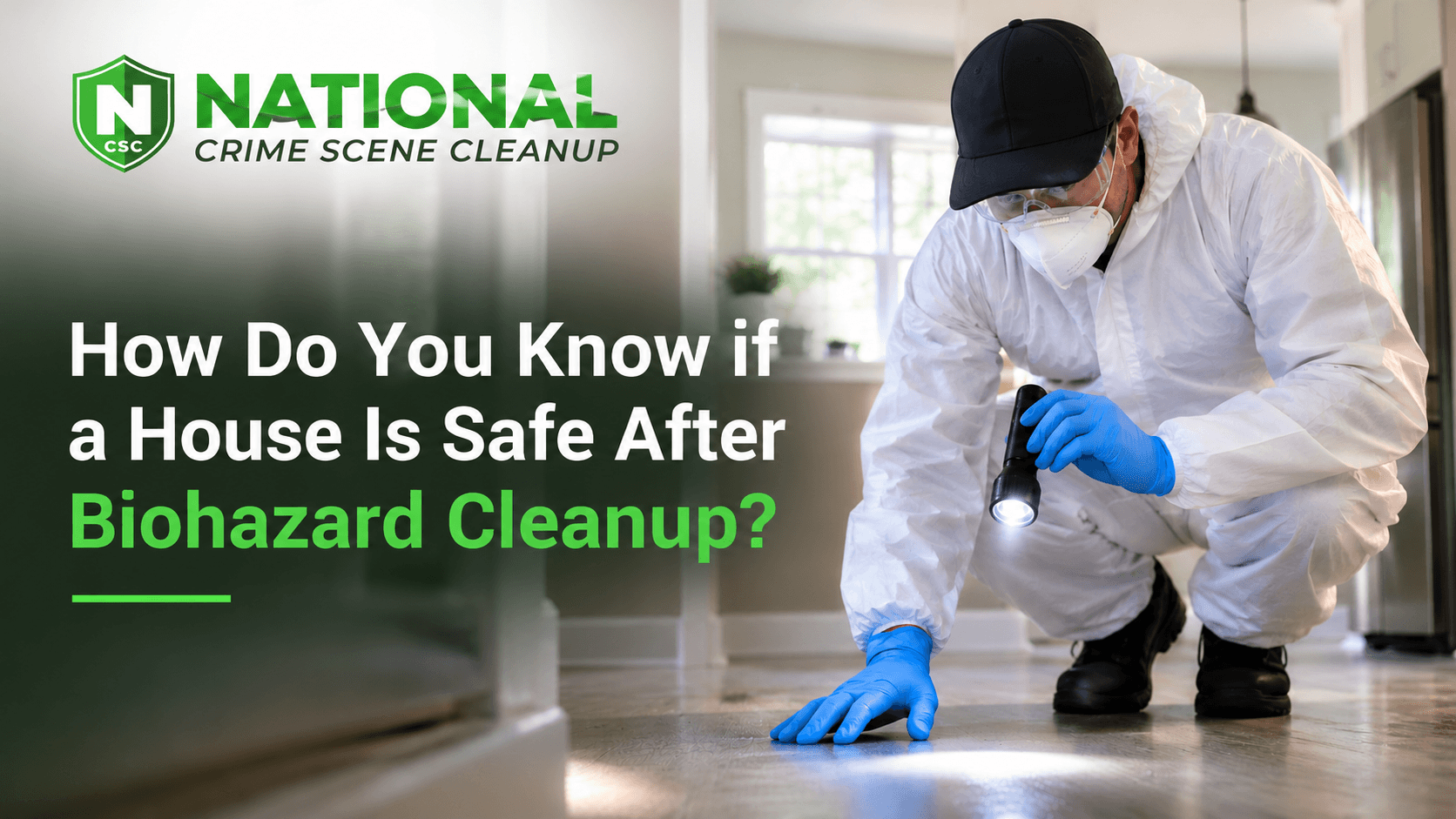
After a biohazard incident, one of the most important questions is whether the property is safe to occupy again. Even when a room looks clean, you may wonder whether contamination remains beneath the flooring, inside porous materials, or in areas that were not immediately visible.
A house is not confirmed safe simply because it looks clean or no longer smells. Confidence in the cleanup depends on whether the contamination was properly assessed, the agreed remediation work was completed, affected materials were handled appropriately, and any remaining concerns were addressed.
At National Crime Scene Cleanup (NCSC), professional biohazard remediation focuses on addressing biological contamination and the affected materials. This guide explains what to look for after cleanup, what questions to ask your provider, and when further assessment may be appropriate.
If you are concerned about a property affected by a death, crime scene, or other biohazard incident, learn more about our Biohazard Cleanup Services.
What Determines Whether a House Is Safe After Biohazard Cleanup?
There is no single visual sign or test that establishes whether every house is safe after biohazard cleanup. The appropriate assessment depends on the original incident, the materials affected, the remediation performed, and any remaining hazards.
Several factors are important.
1. The Original Contamination Was Identified
The cleanup process should begin with an assessment of the affected area and the likely extent of contamination.
Blood, bodily fluids, and decomposition-related contamination can affect more than the immediately visible surface. Depending on the circumstances, materials such as carpet, padding, upholstery, flooring, and other porous components may require additional evaluation.
The assessment should establish which areas are affected and what work is needed to address them.
Learn more about what gets removed during biohazard cleanup and why.
2. The Required Cleanup and Remediation Were Completed
Professional biohazard cleanup may involve removing biological material, cleaning affected surfaces, applying appropriate disinfectants, removing materials that cannot be adequately treated, and managing contaminated waste properly.
The specific procedures depend on the contamination and the surfaces involved. Cleaning a visible stain alone may not address contamination that has penetrated an absorbent material or reached an underlying layer.
Ask your provider to explain which areas were treated, what materials were removed, and whether any parts of the original scope remain incomplete.
For an overview of the work involved, visit our Biohazard Cleanup Services page.
3. Affected Materials Were Properly Addressed
Some materials can be cleaned and retained. Others may need to be removed because contamination has penetrated areas that cannot be adequately treated.
For example, contamination involving carpet may extend into its backing or padding. Depending on the circumstances, cleaning the visible fibers may not be sufficient.
The appropriate decision depends on the material, the extent of contamination, and whether effective remediation is possible.
Read What Happens to Carpet After Blood Contamination? to understand why material-specific assessment matters.
4. Outstanding Concerns Were Addressed
A completed cleanup does not necessarily resolve every issue affecting a property. There may be separate concerns involving structural damage, moisture, damaged building materials, or persistent odors.
If the original assessment identified an area that could not be accessed or treated, ask what additional work is recommended before the space returns to normal use.
Where there is uncertainty about the completed work, request clarification rather than assuming the property is safe or unsafe based on appearance alone.
Signs That May Indicate a Problem After Cleanup
Certain observations may justify contacting the cleanup provider for a follow-up assessment. They do not automatically prove that hazardous contamination remains, but they should not be ignored.
Persistent or Returning Odors
An odor that remains or returns after cleanup may indicate that its source has not been fully addressed. For example, decomposition-related odors can originate in porous materials or areas beneath flooring.
However, odor alone cannot establish whether a property contains a biological hazard. Some hazards may have no noticeable smell, while some odors may persist for reasons unrelated to a remaining biohazard.
If an odor persists, explain where and when you notice it and ask whether further investigation is appropriate.
Learn more about How Do You Remove Biohazard Odor From a House? and our Odor Removal Services.
Visible Residue or Previously Unaddressed Areas
Visible biological material, staining that was identified as contamination but remains untreated, or an area excluded from the original cleanup scope should be brought to the provider’s attention.
Not every stain indicates a remaining biological hazard, and a surface that looks clean is not proof that all contamination has been addressed. The relevant question is whether the affected material was assessed and treated appropriately.
Do not attempt to investigate suspected contamination by pulling up flooring, moving heavily affected belongings, or handling potentially hazardous materials yourself.
Damaged or Removed Materials Have Not Been Repaired
Biohazard remediation and property restoration are related but distinct tasks. A cleanup may require removing contaminated carpet, padding, or other building materials, leaving repairs to be completed separately.
A room may therefore need additional restoration before it is ready for normal use, even when the agreed remediation work is complete.
Ask your provider which repairs, replacements, or other work remain outstanding.
Uncertainty About the Work Completed
If you are unsure which areas were cleaned, what materials were removed, or whether an identified concern was resolved, request a clear explanation of the completed work.
A reputable provider should be able to explain the scope of the job and discuss any limitations or outstanding recommendations.
If the cleanup involved a death or significant biological contamination, our Unattended Death Cleanup Services page provides additional information about situations that may require specialized remediation.
What Documentation Should You Request After Biohazard Cleanup?
Documentation can help you understand what was done and whether any work remains outstanding. The specific documents available will vary depending on the provider, the incident, the contract, and applicable requirements.
Consider asking for the following information.
A Summary of the Work Completed
Request a description of the areas addressed, the general remediation procedures performed, and any materials removed.
This should help you understand how the completed work relates to the original contamination and agreed scope.
Details of Any Materials Removed
If flooring, furniture, padding, or other materials were removed, ask which items were affected and whether any related areas still require attention.
This is particularly important when contamination may have extended beneath the visible surface.
Information About Outstanding Work
Ask whether the provider identified any areas that could not be fully assessed or treated, and whether additional remediation or repairs are recommended.
If other contractors need to complete restoration work, clarify which tasks fall outside the cleanup provider’s scope.
Available Inspection or Testing Results
Depending on the circumstances, the provider may have inspection records, photographs, or results from specific tests. Ask what information is available and what each document establishes.
Testing is useful only when it addresses a defined question using an appropriate method. A test of one surface or location cannot automatically establish that every part of a property is free of all possible hazards.
Likewise, a general completion statement should not be interpreted as a guarantee that no conceivable hazard remains.
Is Testing Necessary After Biohazard Cleanup?
Not every cleanup requires the same testing or verification process. Whether additional testing is appropriate depends on the incident, the remediation performed, the materials involved, and any applicable requirements.
For some situations, a review of the completed work and documentation may be appropriate. In others, specific testing or further professional assessment may help address a remaining concern.
Before arranging testing, ask:
- What specific concern are we trying to resolve?
- Which area or material needs to be evaluated?
- What method is appropriate for that concern?
- What will the results establish—and what will they not establish?
- Is additional remediation or restoration needed regardless of the results?
There is no single test that can certify an entire house as free of every possible biological or environmental hazard. Testing should be selected to answer a clearly defined question rather than used as a blanket guarantee.
If you have concerns about an area that was not included in the original cleanup, discuss the circumstances with a qualified professional.
Can You Move Back Into a House After Biohazard Cleanup?
Whether a house is ready for normal occupancy depends on the original incident, the hazards identified, the remediation completed, and any outstanding issues.
Before returning to normal use, consider whether:
- The property has been released by the appropriate authorities, if the incident involved an investigation.
- The agreed cleanup work has been completed.
- Known contaminated materials have been appropriately treated or removed.
- Any access restrictions or safety instructions from the cleanup provider have been addressed.
- Necessary repairs or restoration work have been completed.
- Any remaining concerns have been evaluated by an appropriate professional.
These considerations can help you determine what questions still need answers. They are not a universal clearance checklist, and the absence of visible contamination or odor does not establish that every potential hazard has been eliminated.
If you remain uncertain about a specific room or surface, seek clarification before using the affected area.
For related guidance, read Can You Stay in a House After a Death?.
What If You Are Not Confident the Cleanup Was Completed Properly?
If you have concerns about the quality or completeness of the remediation, start by reviewing the original scope of work and asking the provider to explain what was completed.
Identify the specific concern, such as a persistent odor, an area that could not be accessed, or a material that was not addressed. Ask whether the concern warrants a follow-up inspection, additional remediation, or a separate assessment.
If the explanation does not resolve your concern, you may wish to seek an independent assessment from a qualified professional.
Avoid disturbing suspected contaminated materials while the situation is being evaluated. If there is visible biological material or another suspected hazard, keep children and pets away from the affected area.
You can also review our guide to choosing a crime scene cleanup company to understand the questions worth asking a remediation provider.
How National Crime Scene Cleanup Can Help
Determining the appropriate cleanup scope after a traumatic event can be difficult, especially when contamination may extend beyond what is immediately visible.
National Crime Scene Cleanup provides professional crime scene cleanup and biohazard remediation services. The work required depends on the circumstances of the incident, the affected materials, and the condition of the property.
If you have questions about a property affected by blood, bodily fluids, an unattended death, or another biohazard situation, our team can discuss the circumstances and the appropriate next steps.
Explore our Biohazard Cleanup Services, Unattended Death Cleanup Services, or Odor Removal Services.
For help with a specific situation, call (844) 255-2461.
Frequently Asked Questions
Does a house look clean after successful biohazard cleanup?
The affected area may look clean after remediation, but appearance alone cannot establish that all relevant contamination has been addressed. The original assessment, work completed, affected materials, and any remaining concerns should also be considered.
Does the absence of odor mean a house is safe?
No. The absence of an odor does not establish that a property is free of biological contamination or other hazards. Conversely, a persistent odor does not automatically prove that a biohazard remains. If you have concerns, ask the provider to assess the specific issue.
Should I request documentation after biohazard cleanup?
Yes, it is reasonable to request a summary of the completed work, the areas addressed, any materials removed, and any outstanding recommendations. Ask what inspection records or test results are available when relevant to your situation.
Does every house need testing after biohazard cleanup?
No single testing procedure applies to every situation. Additional testing should be based on the specific incident, the materials involved, the work performed, and the question that needs to be answered.
Who should I contact if I am concerned about a property after cleanup?
Start by contacting the cleanup provider and explaining the specific concern. Depending on the issue, a follow-up inspection, additional remediation, or an independent professional assessment may be appropriate.
