Common Mistakes People Make With Death Odor Removal
Dealing with the loss of a loved one is an incredibly difficult and emotional experience. When that loss occurs in the home, the situation becomes worse due to the practical challenge of cleanup. The odor associated with decomposition is uniquely pervasive and difficult to eliminate. In these situations, many well-intentioned people try to handle the cleanup themselves, but this can lead to further complications. Let’s talk through some common mistakes people make with death odor removal and discuss a more effective path forward.
Underestimating the Scope of the Problem
The first and most widespread misstep is a fundamental misunderstanding of what causes the odor. It isn’t just an unpleasant smell in the air; it’s the result of biological matter that has deeply penetrated porous materials throughout the affected area. This includes drywall, wood flooring, subflooring, carpeting, and even furniture. The odor-causing compounds are microscopic and can travel far beyond the immediately visible site.
Many people believe that surface-level cleaning will solve the issue. They might remove the source and scrub the floor, only to find the odor returns with full force days or weeks later. This happens because the source of the smell is still present within the structure of the home. True remediation requires a much deeper approach than standard house cleaning.
Relying on Masking Agents and Air Fresheners
When faced with a powerful odor, a common reflex is to try to cover it up. People will light candles, use countless cans of air freshener, or plug in strong fragrance diffusers. This approach provides only temporary and fleeting relief. These products do not remove the source of the odor; they just add another layer of scent on top of it.
The problem is that the biological compounds continue to break down and release gases. The odor will quickly overpower the fragrance, or worse, the scents will combine to create an even more unpleasant smell. This tactic only delays the inevitable and does not address the root cause of the problem in any way. True odor removal is about elimination, not concealment.
Using Standard Household Cleaners
Another frequent mistake is the use of standard cleaning products like bleach, ammonia, or all-purpose sprays. These cleaners are great for everyday household messes and disinfection of non-porous surfaces. They are not, however, designed to neutralize the complex organic compounds that result from decomposition. Bleach can disinfect a surface, but it won’t break down the biological matter that has soaked into a wooden subfloor.
Furthermore, some of these cleaners can be hazardous. Mixing bleach with ammonia, for example, creates toxic chloramine gas. Without proper knowledge of chemical interactions, a person can create a dangerous environment for themselves. Professional remediation uses specialized, enzyme-based cleaners that specifically target and break down biological materials, neutralizing the odor at its source.
Neglecting to Remove All Affected Materials
A successful remediation project requires the complete removal of all contaminated porous materials. This is a step where many DIY attempts fall short. A person might tear out the section of carpet where the incident occurred, but fail to realize that fluids may have seeped through the carpet pad and into the wooden subfloor beneath.
Even drywall can act like a sponge. The material absorbs odor-causing particles, making it impossible to clean. Professionals know to remove drywall, insulation, and flooring sections well beyond the visible contamination area to locate and remove all affected materials. Failure to be this thorough is one of the primary reasons odors persist after a cleanup attempt.
Forgetting About Air-Based Contamination
The odor is not just in the materials; it’s also in the air and on every surface in the room. Microscopic particles can become airborne and settle on walls, ceilings, furniture, and personal belongings. These particles can also be drawn into the home’s HVAC system, which then spreads the odor throughout the entire house.
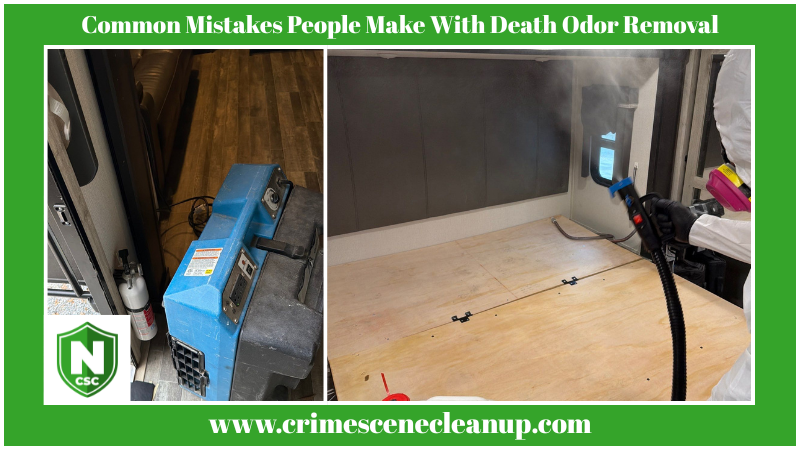
A simple wipe-down won’t remove these settled particles. Professionals use techniques like thermal fogging or ozone generation to treat the air and all surfaces within the space. These technologies work on a molecular level to destroy odor particles. Without this step, even after an expert removes the source materials, a lingering smell can remain.
Inadequate Personal Protective Equipment (PPE)
Another common mistake people make with death odor removal is not using proper safety equipment. Biohazard cleanup is not a task for shorts and a t-shirt. Decomposition releases bacteria and other pathogens that can be harmful. Without the correct personal protective equipment, a person exposes themselves to potential health risks. This goes far beyond a pair of rubber gloves.
Professionals use full-body suits, respirators with special filters, eye protection, and multiple layers of gloves. This gear protects them from direct contact with biohazardous materials and from the inhalation of airborne contaminants. Attempting a cleanup without this level of protection is a serious safety oversight. It’s not just about the “ick” factor; it’s about genuine health and safety.
The Emotional Toll of DIY Cleanup
Beyond the practical and technical mistakes, there is a profound emotional cost to consider. Attempting to clean the site of a loved one’s passing is an incredibly traumatic task. It forces a person to confront the physical reality of their loss in a way that can be deeply distressing and can complicate the grieving process.
No one should have to carry that burden. The emotional and psychological well-being of the family and friends is incredibly important. Handing this difficult job over to compassionate, trained professionals allows you to focus on healing and supporting one another. It separates the practical task from the emotional journey of grief.
Avoid the Most Common Mistakes
Facing this situation is overwhelming, but you don’t have to navigate it alone. Understanding these common mistakes highlights the complexity of the job and the value of professional help. A certified remediation company brings the right tools, the correct science-based techniques, and a compassionate approach to restore the home safely and completely. This allows families the space they need to grieve without the added trauma of the cleanup process. Now that you know the risks of the DIY approach, remember to call crime scene services when you need help with such a traumatic situation.
