Keeping Family Members Safe After a Traumatic Event
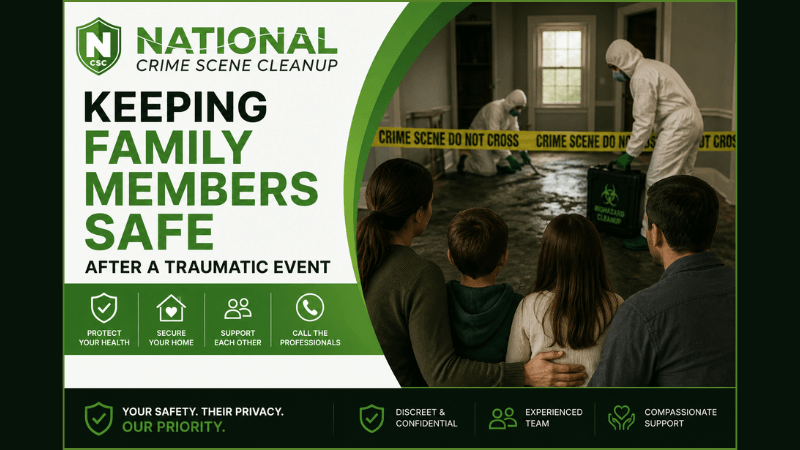
Compassionate Guidance from National Crime Scene Cleanup
In the aftermath of a traumatic event, it’s natural to focus on helping family members and loved ones. At the same time, it’s important to remember that areas affected by blood or other biohazardous materials may present health and safety concerns until they have been professionally remediated.
At National Crime Scene Cleanup, we know that every situation is different. Our goal is to help families understand how to protect themselves, care for one another, and safely navigate the period between the emergency response and professional cleanup.
If your property has been released by the appropriate authorities and you need immediate assistance, our certified technicians are available 24 hours a day, 7 days a week.
24/7 Emergency Response: (844) 255-2461
Your First Priority Is Safety
During the hours following a traumatic event, emotions often take over. While it’s understandable to want to gather belongings or begin cleaning immediately, protecting your family’s health should always come first.
If the property has not yet been released by law enforcement or emergency responders, continue to follow their instructions and avoid entering restricted areas.
Once authorities have completed their work, take steps to keep everyone away from areas that may still contain biological contamination until professional Crime Scene Cleanup has been completed.
Keep Children Away from the Affected Area
Children may not understand the risks associated with blood or other biohazardous materials.
Whenever possible:
- Keep children in a separate part of the home.
- Prevent access to contaminated rooms.
- Do not allow children to handle personal belongings from affected areas until they have been evaluated.
- Answer questions honestly using age-appropriate language while reassuring them that adults are handling the situation.
Protecting children from unnecessary exposure can help support both their physical safety and emotional well-being.
Keep Pets Safe
Pets can unintentionally enter contaminated areas, track hazardous materials through the home, or come into contact with unsafe surfaces.
Until cleanup has been completed:
- Keep pets in unaffected rooms.
- Walk dogs outside using a different entrance if possible.
- Prevent animals from accessing contaminated furniture, flooring, or personal belongings.
- Contact a veterinarian if you believe your pet may have been exposed to potentially hazardous materials.
Limit Access to the Property
Reducing foot traffic through the affected area helps protect both your family and the integrity of the cleanup process.
If appropriate:
- Close doors to contaminated rooms.
- Lock exterior entrances if the property is vacant.
- Ask visitors to remain outside affected areas.
- Limit access to essential individuals only.
Avoid Attempting Cleanup Yourself
One of the most important ways to protect your family is to avoid cleaning biological contamination without proper training and equipment.
Household cleaning products are not designed for professional Biohazard Cleanup.
Professional remediation may include:
- Specialized personal protective equipment (PPE)
- Hospital-grade disinfectants
- Safe handling of contaminated materials
- Regulated biohazard waste disposal
- Odor remediation
- Thorough cleaning and decontamination
Attempting to clean affected areas yourself may increase the risk of exposure and can spread contamination to other parts of the property.
Protect Emotional Well-Being
Every family member responds to trauma differently.
Some people may want to talk immediately, while others may need quiet time before they’re ready to discuss what has happened.
Consider:
- Leaning on trusted friends or family members.
- Asking others to help with practical tasks.
- Seeking support from faith leaders or licensed mental health professionals.
- Giving children opportunities to ask questions in a safe environment.
- Taking breaks to rest, eat, and stay hydrated during a stressful time.
There is no “correct” way to grieve, and everyone moves through loss at their own pace.
Contact Your Insurance Provider
Many homeowners, renters, and commercial insurance policies may help cover professional Crime Scene Cleanup or Biohazard Cleanup, depending on the circumstances and your policy.
National Crime Scene Cleanup regularly works with insurance providers and can often assist with documentation needed during the claims process.
Learn more in our Insurance Resource Center.
How National Crime Scene Cleanup Can Help
Once the property has been released by the appropriate authorities, our trained technicians can begin the cleanup process.
Our services include:
- Crime Scene Cleanup
- Biohazard Cleanup
- Blood Cleanup
- Suicide Cleanup
- Unattended Death Cleanup
- Odor Removal
Every cleanup is performed with professionalism, discretion, and respect for the individuals and families we serve.
Frequently Asked Questions
Is it safe for children to remain in the home?
It depends on the location and extent of contamination.
If affected areas can be completely isolated, it may be possible for unaffected portions of the home to remain usable. In other situations, temporary relocation may be the safest option until professional remediation has been completed.
Can family members collect personal belongings?
Whenever possible, avoid handling items from contaminated areas until they have been evaluated by trained professionals.
Some belongings may be safely cleaned or restored, while others may require specialized treatment or disposal.
Should we clean anything before professionals arrive?
No.
Avoid cleaning blood, bodily fluids, or potentially contaminated materials. Professional remediation is designed to safely address hazards that may not be visible.
How quickly can National Crime Scene Cleanup respond?
Our emergency response teams are available 24 hours a day, 365 days a year.
Response times vary by location, but we work to dispatch trained technicians as quickly as possible after the property has been released.
Related Emergency Guides
Depending on your situation, these additional resources may be helpful.
- Emergency Crime Scene Cleanup Guide
- What to Do After a Homicide
- What to Do After a Suicide
- What to Do After an Unattended Death
- How to Secure a Crime Scene
- When the Police Leave: What Happens Next?
We’re Here When You Need Us
No family expects to face the aftermath of a traumatic event. During these difficult moments, you shouldn’t have to manage the cleanup process on your own.
At National Crime Scene Cleanup, we’re committed to helping families restore their homes safely while treating every situation with compassion, professionalism, and respect.
If your property has been released and you need immediate assistance, our team is available 24 hours a day, 365 days a year.
Call National Crime Scene Cleanup at (844) 255-2461 for immediate assistance.
