Forensic Cleanup After a Crime Scene: Who’s Responsible Once Authorities Leave
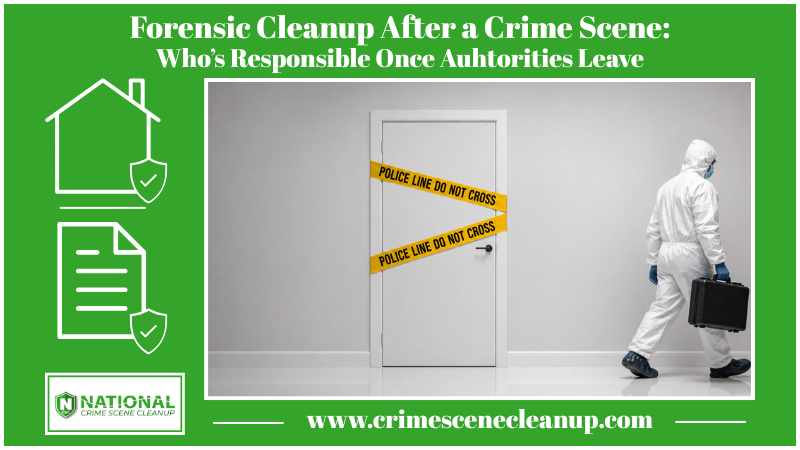
A crime scene does not end when law enforcement leaves. Once investigators complete their work, the responsibility for restoring the property shifts back to the property owner, family member, landlord, business owner, or insurance policyholder. That is where forensic cleanup begins.
Bloodborne pathogens, bodily fluids, fingerprint dust, decomposition odors, and biohazard contamination can remain long after the scene has been released. Most police departments, medical examiners, and emergency responders do not clean or disinfect the affected area. Their role is investigation and evidence collection, not remediation.
At National Crime Scene Cleanup, we handle professional trauma cleanup services for homes, apartments, businesses, hotels, vehicles, and public spaces affected by traumatic events. Proper forensic cleaning focuses on restoring safety, removing biological hazards, and helping people move forward without risk of exposure.
What Is Forensic Cleanup?
Forensic cleanup is the specialized process of cleaning, disinfecting, and restoring areas affected by trauma, violence, unattended deaths, accidents, or other biohazard situations.
Professional forensic cleaning may involve:
- Blood cleanup
- Bodily fluid remediation
- Biohazard removal
- Odor treatment
- Decomposition cleanup
- Tear gas residue removal
- Fingerprint dust cleanup
- Hoarding contamination remediation
- Structural material removal and disposal
The goal is not only to make the area appear clean, but to remove contamination that may create health risks if left untreated.
Common Situations That Require Forensic Cleaning
| Situation | Why Cleanup Is Needed | Potential Risks |
| Violent crimes | Blood and bodily fluids remain | Bloodborne pathogens |
| Unattended deaths | Decomposition contamination spreads | Airborne bacteria and odor |
| Suicides | Biohazard exposure | Emotional trauma and contamination |
| Industrial accidents | Tissue and fluid contamination | Workplace safety hazards |
| Vehicle trauma scenes | Porous surfaces trap fluids | Lingering odors and bacteria |
Who Is Responsible for Cleanup After Police Leave?
The police department is not responsible for cleaning a crime scene after the investigation ends.
Responsibility usually falls to:
- Property owners
- Family members
- Landlords or property managers
- Business owners
- Insurance policyholders
The exact responsibility often depends on the location, ownership structure, insurance coverage, and circumstances surrounding the incident.
Many people are surprised to learn that once authorities release the scene, the cleanup process becomes a private responsibility rather than a government service.
Questions surrounding Police Cleanup Responsibility are especially common after violent incidents in homes, apartments, and rental properties. Families are often left trying to understand who arranges the cleanup, what insurance may cover, and how quickly remediation needs to begin.
Why Professional Forensic Cleanup Matters
Trauma scenes can contain invisible contamination even after visible debris has been removed.
Blood and biological material can spread into:
- Subflooring
- Baseboards
- Wall cavities
- Furniture padding
- Carpeting
- HVAC systems
- Concrete seams
- Porous wood materials
Improper cleaning may leave behind bacteria, pathogens, and persistent odors.
This is why forensic cleanup requires more than household disinfectants or general janitorial work.
Hidden Risks Often Overlooked
Cross-Contamination
Walking through an affected area without containment can spread contamination into unaffected rooms.
Airborne Particles
Disturbed materials may release microscopic contaminants into the air during cleanup.
Structural Absorption
Porous materials absorb fluids quickly. Surface wiping does not fully remove contamination once materials have been penetrated.
Emotional Trauma
Families attempting cleanup themselves are often exposed to additional psychological stress during an already difficult time.
The Forensic Cleanup Process
Every scene is different, but professional forensic cleaning generally follows a structured remediation process designed to prioritize safety and compliance.
1. Scene Assessment
Technicians evaluate:
- The extent of contamination
- Affected materials
- Structural damage
- Safety hazards
- Biohazard exposure risks
This helps determine containment needs and disposal requirements.
2. Containment Setup
Containment barriers help prevent contamination from spreading to unaffected areas.
This may include:
- Negative air machines
- Plastic sheeting barriers
- Restricted access zones
- PPE requirements
3. Biohazard Removal
Contaminated materials are removed according to biohazard handling protocols.
Examples include:
- Carpeting
- Drywall
- Mattresses
- Furniture
- Flooring
- Personal belongings beyond restoration
4. Cleaning and Disinfection
EPA-registered disinfectants are applied to affected surfaces using professional remediation methods.
Technicians clean areas repeatedly to ensure proper dwell time and pathogen reduction.
5. Odor Treatment
Odor removal often involves:
- Hydroxyl generators
- HEPA air filtration
- Thermal fogging
- Deep structural deodorization
This becomes especially important in decomposition and unattended death scenes.
6. Final Inspection
The final stage focuses on confirming the area has been properly restored and safely remediated.
How Crime Scene Cleanup Works Without Damaging Property
One of the biggest misconceptions about forensic cleaning is that everything inside the affected area must be removed.
That is not always true.
Professional remediation focuses on identifying what can safely be restored versus what requires disposal. Strategic cleaning methods help minimize unnecessary demolition while still addressing contamination properly.
Understanding How Crime Scene Cleanup Works is important for property owners trying to balance safety, restoration, and preservation of the space.
In many cases, specialized techniques allow technicians to preserve:
- Hardwood flooring
- Structural framing
- Tile surfaces
- Cabinets
- Concrete
- Non-porous furniture
- Electronics outside contamination zones
The extent of restoration depends on how long contamination remained present and how deeply materials were affected.
How Long Does Forensic Cleanup Take?
The timeline depends on the severity of the scene.
Some smaller incidents may take only a few hours. Larger scenes involving decomposition, structural contamination, or multiple affected rooms may take several days.
Factors That Affect Cleanup Time
| Factor | Impact on Timeline |
| Size of affected area | Larger areas require more remediation |
| Type of contamination | Decomposition scenes take longer |
| Material absorption | Porous materials increase labor |
| Odor penetration | Deep deodorization extends cleanup |
| Insurance approvals | Documentation may delay restoration |
A single-room blood cleanup is very different from an unattended death involving structural contamination beneath flooring and inside wall cavities.
Does Insurance Cover Forensic Cleanup?
Many homeowners insurance policies, renters insurance policies, and commercial property policies may provide coverage for forensic cleanup services.
Coverage varies depending on:
- Cause of loss
- Policy exclusions
- Property type
- Liability conditions
- Scope of contamination
Documentation is often required before remediation begins.
At NCSC, we frequently work alongside insurance carriers to help streamline documentation, photographs, estimates, and remediation reporting.
Why Families Should Avoid DIY Cleanup
The risks involved with trauma scene remediation can typically be underestimated.
Household cleaning products are not designed for biohazard remediation. Without proper PPE and disposal procedures, exposure risks increase significantly.
DIY cleanup may also:
- Spread contamination further
- Damage property unnecessarily
- Miss hidden biological material
- Create lingering odors
- Increase emotional distress
Professional forensic cleaning is designed to reduce both physical and psychological risks during recovery.
The Difference Between Standard Cleaning and Forensic Cleaning
| Standard Cleaning | Forensic Cleaning |
| Focuses on appearance | Focuses on safety and decontamination |
| Uses general disinfectants | Uses biohazard remediation protocols |
| Handles routine dirt and debris | Handles blood and biological contamination |
| Cosmetic cleaning only | Structural contamination assessment |
| Minimal PPE | Full protective equipment and containment |
This distinction matters because trauma scenes require specialized remediation knowledge, not just sanitation.
Situations Where Immediate Forensic Cleanup Is Critical
Some scenes require rapid response to prevent contamination from worsening.
High-Priority Situations Include:
╭─ Unattended deaths
│ Decomposition can spread quickly into surrounding materials.
╰────────────────────
╭─ Blood saturation into flooring
│ Fluids may penetrate beneath visible surfaces within hours.
╰────────────────────
╭─ Hot or humid environments
│ Heat accelerates bacterial growth and odor development.
╰────────────────────
╭─ Commercial properties open to the public
│ Delayed cleanup can create safety and liability concerns.
╰────────────────────
╭─ Multi-unit residential buildings
│ Contamination and odor may spread into neighboring units.
╰────────────────────
The longer contamination remains untreated, the greater the chance it spreads deeper into materials and surrounding areas.
What Families Often Experience After a Scene Is Released
Many families expect authorities to guide them through the next steps after an investigation concludes.
Instead, they are often left standing inside a property that still contains visible trauma and contamination.
This confusion is common.
People may not know:
- Whether the scene is safe to enter
- What should be removed
- Who pays for cleanup
- How long remediation takes
- Whether personal belongings can be saved
Professional forensic cleanup helps provide structure during an otherwise overwhelming situation.
Choosing a Professional Forensic Cleanup Company
Not every cleaning company is equipped for biohazard remediation.
When evaluating a forensic cleaning provider, look for:
→ Experience with trauma scenes
→ Biohazard remediation training
→ OSHA-compliant practices
→ Proper PPE usage
→ Discreet response procedures
→ Clear documentation processes
→ 24/7 emergency availability
A professional response should prioritize safety, communication, discretion, and proper remediation standards from the beginning.
Frequently Asked Questions
What do forensic cleaners do?
Forensic cleaners remove and remediate biological contamination after traumatic events such as crimes, unattended deaths, accidents, and suicides. The work includes disinfecting surfaces, removing biohazard materials, controlling odors, and restoring affected areas to a safe condition.
What is it called when you clean up a crime scene?
Cleaning a crime scene is commonly called forensic cleanup, crime scene cleanup, or forensic cleaning. The process involves professional biohazard remediation rather than standard janitorial cleaning.
How long does a forensic clean take?
A forensic cleanup can take anywhere from several hours to multiple days depending on the severity of contamination, size of the scene, material damage, and odor penetration. Smaller blood cleanup projects may be completed quickly, while decomposition scenes often require more extensive remediation.
Why Proper Forensic Cleanup Matters Long After the Scene Is Released
Forensic cleanup begins after investigators leave and the reality of restoration starts.
The process involves far more than visible cleaning. Bloodborne pathogens, hidden contamination, structural absorption, and odor penetration all require specialized remediation methods designed for safety and proper recovery.
Understanding who becomes responsible after authorities release a scene helps families, property owners, landlords, and businesses make informed decisions during difficult situations.
At National Crime Scene Cleanup, we provide discreet, professional forensic cleaning services for trauma scenes, unattended deaths, violent crimes, and biohazard situations across the country. Our focus remains on safety, respect, proper remediation, and helping people move forward after difficult events.
For immediate assistance contact our team.
