Why Unattended Death Cleanup Shouldn’t Be Delayed
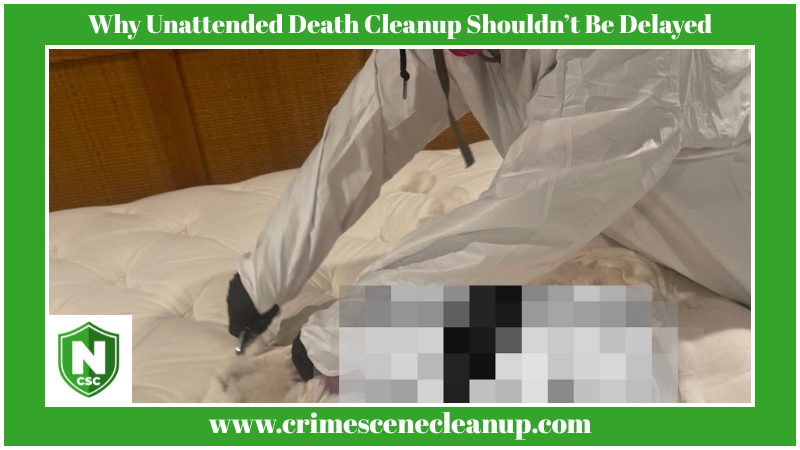
Discovering an unattended death is a deeply traumatic event.
In the aftermath of such a discovery, families and property owners face immense emotional distress. Amid the grief and shock, practical decisions about the property and surrounding environment still need to be made.
It is a natural human response to want to avoid the situation or delay dealing with the scene altogether. However, decomposition environments can change quickly, especially indoors, which is one of the main reasons why unattended death cleanup shouldn’t be delayed. Understanding the risks involved can help families and property owners make informed decisions during an already overwhelming time, especially when professional unattended death cleanup may be necessary to safely restore the environment.
The Immediate Health Risks of Decomposition
Immediate action is often necessary for safety, emotional well-being, and property preservation.
When a person passes away and nobody discovers them for some time, the natural process of decomposition begins. This process releases biological fluids, bacteria, and decomposition gases into the surrounding environment.
These biohazards can pose serious health risks to anyone who enters the space without proper protection.
Why Unattended Death Cleanup Shouldn’t Be Delayed After Decomposition Begins
Exposure to Bloodborne Pathogens
Decomposition involves the breakdown of tissues, which releases blood and other bodily fluids.
These fluids can carry bloodborne pathogens such as Hepatitis B, Hepatitis C, and HIV. Unlike a visible surface spill, decomposition-related contamination often spreads into porous materials and hidden areas throughout the property, which is one reason proper OSHA bloodborne pathogens cleanup procedures are so important in biohazard environments.
Carpet, drywall, wood, and subflooring can absorb contaminated fluids quickly, allowing biohazards to remain present long after the visible scene appears contained. In many cases, contamination beneath the surface becomes one of the most difficult parts of the remediation process to fully address.
Airborne Bacteria and Odor
The decomposition process also produces strong, pervasive odors due to the release of gases and airborne bacteria. These odors are not just unpleasant; they are often indicators that biological activity is affecting the surrounding environment.
Inhaling airborne particles at the scene of an unattended death may cause respiratory irritation and other health concerns. Airborne bacteria and odor particles can also spread through ventilation systems and settle onto surfaces throughout the property, extending contamination beyond the immediate area.
Without timely remediation, odors can penetrate furniture, walls, fabrics, and HVAC systems, making proper death odor removal increasingly difficult as contamination continues spreading over time.
How Indoor Environments Can Accelerate Contamination
Temperature, humidity, airflow, and the materials inside a property can all affect how quickly decomposition impacts the surrounding environment.
Warm indoor temperatures may accelerate biological activity, while porous materials such as carpet, upholstery, insulation, and unfinished wood absorb fluids rapidly. In apartments or multi-unit buildings, shared ventilation systems can also allow odors and airborne particles to travel into neighboring spaces.
A delay of even a few days can significantly increase the amount of contamination absorbed into surrounding materials, which often expands the scope of restoration work needed later and further demonstrates why unattended death cleanup shouldn’t be delayed.
Structural Damage to the Property
Beyond the immediate health concerns, delayed cleanup can also cause serious and sometimes permanent damage to the property itself.
Biological fluids will continue penetrating the materials they come into contact with, weakening surfaces and increasing restoration costs as time passes.
Why Unattended Death Cleanup Shouldn’t Be Delayed for Property Restoration
Damage to Flooring and Subflooring
Flooring materials like carpet, hardwood, and tile are especially vulnerable.
Fluids can seep through the top layer and saturate the subfloor beneath, creating a much more complicated problem to address. What may initially appear to be isolated contamination can quickly spread beneath flooring materials and into surrounding structural components.
If left untreated, moisture and biological matter can contribute to wood rot, microbial growth, and persistent odor issues that become increasingly difficult to remove completely.
Saturation of Walls and Furnishings
Porous surfaces like drywall, plaster, mattresses, and upholstered furniture absorb biological matter quickly.
This not only traps bacteria and contamination but can also create persistent odors that standard household cleaners are unable to fully eliminate. In some situations, a short delay can mean the difference between targeted remediation and the need to replace entire sections of walls, flooring, or furnishings.
The longer contamination remains in place, the deeper it can spread into the structure of the property, reinforcing why unattended death cleanup shouldn’t be delayed in decomposition environments.
The Escalating Mental and Emotional Toll
The emotional impact of an unattended death on family members is profound.
Being responsible for handling the environment where the death occurred can add another layer of trauma during an already devastating time. Attempting to manage the cleanup personally may lead to lasting emotional distress, particularly when families are repeatedly exposed to visual reminders, odors, and the physical aftermath of the scene.
The Trauma of Personal Cleanup
Family members are rarely equipped, emotionally or physically, to handle decomposition-related cleanup safely.
The visual and sensory reminders associated with the scene can be deeply overwhelming. For many people, trying to clean the area themselves can make the grieving process even more difficult.
Professionals trained in remediation are taught to approach these situations with discretion and compassion, helping reduce additional emotional strain on loved ones during an already painful experience.
The Burden on Property Owners
For landlords and property managers, an unattended death can create a complicated set of responsibilities.
There is both a legal and ethical obligation to restore the property to a safe, habitable condition before future occupants can return. Delays may lead to extended vacancies, increased restoration costs, and additional complications if contamination spreads further throughout the property.
Prompt action helps protect both the property itself and the well-being of future occupants.
The Importance of Proper Remediation
Unattended death cleanup is a specialized process that involves far more than surface cleaning.
Proper remediation often requires containment procedures, sanitation, odor removal, and the safe handling of contaminated materials to restore the environment responsibly.
Specialized Training and Equipment
Professional remediation technicians receive training in OSHA regulations, bloodborne pathogen safety, and biohazard handling procedures.
Protective equipment, industrial air scrubbers, enzyme treatments, and EPA-approved disinfectants are often necessary to safely address contamination and reduce the risk of cross-contamination throughout the property.
Thorough Decontamination and Restoration
A professional remediation process generally begins by containing the affected area to help prevent contamination from spreading further.
From there, contaminated materials may need to be removed, followed by deep cleaning, sanitization, and deodorization of the surrounding environment. In some cases, additional testing may also be performed to confirm the area has been properly restored.
This type of comprehensive remediation is often the only reliable way to address both visible and hidden contamination after an unattended death.
Understanding Why Unattended Death Cleanup Shouldn’t Be Delayed
As you can see, the reasons for why unattended death cleanup shouldn’t be delayed are clear. Delaying professional restoration can expose people to dangerous biohazards, increase structural damage throughout the property, and place additional emotional strain on grieving families.Taking timely action helps reduce contamination, protect the property, and begin the process of restoring the environment safely and responsibly.
