What Happens to Carpet After Blood Contamination?
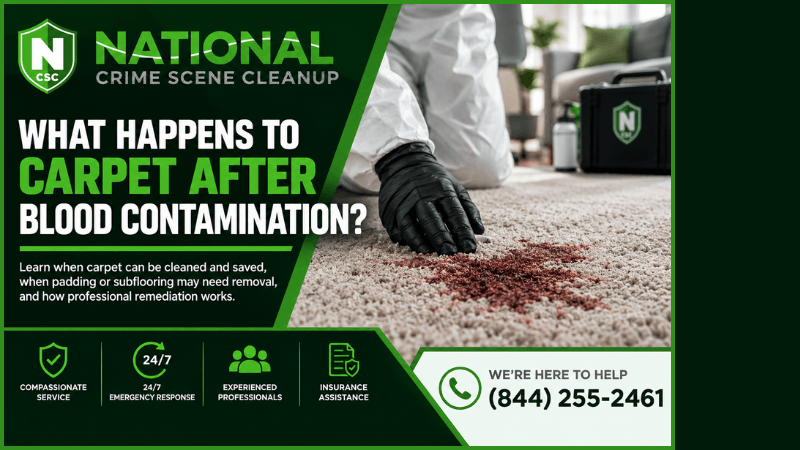
When blood gets onto carpet, the right next step depends on more than whether the stain is visible. Blood can soak through carpet fibers into the backing, padding, and sometimes the subfloor beneath it. The affected materials, amount of contamination, how far it spread, and whether it can be safely remediated all influence whether the carpet can remain or needs to be removed.
At National Crime Scene Cleanup (NCSC), we help families, property owners, and businesses understand what may be involved after a traumatic event. This guide explains what happens to carpet after blood contamination, how professionals assess affected materials, and when replacement may be necessary.
The key point: A carpet that looks clean is not necessarily free of biological contamination. Decisions should be based on the affected area and the materials involved—not appearance alone.
Can Blood-Contaminated Carpet Be Cleaned?
Sometimes, but not every blood-contaminated carpet can be safely restored. The answer depends on the type of carpet, the extent and depth of contamination, the condition of the underlying materials, and whether the affected area can be effectively cleaned and disinfected.
Blood may remain on the surface, or it may penetrate the carpet pile, backing, padding, seams, and subfloor. A surface stain does not reveal how far the material has traveled.
A trained remediation professional can assess the affected area and determine whether appropriate cleaning and disinfection are feasible or whether some materials should be removed.
When carpet may be salvageable
Depending on the circumstances, carpet may be considered for remediation when:
- Contamination is limited and its extent can be established.
- The affected material is accessible for appropriate treatment.
- The carpet and underlying layers can be adequately addressed.
- The materials remain in a condition suitable for remediation.
- The professional can follow applicable safety, cleaning, and waste-handling requirements.
These are assessment factors, not a guarantee that a carpet can be saved. A professional must evaluate the specific situation before recommending restoration.
When carpet may need to be removed
Removal may be appropriate when:
- Blood has penetrated the carpet backing or padding.
- Contamination has spread beneath the visible stain.
- The affected materials are damaged, deteriorated, or difficult to treat adequately.
- The subfloor or adjacent building materials are affected.
- The full extent of contamination cannot be reliably addressed while the carpet remains in place.
Removing carpet does not automatically mean the entire room—or the entire home—needs to be stripped. The goal is to identify and address the affected materials while avoiding unnecessary removal of unaffected areas.
Why Blood Can Affect More Than the Carpet Surface
Carpet is a layered material. What appears to be one stain may involve several different components, each of which requires its own assessment.
1. Carpet fibers
The visible fibers can absorb and hold blood. The carpet’s material, pile, color, and construction can affect how contamination spreads and how the surface responds to treatment.
Removing the visible discoloration is not the same as establishing that the material has been appropriately decontaminated.
2. Carpet backing
The backing supports the fibers and can trap contamination beneath the surface. Even when the top of the carpet appears improved, the backing may still require attention.
3. Carpet padding or underlay
Padding sits below the carpet and can absorb liquid. Because it is concealed, contamination in the padding may not be obvious from above. If blood has penetrated this layer, a professional may recommend removing the affected padding rather than attempting to treat it in place.
4. Subflooring
If contamination passes through the carpet and padding, the subfloor may also be affected. The appropriate response depends on the subfloor material, the extent of contamination, and whether the surface can be effectively treated.
In some cases, the assessment may identify a limited affected area. In others, additional material may need to be exposed so the full extent can be evaluated.
Does Carpet Padding Always Need to Be Replaced?
No. The decision depends on whether the padding was affected and whether safe, effective remediation is feasible.
If blood has soaked into the padding, replacement may be the more appropriate option because the material is absorbent and difficult to inspect or treat thoroughly while installed. If contamination is confined to the carpet surface, padding replacement may not be necessary—but that conclusion should not be made from a visual check alone.
A remediation professional may need to examine the carpet’s edges or lift a section to assess the layers beneath it. The inspection should establish what is affected before deciding which materials to remove.
What Happens to the Subfloor Under Blood-Contaminated Carpet?
When contamination reaches the subfloor, the response depends partly on the material.
Plywood or other wood-based subflooring: These materials may absorb liquid into their surface or seams. The professional needs to assess the extent of contamination and determine whether the affected surface can be treated appropriately or whether further remediation is necessary.
Concrete: Concrete is porous to varying degrees, and its surface condition can affect how contamination behaves. It still requires assessment and appropriate treatment when affected.
Other flooring layers: Adhesives, underlayments, transitions, and adjoining materials may also need inspection if contamination spreads beyond the carpet.
The objective is to address affected materials without assuming that every subfloor requires replacement. Any recommendation for removal should be based on the observed conditions and the remediation plan.
How Professionals Handle Blood-Contaminated Carpet
Professional remediation typically begins with an assessment rather than immediately applying a cleaning product. The exact procedure varies according to the location, materials, extent of contamination, and site conditions.
A typical process may include:
- Assessing the area. The technician identifies visible contamination and evaluates where blood may have spread, including beneath the carpet.
- Establishing a safe work area. Appropriate precautions and personal protective equipment help reduce exposure and prevent cross-contamination.
- Determining what can be treated. The remediation plan identifies materials that may be cleaned and disinfected and materials that may require removal.
- Removing affected materials when necessary. Contaminated carpet, padding, or other materials may be removed using appropriate containment and handling procedures.
- Addressing underlying surfaces. If the subfloor or adjacent materials are affected, they are evaluated and treated as appropriate.
- Handling waste properly. Materials are packaged, transported, and disposed of in accordance with applicable requirements.
- Reviewing the completed work. The professional checks the remediated area against the scope of work and identifies any remaining concerns.
Not every job requires every step. The process should reflect the actual conditions rather than a one-size-fits-all approach.
Can You Remove Blood From Carpet Yourself?
Blood contamination following a traumatic event can present risks that are not apparent from the stain alone. Household carpet cleaners and ordinary stain-removal methods are not a substitute for an assessment of biological contamination.
Avoid scrubbing, extracting, or removing affected carpet yourself if doing so could expose you to blood or spread contamination to other areas. Do not mix cleaning chemicals, and do not assume that a surface looks safe because its color has returned to normal.
If the incident involves a death, serious injury, or a substantial amount of blood, keep people and pets away from the affected area and seek guidance from a qualified biohazard remediation provider. If there is an immediate medical or public-safety emergency, contact the appropriate emergency services.
NCSC’s biohazard cleanup services explain how specialized remediation can address biological contamination in affected properties.
How Do You Know Whether the Carpet Is Safe After Cleanup?
Appearance alone cannot establish that a contaminated carpet or the materials beneath it have been adequately remediated. A professional should explain what was affected, what was cleaned, what was removed, and what work remains within the agreed scope.
Before considering the area ready for normal use, ask the provider:
- Was contamination found in the carpet backing or padding?
- Was the subfloor inspected where necessary?
- Which materials were removed, and which were retained?
- What cleaning and disinfection procedures were used?
- Were waste-handling requirements followed?
- Are there any limitations, unresolved issues, or recommendations for additional work?
For a broader checklist, read How Do You Know If a House Is Safe After Biohazard Cleanup?.
What Affects the Cost of Carpet Remediation or Replacement?
There is no single price for every blood-contaminated carpet. Cost can vary according to the size of the affected area, the amount of contamination, carpet construction, whether padding or subflooring is affected, material removal requirements, waste handling, and the work needed to restore the area.
A small, accessible area may require a different scope of work from contamination that has spread beneath the carpet or into adjoining materials. Any estimate should clearly distinguish assessment, remediation, removal, disposal, and any reconstruction or replacement that falls within the provider’s scope.
For the broader factors that influence service pricing, visit NCSC’s Crime Scene Cleanup Cost page. That page covers overall cleanup costs; this article focuses specifically on carpet and its underlying layers.
If you are concerned about insurance, see Does Insurance Cover Crime Scene Cleanup? and How Claims Work. Coverage depends on the policy, circumstances, exclusions, and the insurer’s review; do not assume that carpet replacement or remediation will automatically be covered.
What If the Carpet Is Contaminated After a Death?
After a death, blood or other biological material may affect flooring, furniture, and nearby surfaces. The extent of the work depends on what occurred at the scene and which materials were affected. In an unattended death, there may also be other contamination or odor-related concerns beyond the carpet itself.
This page addresses the carpet-specific question: whether the carpet, padding, or subfloor may need treatment or removal. For the broader property-level process, read What Happens to a House After an Unattended Death?.
If you need help identifying the appropriate service, NCSC also provides information about crime scene cleanup and unattended death cleanup.
Choosing a Professional for Blood-Contaminated Carpet
When comparing providers, ask whether they have experience with blood contamination in layered flooring, how they determine the extent of affected materials, what their estimate includes, and how they handle removal and waste.
A qualified provider should explain the proposed scope clearly, distinguish remediation from reconstruction, and avoid promising that every stain can be removed or every carpet can be saved.
Use our guide, What Should I Look for in a Crime Scene Cleanup Company?, for a more complete checklist covering training, safety practices, insurance, communication, and estimates.
Frequently Asked Questions
Does blood permanently ruin carpet?
Not always. Whether carpet can be retained depends on how far contamination spreads, the material’s condition, and whether appropriate remediation is feasible. Removing a stain does not by itself prove that the carpet is safe.
Do you always have to replace carpet after blood contamination?
No. Replacement is not automatic. A professional should assess the carpet, backing, padding, and any affected subfloor before recommending cleaning, removal, or a combination of approaches.
Can blood soak through carpet into the floor underneath?
Yes. Depending on the amount of liquid and the carpet’s construction, blood can penetrate the fibers, backing, padding, and potentially the subfloor. The visible stain may not show the full extent of contamination.
Does carpet padding need to be removed if blood reaches it?
Padding may need to be removed if it is contaminated and cannot be adequately remediated in place. The decision should be based on an assessment of the affected material and the appropriate remediation approach.
Can ordinary carpet cleaning remove blood contamination?
Ordinary carpet cleaning may improve visible staining, but it should not be treated as proof that biological contamination has been addressed. The required response depends on the nature and extent of contamination.
Will homeowners insurance pay to replace contaminated carpet?
Coverage depends on the policy, the cause of the loss, applicable exclusions, and the insurer’s determination. Contact your insurer and retain relevant documentation. See NCSC’s insurance coverage guide for more information.
Get Guidance on Blood-Contaminated Carpet
If blood has contaminated carpet in a home, rental property, business, or other building, the first step is to determine which materials are affected and what remediation is appropriate. The carpet may be only one part of the assessment; padding, subflooring, and adjacent surfaces can also matter.
National Crime Scene Cleanup provides guidance and professional cleanup services for traumatic events and biohazard situations. Contact NCSC at (844) 255-2461 to discuss the situation and the next steps.
