Crime Scene Disinfecting in Homes: Why Odors and Contamination Can Return Without Proper Treatment
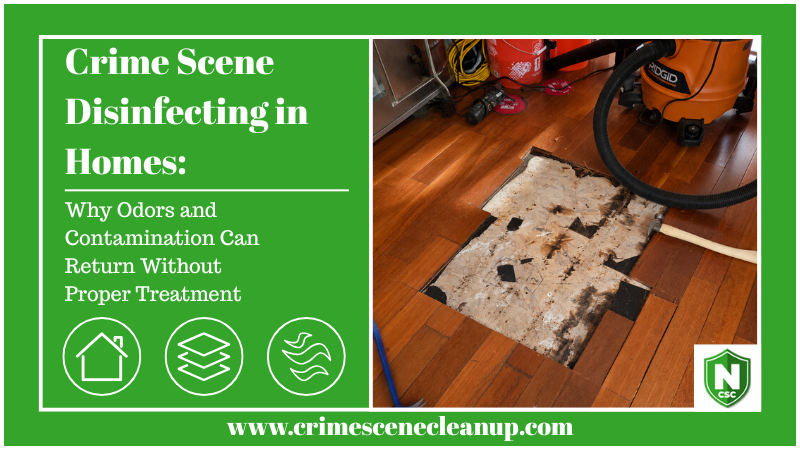
A home can look clean while still holding dangerous contamination beneath the surface. After a violent crime, unattended death, suicide, or traumatic injury, biological material often spreads far beyond what is immediately visible. Blood, bodily fluids, and bacteria can seep into flooring, drywall, insulation, furniture, and ventilation systems where ordinary cleaning methods cannot fully reach.
That is why professional crime scene disinfecting involves far more than wiping surfaces or removing visible stains. Proper remediation focuses on eliminating contamination at its source so the property can be safely restored.
When crime scene disinfecting is incomplete, odors frequently return. In some homes, contamination continues spreading long after the area appears clean.
Why Crime Scene Disinfecting Often Fails Without Proper Remediation
One of the biggest misconceptions surrounding trauma cleanup is the belief that odor removal automatically means the property has been disinfected. In reality, odors are often only a symptom of a much larger contamination issue.
Biological material can absorb deep into:
→ Carpet padding
→ Hardwood flooring
→ Subflooring
→ Drywall
→ Upholstered furniture
→ HVAC systems
→ Insulation
Once contamination penetrates porous materials, standard household cleaning products rarely solve the problem. Surface cleaning may temporarily improve the appearance of a room, but bacteria and odor-causing organic matter can remain trapped underneath.
This is why professional crime scene disinfecting focuses on both visible and hidden contamination.
Why Odors Return After Crime Scene Disinfecting Is Done Incorrectly
Persistent odors usually indicate that contamination still exists somewhere inside the property. Even when a room initially smells clean, residual biological material can continue breaking down beneath flooring or behind walls.
Heat and humidity often make the problem worse. During warmer months, trapped bacteria and moisture can reactivate lingering odors that seemed to disappear after initial cleaning.
Common Reasons Odors Return
| Cause | What Happens | Result |
| Fluids reach the subfloor | Biological material absorbs beneath flooring | Odors resurface repeatedly |
| Deodorizing replaces disinfecting | Smells are masked instead of removed | Temporary improvement only |
| HVAC contamination is overlooked | Airflow spreads odor particles | Odors move throughout the home |
| Porous materials remain untreated | Bacteria continue developing internally | Ongoing contamination concerns |
In residential settings, incomplete crime scene disinfecting can leave homeowners dealing with recurring odors for months.
Crime Scene Disinfecting in Homes Requires More Than Basic Cleaning
Residential trauma scenes create unique challenges because homes contain countless absorbent materials and enclosed spaces where contamination can spread unnoticed.
Unlike commercial environments, homes are filled with:
- Fabric furniture
- Mattresses
- Wood flooring
- Personal belongings
- Tight ventilation systems
- Soft building materials
This allows contamination to move beyond the original location much more easily.
A small visible area may actually represent a much larger cleanup issue underneath the surface.
Hidden Cross-Contamination Inside Residential Properties
One of the most overlooked parts of crime scene disinfecting is cross-contamination. Biological material does not always remain confined to a single room.
Foot traffic, airflow, and cleanup attempts can spread contamination into nearby areas without being obvious immediately.
Areas Commonly Missed During Improper Cleanup
╭─ Commonly Overlooked Areas ─╮
→ Floor seams and cracks
→ Baseboards and trim
→ Air vents and returns
→ Closet flooring
→ Under furniture
→ Beneath carpet padding
→ Wall cavities
→ Adjacent hallways
╰────────────────────────────╯
Without proper containment procedures, contaminated particles may continue circulating throughout the property.
Understanding what a crime scene cleanup technician is becomes important in situations like these because professional remediation involves much more than surface cleaning. Proper crime scene disinfecting requires contamination control, structural assessment, and biohazard safety procedures designed specifically for residential environments.
Why Some Materials Cannot Be Fully Disinfected
Not every surface inside a contaminated property can be safely restored. Some porous materials absorb fluids too deeply to allow complete sanitization.
Professional crime scene disinfecting often requires the removal of:
- Carpet padding
- Drywall
- Insulation
- Mattresses
- Particle board materials
- Certain upholstered furniture
Attempting to preserve heavily contaminated materials can lead to recurring odors, bacterial growth, and long-term sanitation issues.
In many cases, removal is necessary to stop contamination from returning later.
The Role of Containment During Crime Scene Disinfecting
Containment is one of the most important parts of professional trauma remediation. Without it, disturbed particles can spread into unaffected areas during cleanup.
Professional remediation teams often use:
- HEPA-filtered air scrubbers
- Negative air pressure systems
- Controlled work zones
- Protective equipment
- Biohazard disposal procedures
These measures help isolate contamination and reduce the risk of spreading bacteria throughout the property.
Improper cleaning without containment can unintentionally create additional contamination problems inside the home.
Why DIY Crime Scene Disinfecting Can Create Larger Problems
Homeowners sometimes attempt cleanup themselves because the visible damage appears manageable. Unfortunately, trauma scenes often involve contamination that cannot be fully seen with the naked eye.
Improper crime scene disinfecting may result in:
→ Lingering odors that continue returning
→ Hidden bacterial growth beneath flooring
→ Cross-contamination into unaffected rooms
→ Unsafe exposure to bloodborne pathogens
→ Permanent damage to structural materials
→ Delayed insurance claims or restoration work
Even small amounts of remaining biological material can continue producing odor and contamination over time.
Insurance Complications After Improper Trauma Cleanup
Insurance-related issues can become more complicated when remediation is delayed or performed incorrectly. In vacant or abandoned properties especially, contamination may worsen significantly before proper cleanup begins.
Structural damage, odor migration, and bacterial spread can increase restoration costs if the property is not addressed quickly and professionally.
This is why questions surrounding whether crime scene cleanup is covered by insurance in vacant properties often become important during residential trauma remediation. The condition of the property, timeline of the incident, and extent of contamination can all influence the claims process.
How Professional Crime Scene Disinfecting Helps Restore a Safe Living Environment
Professional remediation is designed to address both immediate contamination and long-term safety concerns. Effective crime scene disinfecting focuses on restoring the property properly instead of simply improving appearance temporarily.
The process typically includes:
- Assessing contamination spread
- Establishing containment zones
- Removing unsalvageable materials
- Deep cleaning and sanitization
- Odor source treatment
- Safe biohazard disposal
- Final inspection and verification
Every trauma scene is different. Some require limited disinfection, while others involve extensive structural remediation depending on how far contamination has spread.
Crime Scene Disinfecting Requires Thoroughness, Not Surface-Level Cleaning
Trauma scenes inside homes often involve contamination that extends far beyond what can be seen immediately. Odors returning after cleanup are usually a sign that biological material still exists somewhere within the property.
Proper crime scene disinfecting addresses:
- Hidden contamination
- Odor source removal
- Cross-contamination risks
- Structural absorption
- Bloodborne pathogen concerns
- Long-term sanitation issues
At National Crime Scene Cleanup, we provide professional trauma remediation services designed to restore residential properties safely, discreetly, and thoroughly. Our team approaches every scene with the level of containment, disinfection, and structural assessment necessary to help prevent contamination from returning later.
If you need immediate assistance or have questions about residential trauma cleanup, contact our team.
