Eliminating Odors in Cars: When Simple Fixes Fail and Deeper Cleaning Is Needed
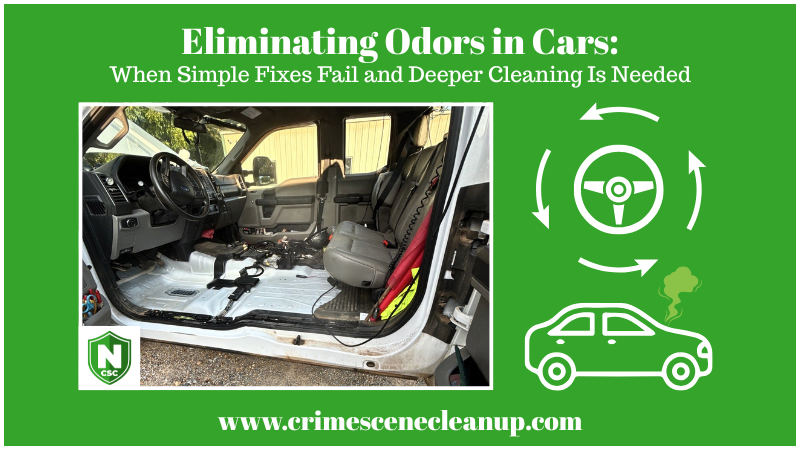
A car can look clean and still carry a smell that refuses to leave. You wipe surfaces, vacuum the seats, maybe even try a few popular home remedies. It seems better for a moment. Then the odor comes back—sometimes stronger than before.
That’s because eliminating odors in cars is rarely about what you can see. It’s about what has settled deep into the materials you don’t think about. When odors linger, they’re not just sitting on the surface. They’ve become part of the environment.
In more serious situations—especially those involving contamination—Biohazard Car Cleanup becomes essential to fully restore safety and air quality.
Why Eliminating Odors in Cars Is More Complex Than It Seems
At first glance, a bad smell feels like a simple problem. Clean the area. Add a fragrance. Move on. But vehicles are enclosed spaces filled with layered materials that trap and hold odor particles over time.
Seats aren’t just fabric. Beneath them is foam that absorbs liquids and gases. Carpets sit on thick padding. Even the air system can circulate odor particles long after the original source is gone.
When you attempt eliminating odors in cars without addressing these deeper layers, the smell isn’t gone—it’s just temporarily quiet.
The Hidden Places Odors Settle
Odors don’t stay where they start. They spread, settle, and hide in places that aren’t immediately visible.
Some of the most common areas include:
- Beneath carpeting and floor mats
- Inside seat cushions and foam layers
- Along the headliner
- Within door panels
- Inside the HVAC system and vents
What makes this more challenging is how these areas interact. A spill on the seat can seep downward. Moisture can travel. Air circulation can carry odor particles throughout the cabin.
This is why a vehicle can smell fine one day and noticeably worse the next—especially after heat exposure or prolonged use.
When Simple Fixes Stop Being Enough
There’s a point where basic cleaning methods stop making a difference. You may notice the smell fading briefly, only to return within hours or days.
Instead of listing what doesn’t work, it’s easier to understand what these methods are actually doing: they manage the air, not the source.
A scented spray might make the car feel fresher, but it doesn’t interact with the material holding the odor. Baking soda can absorb light surface smells, but it won’t reach deep into padding or enclosed areas. Even a thorough vacuum only removes what’s loose—not what’s embedded.
When eliminating odors in cars becomes a repeated effort instead of a lasting solution, it’s a clear sign that the issue runs deeper than surface-level cleaning.
What Different Car Odors Are Telling You
Not all smells are the same. Each type of odor points to a different underlying issue, and recognizing that difference is key to resolving it.
Smoke Odors
Smoke doesn’t just settle—it clings. It bonds to surfaces and leaves behind residue that continues to release odor over time. Even after visible cleaning, the smell can linger because it has embedded into plastics, fabrics, and ventilation systems.
Mold and Mildew
A musty smell often points to moisture. This could come from something as simple as a spill or as complex as a hidden leak. Once mold develops, it doesn’t stay contained. It spreads through porous materials and air pathways.
Organic Odors
Food, pet accidents, and bodily fluids break down over time. As they decompose, they release gases that become increasingly difficult to remove. These odors tend to intensify rather than fade.
Chemical Odors
Some smells come from substances rather than decay. Spilled chemicals or off-gassing materials can create sharp, persistent odors that linger in enclosed spaces.
Understanding the source changes the approach. Without that clarity, efforts to remove the smell often miss the mark.
Eliminating Odors in Cars Requires Treating the Source, Not the Smell
The difference between temporary relief and real results comes down to one idea: the source must be removed or neutralized.
Effective odor removal typically follows a deeper process:
- Locating where the odor originates—not just where it’s strongest
- Removing or treating contaminated materials
- Cleaning beyond visible surfaces to reach embedded particles
- Neutralizing odor-causing compounds at a chemical level
- Addressing airflow systems that may be redistributing the smell
This process is what separates lasting results from repeated frustration.
Why Odors Keep Coming Back
Recurring smells are one of the most common frustrations. You clean, the odor fades, and then it returns.
That cycle usually points to one of a few underlying issues:
| Cause | What’s Happening | Result |
| Incomplete cleaning | Only surface areas treated | Odor remains trapped below |
| Absorbed contamination | Materials holding odor particles | Smell reactivates over time |
| Air system contamination | Vents circulating odor | Smell spreads through cabin |
| Ongoing moisture | Mold continues to grow | Odor intensifies |
Heat, humidity, and time all play a role. What seems resolved can quickly reappear under the right conditions.
When Deeper Cleaning Becomes Necessary
There’s a noticeable shift when odor removal moves beyond simple maintenance and into remediation.
You may recognize it when:
- The smell returns quickly after cleaning
- It becomes stronger in warm conditions
- Multiple areas of the car seem affected
- There’s visible staining or moisture
- The odor is sharp, sour, or unusually persistent
At that point, eliminating odors in cars requires more than routine cleaning. It requires a targeted approach designed to reach what standard methods cannot.
What Makes Professional Odor Removal Different
The biggest difference is focus. Instead of treating the air, the process targets the environment as a whole.
At National Crime Scene Cleanup, our approach centers on removing contamination at its source and restoring the vehicle fully.
This includes:
- Accessing hidden areas where odors originate
- Using professional extraction equipment
- Applying solutions that break down organic material
- Treating ventilation systems to stop odor circulation
- Handling biohazard risks safely and thoroughly
This level of cleaning doesn’t just improve how a car smells. It changes the condition of the space itself.
Preventing Odors from Taking Hold Again
Once a vehicle has been properly cleaned, keeping it that way becomes much easier.
Instead of relying on reactive fixes, small consistent habits make a difference. Moisture should never be left sitting. Spills should be addressed quickly. Airflow matters more than most people realize.
It’s not about constant cleaning. It’s about preventing conditions that allow odors to develop in the first place.
Quick Answers That Make a Lasting Difference
When odors persist, the problem is rarely random. It follows patterns. Understanding those patterns helps you respond more effectively.
- If the smell comes back, something was missed.
- If the odor changes with temperature, it’s embedded.
- If multiple areas smell, it has spread beyond the source.
These signals make it easier to recognize when a deeper solution is needed.
FAQ: Eliminating Odors in Cars
1. How to permanently remove odors from a car?
Permanent odor removal happens when the source of the smell is fully addressed. That means locating where the odor originates, cleaning beyond surface level, and neutralizing the compounds causing it. If the smell has soaked into materials like foam, carpet padding, or the ventilation system, deeper remediation is often required to prevent it from returning.
2. What soaks up bad odors in a car?
Materials like baking soda, activated charcoal, and similar absorbers can help with light, surface-level odors. They work by pulling odor particles from the air, not from deep within materials. While they can improve the immediate environment, they are not effective for odors that are embedded beneath surfaces or caused by contamination.
3. Why does my car have a horrible smell inside?
A strong or persistent odor usually points to an underlying issue. Common causes include trapped moisture leading to mold, organic material breaking down, smoke residue, or hidden contamination within seats or carpeting. When the smell does not go away with basic cleaning, it typically means the source is still present somewhere within the vehicle.
What Actually Matters When Odors Won’t Go Away
Instead of focusing on quick fixes, it helps to step back and look at the bigger picture:
Surface cleaning ≠ full odor removal
What you can see is rarely where the problem ends.
Odors follow materials, not just locations
Foam, fabric, and airflow systems all play a role.
Reoccurring smells are a signal, not a coincidence
They point to something that hasn’t been fully addressed.
Deeper cleaning changes the environment—not just the scent
That’s what creates lasting results.
Restore a Clean, Safe Vehicle Environment
Persistent odors are more than an inconvenience. They affect how a space feels, how it’s used, and in some cases, how safe it is to be in.
When eliminating odors in cars becomes difficult or repetitive, the problem is no longer surface-level. Addressing it properly makes the difference between temporary relief and a true reset of the environment.
For situations that require deeper cleaning, including contamination and biohazard concerns, contact us to connect with our 24/7 specialists and restore your vehicle.
