How Bloodborne Pathogens Are Spread: Common Exposure Risks People Often Overlook
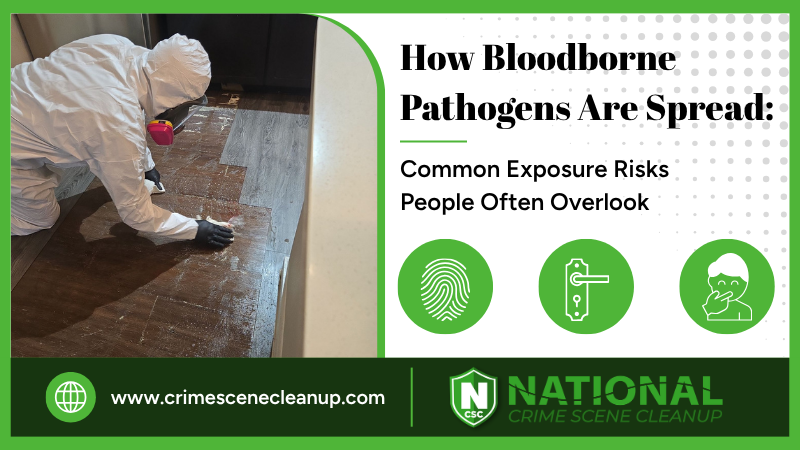
Bloodborne pathogens can remain a risk long after an incident occurs. Many people assume exposure only happens through direct contact with fresh blood. In reality, contamination can spread through overlooked surfaces, improperly handled materials, and small mistakes during cleanup.
Understanding how bloodborne pathogens are spread helps you recognize risks before they lead to exposure. Many of the situations that explain how bloodborne pathogens are spread involve everyday actions that seem harmless at first glance. A contaminated doorknob, a small cut on your hand, or contact with a blood-soaked material can create exposure pathways that people rarely consider.
If you’re dealing with a blood contamination event and want to better understand the risks involved, our blood cleanup resource provides additional information about professional remediation and contamination control.
What Are Bloodborne Pathogens?
Bloodborne pathogens are microorganisms found in human blood and certain bodily fluids that can cause disease in humans.
Some of the most recognized bloodborne pathogens include:
- Hepatitis B (HBV)
- Hepatitis C (HCV)
- Human Immunodeficiency Virus (HIV)
These pathogens can enter the body through broken skin, puncture wounds, the eyes, nose, mouth, or other mucous membranes.
The risk does not depend on how much blood is present. Even small amounts of contaminated material can create an exposure hazard under the right conditions.
How Bloodborne Pathogens Are Spread
Bloodborne pathogens spread when infected blood or certain bodily fluids enter another person’s bloodstream or mucous membranes.
The most common transmission pathways include:
- Needlestick and sharps injuries
- Contact with broken skin
- Contact with the eyes, nose, or mouth
Many people focus only on direct blood-to-blood contact. However, exposure often occurs through indirect situations that are easier to overlook.
Direct Exposure
Direct exposure happens when contaminated blood enters the body immediately through:
- Open wounds
- Cuts
- Needle punctures
- Mucous membranes
Healthcare workers often face this risk through accidental needlestick injuries.
Indirect Exposure
Indirect exposure occurs when someone comes into contact with contaminated materials and unknowingly transfers pathogens to an entry point.
Examples include:
- Touching contaminated surfaces
- Handling blood-soaked materials
- Cleaning without proper PPE
- Touching your face after contacting contaminated items
Indirect exposure is one of the most overlooked examples of how bloodborne pathogens are spread because contamination can move from one surface to another without being immediately visible.
Common Exposure Risks People Often Overlook
Many exposures happen because contamination extends beyond the obvious stain or spill.
Dried Blood Can Still Present Risks
One of the most common misconceptions is that dried blood no longer poses a hazard.
While pathogens do not all survive for the same length of time, dried blood should always be treated as potentially infectious.
Blood can seep into:
- Flooring
- Carpeting
- Furniture
- Baseboards
- Porous building materials
Surface cleaning alone may leave contamination behind.
Frequently Touched Surfaces Reveal How Bloodborne Pathogens Are Spread
After a traumatic incident, contamination may spread to areas that do not appear affected.
Examples include:
| Common Surface | Potential Risk |
| Door handles | Cross-contamination from hands |
| Light switches | Contact after touching blood |
| Countertops | Transfer of contaminated materials |
| Tools and equipment | Repeated handling by multiple people |
People often focus on visible blood while overlooking the surfaces touched during the event. These secondary contact points often reveal how bloodborne pathogens are spread throughout an environment after the initial incident.
Improper Removal of Contaminated Materials
Removing contaminated items without proper procedures increases exposure risk.
Contamination often remains trapped in mattresses, upholstered furniture, carpeting, clothing, and other absorbent materials. These surfaces can hold biological matter below the visible surface, making complete decontamination difficult without specialized cleaning methods.
Moving these materials can spread contaminants to surrounding surfaces and increase the affected area.
Small Cuts and Skin Damage
Many people do not realize they have an entry point for pathogens.
Many people focus on major injuries and overlook minor skin damage. Paper cuts, scratches, cracked skin, hangnails, and healing wounds can all provide an entry point for contaminated fluids. Even small openings in the skin should be treated seriously when blood contamination is present.
Contact With Eyes, Nose, and Mouth
Your mucous membranes provide a direct pathway for exposure.
Common mistakes include:
- Rubbing your eyes during cleanup
- Adjusting a face mask with contaminated gloves
- Eating or drinking in contaminated areas
- Touching your face after handling affected materials
These actions can occur without conscious thought, which makes them especially dangerous.
How Bloodborne Pathogens Are Spread During Cleanup Activities
Cleanup activities often create more opportunities for exposure than the original incident. The people that clean up crime scenes understand how contamination moves through an environment and follow strict procedures designed to reduce exposure risks during remediation.
When contaminated materials are moved, scrubbed, cut, or removed, pathogens can spread to new surfaces.
The risk increases when:
- PPE is missing or used incorrectly
- Waste is handled improperly
- Contaminated materials are transported through occupied spaces
- Cleaning products are used incorrectly
- Cross-contamination occurs between rooms
This is why professional remediation follows strict containment and decontamination procedures.
Exposure Scenarios People Rarely Consider
The way bloodborne pathogens are spread often involves situations people do not immediately recognize.
Vehicle Contamination
Blood inside vehicles can contaminate:
- Seats
- Seat belts
- Floorboards
- Door panels
- Trunk compartments
Even after visible staining is removed, contamination may remain inside seams, padding, and hidden areas.
Workplace Accidents
Industrial facilities, construction sites, and warehouses can experience blood exposure incidents involving:
- Machinery
- Shared tools
- Equipment controls
- Workstations
Without proper decontamination, multiple employees may encounter contaminated surfaces.
Residential Environments
Homes often contain porous materials that absorb fluids.
Blood can migrate beneath:
- Flooring
- Carpeting
- Subfloor materials
- Furniture cushions
What appears to be a small affected area may extend much farther than expected.
These examples show how bloodborne pathogens are spread in real-world environments where contamination extends beyond the obvious affected area.
How to Reduce Exposure Risks
If you encounter blood or potentially infectious materials:
- Avoid direct contact.
- Keep others away from the area.
- Do not touch contaminated surfaces unnecessarily.
- Wear appropriate PPE if immediate contact is unavoidable.
- Wash exposed skin thoroughly.
- Seek medical guidance if exposure occurs.
- Contact trained cleanup professionals for remediation.
Quick bloodborne pathogens cleanup reduces risk and prevents contamination from spreading further.
FAQ
What are the three ways bloodborne pathogens are transmitted?
The three primary ways bloodborne pathogens are transmitted are through needlestick or sharps injuries, contact with broken skin, and contact with mucous membranes such as the eyes, nose, or mouth. Each pathway allows contaminated blood or bodily fluids to enter the body.
How are bloodborne pathogens spread in OSHA?
Under OSHA’s Bloodborne Pathogens Standard, bloodborne pathogens are spread through occupational exposure to blood or other potentially infectious materials. Exposure occurs when contaminated materials contact broken skin, puncture wounds, or mucous membranes during work activities.
What is an example of a bloodborne transmission?
A common example of bloodborne transmission is a needlestick injury involving a contaminated needle. The puncture creates a direct pathway for pathogens in infected blood to enter the bloodstream.
What is the most common route of bloodborne pathogen infection?
Needlestick and sharps injuries are among the most commonly recognized routes of occupational bloodborne pathogen infection. However, exposure can also occur when contaminated blood contacts broken skin or mucous membranes.
The Risks Often Extend Beyond What You Can See
Understanding how bloodborne pathogens are spread means looking beyond visible blood and obvious contamination. Exposure can occur through overlooked surfaces, porous materials, indirect contact, and small openings in the skin that many people do not notice.
The challenge is that contamination often spreads farther than expected. What appears to be a small affected area can involve hidden hazards beneath flooring, inside furniture, or on frequently touched surfaces.
Knowing how bloodborne pathogens are spread allows you to identify risks earlier and make informed decisions about safety. When blood contamination is present, proper assessment and decontamination help reduce exposure risks and prevent contamination from spreading further.
If you need assistance after a blood-related incident, contact NCSC. Our team can help you restore the affected environment safely and thoroughly while addressing contamination that may not be immediately visible.
