People That Clean Up Crime Scenes: How Specialized Cleanup Teams Restore Homes After Traumatic Events
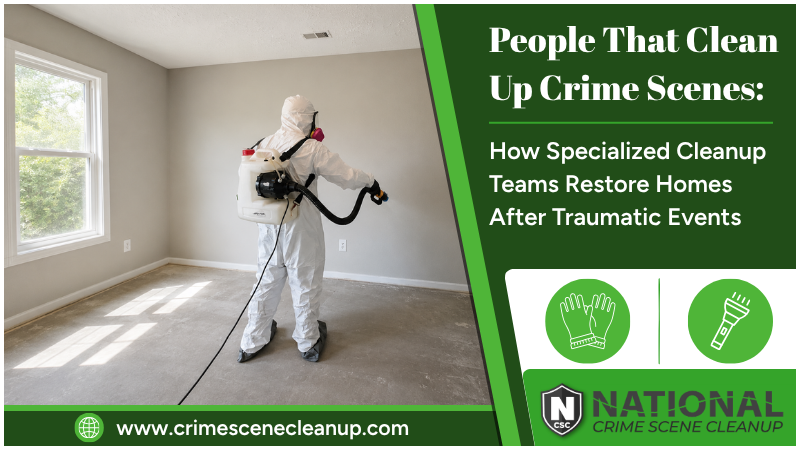
When a traumatic event happens inside a home, most people focus on the emergency response. Police arrive. Investigators process the scene. Medical personnel leave. Then the property sits in silence.
What many people do not realize is that the home is often left with dangerous biological contamination that still needs to be removed safely.
The people that clean up crime scenes are trained trauma cleanup specialists who handle biohazard remediation after violent crimes, unattended deaths, suicides, accidents, and other traumatic events. At National Crime Scene Cleanup, we restore affected spaces using professional decontamination procedures designed to protect your health and safety.
What Crime Scene Cleanup Actually Involves
Crime scene cleanup involves much more than cleaning visible blood or removing damaged furniture. Biological contamination spreads quickly into flooring, walls, furniture, subfloors, and ventilation systems.
Without proper remediation, dangerous pathogens and odors remain inside the property.
Our cleanup process often includes:
- Biohazard removal
- Blood cleanup
- Surface disinfection
- Odor treatment
- Removal of contaminated materials
- Air purification
- Safe biohazard disposal
- Structural cleaning and restoration
Every scene presents different conditions. Some require limited remediation. Others involve severe contamination that reaches beneath flooring or inside structural materials.
How People That Clean Up Crime Scenes Handle Biohazards Safely
The people that clean up crime scenes are commonly called:
- Trauma cleanup technicians
- Biohazard remediation specialists
- Crime scene cleaners
- Trauma scene cleanup professionals
Crime scene cleanup technicians receive specialized training for handling hazardous biological material safely. Standard cleaning methods are not designed for trauma scenes involving bloodborne pathogens, decomposition fluids, or infectious contamination.
Our technicians use protective equipment, containment systems, and professional disinfectants that meet OSHA and biohazard remediation standards.
Why Specialized Cleanup Teams Are Necessary
After a traumatic event, contamination often exists beyond what you can immediately see.
Blood travels into porous materials. Bodily fluids settle beneath flooring. Strong odors penetrate insulation, furniture, and HVAC systems. Improper cleaning spreads contamination instead of removing it.
This creates serious health and safety risks for anyone entering the property.
Many people searching for people that clean up crime scenes are surprised to learn how quickly biological contamination spreads through a structure after a traumatic event.
Common Hazards Found at Trauma Scenes
| Hazard | Why It Matters | Commonly Affected Areas |
| Bloodborne pathogens | Risk of disease exposure | Floors, furniture, walls |
| Bodily fluids | Cross contamination | Bathrooms, bedrooms |
| Decomposition fluids | Structural damage and odor | Subfloors, concrete |
| Drug residue | Toxic exposure | Counters, vents |
| Sharps and debris | Injury risk | Hidden or cluttered areas |
Professional remediation helps return the property to a safe condition while preventing additional contamination issues later.
What Happens After Police Release a Crime Scene
Once investigators finish processing the scene, cleanup responsibility usually shifts to the property owner, family member, landlord, or estate representative.
At that point, the restoration process begins.
Initial Assessment
Our technicians inspect the property to determine:
- The extent of contamination
- Structural damage
- Materials requiring removal
- Odor penetration
- Safety concerns throughout the property
Some scenes involve contamination confined to one area. Others affect multiple rooms and hidden structural spaces.
Removal of Contaminated Materials
Porous materials often absorb biological contamination too deeply to disinfect fully.
This may require removal of:
- Carpet
- Drywall
- Mattresses
- Upholstered furniture
- Flooring
- Personal belongings
Containment barriers help prevent contamination from spreading during removal.
Deep Cleaning and Disinfection
After damaged materials are removed, technicians disinfect all affected surfaces using professional biohazard remediation procedures.
This stage may involve:
- Surface decontamination
- ATP or moisture testing
- Air scrubbing
- Odor neutralization
- Fogging or ozone treatment when necessary
Strong odors usually indicate contamination remains somewhere inside the structure. Proper remediation addresses the source instead of masking the smell temporarily.
Professional people that clean up crime scenes also inspect hidden structural areas where contamination may have spread beneath flooring or behind walls.
Restoration and Recovery
The final goal is restoring the property to a safe and livable condition.
Some scenes require light repairs. Others involve reconstruction work because biological contamination has damaged flooring, walls, or structural materials.
During this stage, many families also begin dealing with practical concerns tied to the property itself, including insurance questions and cleanup responsibility. Situations involving abandoned properties or unclear ownership often create confusion about financial responsibility after a traumatic event. Our guide on who pays for crime scene cleanup when no one is legally responsible breaks down how these situations are typically handled.
Crime Scene Cleanup vs Standard Cleaning
Trauma cleanup requires a completely different process than traditional residential or commercial cleaning.
| Standard Cleaning | Trauma Cleanup |
| Removes visible dirt | Removes biological contamination |
| Uses household products | Uses professional disinfectants |
| Focuses on appearance | Focuses on safety and sanitation |
| Limited protective equipment | Full PPE and containment |
| Regular trash disposal | Regulated biohazard disposal |
The difference is important because trauma scenes involve potential exposure to infectious materials and hazardous biological waste.
How People That Clean Up Crime Scenes Support Families After Trauma
Crime scene cleanup affects more than the physical property.
Families often contact us during overwhelming situations involving grief, shock, confusion, or emotional exhaustion. Some have spent hours speaking with investigators, hospitals, landlords, or insurance companies before thinking about the condition of the property itself.
That changes how cleanup work needs to be handled.
Professional trauma cleanup requires:
- Discretion
- Patience
- Clear communication
- Respect for personal belongings
- Careful scene handling
- Fast response times
You are entering deeply personal spaces during some of the hardest moments people experience. Professionalism matters just as much as technical training.
Where Crime Scene Cleanup Happens
Trauma scenes occur in many different environments, not just highly visible criminal investigations.
Our teams regularly respond to:
Homes and Apartments
Residential properties account for many trauma cleanup calls.
Affected areas often include:
- Bedrooms
- Bathrooms
- Garages
- Basements
- Hallways
Vehicles
Vehicle cleanup presents unique challenges because enclosed interiors absorb odors and contamination quickly.
Cleanup may involve:
- Blood removal
- Seat removal
- Interior decontamination
- Odor treatment
- Disposal of contaminated materials
Hotels and Rental Properties
Property managers often require immediate remediation to protect future occupants and prevent contamination from spreading.
Commercial Buildings
Workplace accidents and traumatic incidents sometimes require emergency biohazard remediation and disinfection.
Odor Removal After Traumatic Events
Odor becomes one of the biggest challenges after severe trauma scenes or unattended deaths.
Biological odors settle into:
- Carpet padding
- Subfloors
- Drywall
- Furniture
- HVAC systems
- Insulation
Surface cleaning alone does not solve the problem.
Professional odor removal may require:
- Removal of contaminated materials
- Air scrubbing equipment
- Hydroxyl treatment
- Thermal fogging
- Ozone treatment
- Ventilation cleaning
Persistent odor usually means hidden contamination remains somewhere inside the property.
Experienced people that clean up crime scenes understand that odor removal depends on finding and removing the actual source of contamination.
How Long People That Clean Up Crime Scenes Take
Crime scene cleanup timelines depend on the severity of contamination and the size of the affected area.
| Situation | Average Timeline |
| Minor blood cleanup | Several hours |
| Single-room trauma scene | 1 to 2 days |
| Advanced decomposition cleanup | Several days |
| Large structural contamination | One week or longer |
Some projects require demolition and reconstruction before the property is fully restored.
Why Professional Trauma Cleanup Matters
Trauma scenes involve emotional stress, biological hazards, and contamination most people are not prepared to handle safely on their own.
Professional cleanup teams help protect:
- Families
- Property owners
- Tenants
- Employees
- Future occupants
- First responders entering the property later
Proper remediation also helps prevent long-term odor issues, structural damage, and contamination exposure after the initial event.
The Last Step in Restoring a Safe Home
The people that clean up crime scenes are trained biohazard remediation specialists who restore properties after traumatic events involving blood, bodily fluids, decomposition, and other hazardous contamination.
This work involves far more than surface cleaning. Trauma cleanup requires professional decontamination procedures, protective equipment, safe disposal methods, odor removal, and structural remediation to restore the property safely.
At National Crime Scene Cleanup, we provide 24/7 trauma cleanup services with discretion, urgency, and respect for the people affected. If you need immediate assistance after a traumatic event, contact our team.
