The Industrial Accident Cleanup Process: A Workplace Checklist
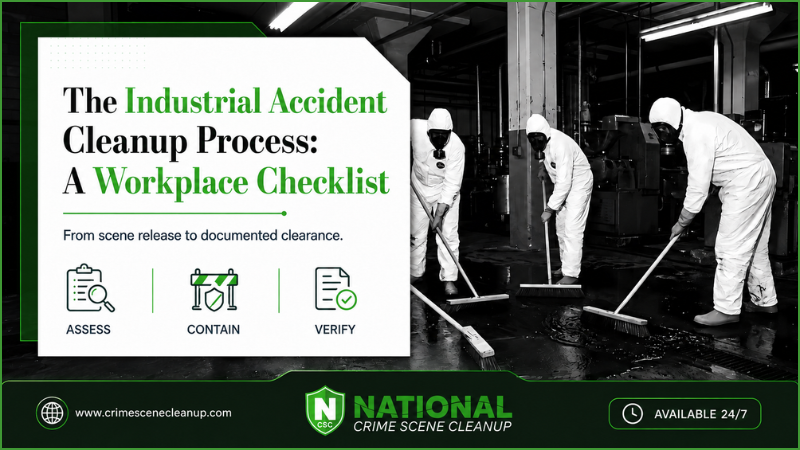
An industrial accident involving blood or bodily fluids requires more than cleaning the visible area. After emergency responders address immediate dangers, you must restrict access, complete required reporting and determine where contamination may have spread.
This workplace checklist explains each stage of the industrial accident cleanup process, from the initial facility handoff through containment, decontamination, waste tracking and documented clearance. NCSC’s industrial accident cleaning services can address biological contamination within the affected work area.
What to Do After an Industrial Accident
Protect people before addressing the cleanup. Call emergency services, stop nearby work when safe and keep employees away from blood, damaged machinery and unidentified materials.
Take these immediate actions:
- Call 911 when someone is injured or the scene presents an immediate danger.
- Stop nearby equipment only when authorized personnel can do so safely.
- Restrict employees and visitors from the affected area.
- Do not move contaminated objects unless responders direct you to do so.
- Notify the managers responsible for safety and operations.
- Record basic incident details without entering the contaminated area.
- Wait for responders or investigators to release the scene.
Do not ask an untrained employee to wipe up blood so work can resume. Shoes, carts, tools and cleaning supplies can carry biological material beyond the original accident area.
Complete Required Workplace Reporting
Cleanup does not replace your reporting duties. Assign someone to confirm which federal, state, local and internal notices apply.
OSHA requires covered employers to report a work-related fatality within eight hours. An inpatient hospitalization, amputation or loss of an eye generally must be reported within 24 hours. OSHA’s January 2025 Recordkeeping Policies and Procedures Manual explains these requirements and their exceptions.
Industrial Accident Cleanup Process Checklist
Professional cleanup begins after emergency responders or investigators release the affected area. The following eight stages take the facility from the initial handoff through documented clearance.
1. Assign One Facility Contact
Choose one person to communicate with responders, cleanup technicians, management and the insurance carrier. A designated contact prevents conflicting instructions and keeps essential information together.
Your facility contact should provide:
- The accident’s date, time and location
- The known type of contamination
- Confirmation that authorities released the area
- Contact information for the responding agency
- Building access instructions
- Equipment manuals and maintenance contacts
- Known chemicals or production materials nearby
- Current operational restrictions
- Insurance information, when available
Only share medical details needed to identify the cleanup hazard. Private information unrelated to remediation should remain limited to authorized personnel.
Understanding the common workplace accidents and injuries can help the facility contact explain whether machinery, a fall, a sharp object or another condition may have spread contamination.
2. Assess the Site and Contamination
Our technicians identify affected surfaces and determine how contamination traveled. They assess visible blood as well as material spread by splashing, foot traffic, runoff, equipment or contact with tools.
The assessment may cover:
- Machine guards, control housings and conveyor components
- Floor joints, wall seams and drains
- Pits, trenches and grated platforms
- Forklifts, carts and work vehicles
- Porous insulation or unfinished wood
- Tools, uniforms and nearby inventory
- Broken glass, sharp metal and unstable materials
- Stored energy, moving components and limited ventilation
Chemical releases, fires, structural damage and energized machinery may require hazmat responders, engineers or equipment technicians before biological remediation begins. NCSC’s scope focuses on blood, bodily fluids, tissue and materials contaminated during an industrial injury or fatality.
3. Isolate the Affected Work Zone
Containment separates contaminated space from areas that remain safe. It also establishes a controlled route for technicians, equipment and packaged waste.
A containment plan may include:
- Physical barriers and warning signs
- Controlled entry and exit points
- Separate clean and contaminated zones
- Protective coverings along removal routes
- A designated area for removing PPE
- Sealed waste containers
- Air controls when required by the hazard
The full facility may not need to close. Unaffected departments can sometimes remain open when employees can avoid the controlled zone and normal operations will not interfere with remediation.
4. Select PPE and Cleanup Equipment
The site assessment determines what technicians need to work safely. Equipment selection must match the contaminant, potential exposure routes and tasks being performed.
| Equipment category | Examples | Main purpose |
|---|---|---|
| Personal protection | Gloves, protective clothing, eye protection and respirators when required | Limits contact with identified hazards |
| Containment | Barriers, sheeting, signs and sealed containers | Controls access and material transfer |
| Removal | Tongs, scrapers and absorbent materials | Collects contaminated matter |
| Decontamination | EPA-registered products, application tools and extraction equipment | Treats affected surfaces |
| Verification | Inspection lighting and testing tools when appropriate | Checks completed work |
| Waste handling | Marked bags, sharps containers and rigid containers | Separates and contains waste |
The four levels of PPE describe different combinations of skin and respiratory protection, but technicians select equipment according to the hazards identified onsite. They must also remove PPE without transferring contaminants to their skin or clean areas.
5. Remove Biological Material and Decontaminate the Area
Our technicians remove blood and other biological matter before applying the appropriate decontamination method. Treating only a visible stain can leave contamination beneath or around the surface.
Human blood may carry HBV, HCV, HIV and other pathogens. Understanding common bloodborne diseases in the workplace helps explain why exposed tools, equipment and building materials require controlled handling. NIOSH’s May 2024 information on bloodborne infectious disease risk factors further explains how occupational contact occurs and how exposure controls protect workers.
After removing biological matter, technicians clean affected surfaces and apply a suitable product for its required contact time. Materials that absorbed fluid beyond a reachable surface may need to be removed, including:
- Carpet and carpet padding
- Ceiling tiles
- Unfinished wood
- Insulation
- Some upholstery
- Damaged wall or floor materials
6. Evaluate Contaminated Machinery
Blood and bodily fluids can enter machine guards, tracks, joints, fastener holes and wiring channels. Authorized maintenance personnel or the manufacturer may need to provide access before technicians can address those components.
Before machinery is disassembled or treated, confirm:
- The equipment has been locked out and made safe.
- Potentially contaminated components can be reached.
- Cleaning will not damage electrical or mechanical parts.
- Disassembly will not spread contamination.
- Affected components can be treated or replaced.
Cleanup technicians should not bypass your energy-control procedures or operate unfamiliar machinery. Your authorized maintenance contact must control hazardous energy and confirm when technicians can safely access the equipment.
7. Package and Track Contaminated Waste
Waste classification determines how contaminated material must be packaged, transported and documented. Blood-soaked absorbents, disposable PPE, sharps and removed building materials may require different containers or handling procedures.
When a project produces federally regulated hazardous waste, EPA’s manifest system tracks applicable shipments from the generator to the receiving facility. EPA updated that system through its July 2024 Third e-Manifest Final Rule.
Retain the transport and disposal records provided for the project. Do not place saturated cleanup materials in ordinary workplace trash unless the rules governing that waste clearly permit it.
8. Verify Cleanup and Approve Reopening
The affected work zone should reopen only after technicians complete the approved scope and inspect each identified contamination point. Final verification establishes whether treated surfaces, machinery and removal areas are ready for release.
The final review may include:
- Inspecting the original contamination points
- Checking machinery seams and floor joints
- Confirming affected materials were treated or removed
- Conducting surface testing when appropriate
- Confirming packaged waste left the work zone
- Removing containment after clearance
- Recording the cleanup completion date
An unaffected section may reopen earlier if it remains separate from the controlled area and employees do not need to cross the removal route. Contaminated tools, uncleared machinery or continuing access restrictions should keep the affected section closed.
NCSC verifies biological remediation within its approved scope. Your facility must obtain any separate structural, electrical, mechanical, environmental or regulatory clearance required after the accident.
Keep the Closeout Records
Closeout documentation connects the initial assessment to the completed work. Keep the following records with the incident file while protecting sensitive employee information:
- Approved scope of work
- Authorized scene photographs
- Areas and materials treated
- Items removed from the facility
- Waste transport or disposal records
- Testing results, when used
- Change orders and invoices
- Cleanup completion date
- Facility representative’s reopening approval
How to Hire an Industrial Accident Cleanup Contractor
Choose a contractor that can explain how it will address the biological hazards within your facility. Fast arrival matters, but it does not replace qualified technicians, a defined scope and documented waste handling.
Ask these questions before approving the work:
- Do you handle blood and biological contamination from industrial injuries?
- How will you inspect machinery and other hidden areas?
- What training applies to the assigned technicians?
- How will you package and document contaminated waste?
- What determines whether an item is treated or removed?
- What closeout records will our facility receive?
Avoid contractors that guarantee immediate reopening before inspecting the site. The schedule depends on where contamination traveled and which materials or equipment it affected.
Preventing Another Workplace Accident
A post-cleanup review should address the cause of the accident and any weakness that allowed contamination to spread.
Review whether your facility needs to update:
- Machine guarding or maintenance
- Lockout/tagout practices
- Walking and working surfaces
- Employee training
- Biohazard response procedures
- Incident communication
- Access to appropriate PPE
Practical controls for preventing workplace accidents can help you address risks specific to warehouses, laboratories, offices, retail properties and construction sites.
Industrial Accident Cleanup Process FAQs
What are the typical stages of industrial site decontamination?
The process generally includes site assessment, containment, equipment selection, biological material removal, decontamination, waste handling and final verification. The exact scope depends on the hazards and materials identified onsite.
What should you do first after an industrial accident?
Call emergency services, protect the injured person, stop nearby work when safe and restrict access. Do not clean or move contaminated materials until responders or investigators release the scene.
What equipment is recommended for industrial accident cleanup?
Technicians may use PPE, containment barriers, removal tools, EPA-registered products, sharps containers and marked waste containers. The site assessment determines the appropriate equipment.
Can employees clean up blood in the workplace?
Only employees who are assigned, trained and protected under the employer’s exposure-control procedures should handle occupational blood cleanup. Large spills, fatalities, contaminated machinery and uncertain exposures may require professional remediation.
How long does industrial accident cleanup take?
The schedule depends on the size of the affected area, extent of contamination, materials involved and whether machinery must be accessed. The affected zone should remain closed until cleanup and required verification are complete.
How do I find an industrial accident cleanup contractor near me?
Choose a contractor that handles workplace biohazards in your location and can verify its training, insurance, waste procedures and documentation process. NCSC provides 24/7 industrial accident cleanup across the contiguous United States.
Key Takeaways
- Protect injured people, restrict access and wait for responders to release the scene.
- Assign one facility contact to coordinate information, access and operational restrictions.
- Assess surfaces, machinery and hidden areas before removing biological material.
- Match containment, PPE and cleanup equipment to the hazards identified onsite.
- Package contaminated waste correctly and retain transport and disposal records.
- Reopen each affected work zone only after cleanup, verification and required clearance.
The industrial accident cleanup process must account for visible contamination, hidden machinery components and porous building materials. National Crime Scene Cleanup provides discreet workplace biohazard response throughout the contiguous United States. If an accident leaves blood, bodily fluids or biological contamination at your facility, contact NCSC for 24/7 assistance.
