The 4 Levels of PPE and How They Keep Crime Scene Cleaners Safe
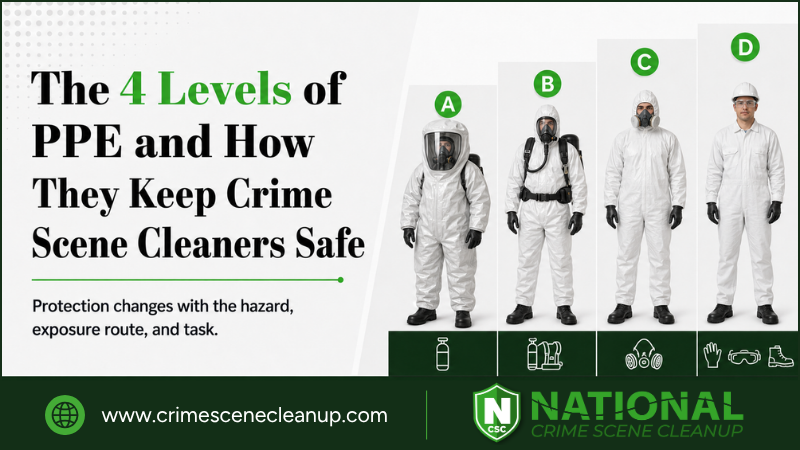
Personal protective equipment, or PPE, only works when it matches the hazard. Choosing the most restrictive suit without considering the contaminant, exposure route, and task can reduce movement and visibility while increasing heat stress.
The four levels of PPE classify different combinations of respiratory and skin protection, but they do not prescribe one fixed outfit for every hazardous scene. During crime scene cleanup, technicians assess biological materials, chemicals, airborne contaminants, and sharps before selecting an ensemble that fits the work.
What Are the 4 Levels of PPE?
The four levels of PPE are Level A, Level B, Level C, and Level D. Level A provides the greatest combined respiratory and skin protection, while Level D provides basic work protection for environments without known atmospheric hazards.
A self-contained breathing apparatus, or SCBA, supplies breathable air from a tank carried by the wearer. A supplied-air respirator delivers air through a connected hose, while an escape SCBA provides an emergency air supply if that system fails.
| PPE level | Respiratory protection | Skin protection | Generally used when |
|---|---|---|---|
| Level A | SCBA or supplied air with escape SCBA | Maximum | Maximum respiratory and skin protection are both required |
| Level B | SCBA or supplied air with escape SCBA | Lower than Level A | Maximum respiratory protection is needed without a vapor-tight suit |
| Level C | Air-purifying respirator | Limited chemical protection | Contaminants and concentrations are known, and all respirator-use criteria are met |
| Level D | None | Basic work protection | No known atmospheric or serious contact hazard exists |
The EPA’s current description of personal protective equipment confirms that equipment combinations outside these categories may be more appropriate for specific site conditions. The levels of PPE provide a framework, not a replacement for a hazard assessment.
What Is Level A PPE?
Level A PPE provides the highest available protection for the respiratory system, skin, eyes, and mucous membranes. It is selected when workers need maximum protection from hazards that can cause serious harm through inhalation and skin contact.
A Level A ensemble generally includes:
- Positive-pressure, full-face SCBA
- A totally encapsulating chemical and vapor-protective suit
- Chemical-resistant inner and outer gloves
- Chemical-resistant boots
- A hard hat when required
- Two-way communication equipment when required
Level A may be appropriate when a substance creates a severe skin exposure risk or when work occurs in a confined, poorly ventilated area and conditions requiring less protection have not been confirmed.
This protection has operational limits. The suit restricts movement and vision, while the SCBA provides a limited air supply. Heat and physical strain can also reduce safe working time.
What Is Level B PPE?
Level B PPE provides maximum respiratory protection with less skin protection than Level A. It applies when inhalation presents the primary danger but the substance does not require a totally encapsulating, vapor-protective suit.
A Level B ensemble generally includes:
- Positive-pressure, full-face SCBA
- Hooded chemical-resistant clothing
- Chemical-resistant inner and outer gloves
- Chemical-resistant boots
- A face shield or hard hat when required
Level B clothing protects against liquid splashes but provides less vapor protection than Level A. OSHA also identifies an atmosphere containing less than 19.5 percent oxygen as oxygen-deficient, which is one condition that requires the supplied breathing air associated with Level B protection.
Workers using Level B equipment need respiratory training, medical evaluation, and fit testing. The ensemble can also cause heat stress and restrict movement, even though it is less confining than Level A.
What Is Level C PPE?
Level C PPE uses an air-purifying respirator instead of an independent breathing-air supply. It is appropriate only when airborne contaminants have been identified, their concentrations have been measured, sufficient oxygen is present, and the respirator can remove those contaminants.
A Level C ensemble may include:
- A full-face or half-mask air-purifying respirator
- Hooded chemical-resistant clothing or disposable coveralls
- Chemical-resistant inner and outer gloves
- Chemical-resistant boots or disposable boot covers
- Separate eye and face protection when needed
An air-purifying respirator draws surrounding air through a filter or cartridge. Filters commonly capture particles, while cartridges contain material designed to remove specific gases or vapors.
These respirators do not supply oxygen. Level C is not suitable for an oxygen-deficient, immediately dangerous, or poorly characterized atmosphere. The selected filter or cartridge must also match the identified contaminant.
What Is Level D PPE?
Level D PPE provides basic work protection without respiratory protection. It is appropriate only when the atmosphere contains no known hazard and the work will not cause dangerous splashes, immersion, inhalation, or unexpected chemical contact.
A Level D ensemble may include:
- Work clothing or coveralls
- Task-appropriate gloves
- Safety glasses or chemical splash goggles
- Safety shoes or chemical-resistant boots
- A hard hat
- A face shield when required
Level D should not be selected simply because contamination looks minor. Unknown conditions require further assessment, and workers may still need specific protection for their hands, eyes, body, or feet.
How Are PPE Levels Selected?
PPE selection begins with the hazards and the work being performed. OSHA requires employers to assess workplace risks and choose properly fitting equipment that protects workers from the exposures identified.
A practical selection process includes:
- Identify the biological, chemical, and physical hazards.
- Determine whether exposure could occur through inhalation, skin contact, splashes, punctures, or hand-to-mouth contact.
- Evaluate contaminant concentrations and available oxygen when respiratory hazards may exist.
- Match protective materials and respirators to the substances present.
- Consider the work area, task duration, temperature, visibility, and required movement.
- Inspect the equipment for damage and confirm that each item fits correctly.
- Reassess the PPE when the work or site conditions change.
Removing contaminated carpet creates different splash and puncture risks than treating an intact hard surface. Unknown chemical residue also requires a different assessment than a known biological contaminant.
The OSHA Personal Protective Equipment guide published in 2023 confirms that hazard assessment, equipment selection, training, maintenance, and replacement of damaged PPE all belong in an effective protection program.
How Do the Levels of PPE Relate to Crime Scene Cleanup?
The levels of PPE provide a useful reference, but crime scene cleanup equipment does not always fit into one A, B, C, or D category. Technicians select task-specific protection based on what is present and how exposure could occur.
The hazards involved with crime scene cleanup may include:
- Blood and other potentially infectious materials
- Decomposition fluids and biological residue
- Splash exposure to the eyes, nose, or mouth
- Sharps, including needles and broken glass
- Dust produced during material removal
- Tear gas, drug residue, or unknown chemicals
- Cleaning and disinfecting products
- Slippery or structurally damaged surfaces
Conditions can change once remediation begins. Taking out flooring, opening a wall cavity, or moving furniture may reveal hazards that were not visible during the first inspection.
A trained crime scene cleanup technician assesses the affected materials, extent of contamination, required containment, and planned work before selecting protective equipment.
Does Crime Scene Cleanup Always Require Level A PPE?
No. Crime scene cleanup does not automatically require Level A PPE, even when serious biological contamination is present.
Blood and bodily fluids can create significant exposure risks without producing an oxygen-deficient atmosphere or a severe chemical vapor hazard. Those conditions differ from the hazards that justify a fully encapsulating suit and SCBA.
Unnecessary Level A equipment may restrict movement around furniture, damaged flooring, and confined rooms. It can also reduce visibility and dexterity while increasing heat and fatigue.
Crime scene technicians use protection suited to the identified hazards. The correct ensemble may combine individual pieces of biological, chemical, respiratory, and puncture protection without falling neatly into one formal PPE level.
What PPE May Crime Scene Cleanup Technicians Wear?
Crime scene cleanup technicians may use protective clothing, gloves, footwear, eye protection, and respiratory equipment selected for the expected exposure. The exact combination changes with the scene and the task.
Common equipment may include:
- Fluid-resistant or chemical-resistant disposable coveralls
- Disposable or chemical-resistant gloves
- Protective boots or disposable boot covers
- Safety goggles or a face shield
- A task-appropriate respirator
- Cut-resistant or puncture-resistant protection
- Head coverings when contamination could reach the hair
Each item must work with the rest of the ensemble. Torn clothing, gaps between gloves and sleeves, poorly fitting eyewear, or an incorrect respirator cartridge can weaken the protective system.
OSHA’s worker protections for occupational exposure to infectious diseases identify gloves, gowns, masks, goggles, and face shields as equipment used to reduce contact with infectious material.
Blood and certain bodily fluids can enter the body through punctures, broken skin, or mucous membranes. Understanding how bloodborne pathogens are spread explains why gloves alone cannot address every exposure route.
Why Donning and Doffing PPE Matter
Donning means putting PPE on correctly before entering a hazardous area. Doffing means removing it without transferring contaminants to your skin, clothing, equipment, or clean parts of the property.
PPE can transfer contamination when someone removes it incorrectly. The outer surfaces of gloves, coveralls, boot covers, and face protection may carry the same hazardous material they kept away from the body.
A controlled removal process accounts for:
- Moving from the work area into a designated transition space
- Avoiding bare-skin contact with contaminated outer surfaces
- Separating disposable PPE from reusable equipment
- Decontaminating reusable equipment according to procedure
- Checking clothing and skin for possible exposure
- Performing hand hygiene after removal
The correct sequence depends on the equipment and contaminants involved. Technicians follow their training, exposure-control plan, and site-specific procedures rather than applying one generic order to every scene.
Can PPE Make Crime Scene Cleanup Safe for an Untrained Person?
No. PPE creates a barrier against specific hazards, but it does not make crime scene cleanup safe for an untrained person.
Protective equipment cannot show you how far fluids have traveled, whether a respirator cartridge is appropriate, or which porous materials require removal. It also cannot prevent mistakes such as stepping on a hidden needle, mixing incompatible chemicals, or touching your face with contaminated gloves.
National Crime Scene Cleanup combines protective equipment with scene assessment, containment, remediation, and controlled waste handling. No suit, glove, or respirator replaces that complete process.
Key Points About PPE in Crime Scene Cleanup
The four levels of PPE provide a useful framework, but safe crime scene remediation depends on a site-specific hazard assessment. The equipment must protect against the contaminants present while fitting the technician and the work being performed.
- Levels A through D describe protective ensembles used mainly in hazardous waste operations and emergency response.
- Level A provides the greatest combined respiratory and skin protection, but it is not automatically appropriate for crime scene cleanup.
- Crime scene cleanup PPE may combine biological, chemical, respiratory, splash, and puncture protection without fitting one formal level.
- Respirators, filters, cartridges, gloves, and protective clothing must match the identified hazards and exposure routes.
- Proper donning, fit, inspection, and doffing affect how well the complete ensemble protects the technician.
- PPE cannot replace training, containment, decontamination, or controlled waste handling.
If blood, bodily fluids, decomposition, or another biohazard has affected your property, avoid entering or disturbing the area. Contact National Crime Scene Cleanup for help assessing the situation and arranging professional cleanup across the United States.
Frequently Asked Questions
How Many Levels of PPE Are There?
There are four recognized PPE levels within the OSHA and EPA hazardous-response framework. They are identified as Levels A, B, C, and D.
What Are the 4 Levels of PPE?
The four levels are Level A, Level B, Level C, and Level D. Each represents a different combination of respiratory protection, protective clothing, and supporting equipment for specific hazards.
What Level of PPE Provides the Most Protection?
Level A provides the most comprehensive protection for breathing, skin, eyes, and exposed facial tissues. It combines supplied breathing air with a fully encapsulating chemical and vapor-resistant suit.
How Is the Appropriate PPE Level Determined?
The appropriate level is determined through a hazard assessment of the contaminants, exposure routes, airborne concentrations, oxygen supply, and planned task. PPE must also fit correctly and remain compatible with the other equipment worn.
Does Crime Scene Cleanup Always Use One of the Four PPE Levels?
No. Crime scene cleanup often requires a task-specific combination of protective clothing, gloves, footwear, eye protection, and respiratory equipment rather than one complete A–D ensemble.
