What Types of Hazards Are Involved With Crime Scene Cleanup? Hidden Risks Beyond What You Can See
Most people think crime scene contamination ends once visible blood or debris gets removed. That is rarely the case. The reality behind what types of hazards are involved with crime scene cleanup goes much deeper than surface-level damage. Bloodborne pathogens, airborne particles, chemical residue, and hidden biological contamination often remain inside the property long after law enforcement leaves.
Professional trauma cleanup services focus on locating and removing these hazards before they spread through flooring, walls, furniture, and ventilation systems.
What Types of Hazards Are Involved With Crime Scene Cleanup?
The answer depends on the type of scene, the length of exposure, and the condition of the property. Most crime scenes contain multiple forms of contamination at the same time.
Common hazards include:
- Bloodborne pathogens
- Bodily fluids
- Human decomposition fluids
- Airborne bacteria
- Drug residue
- Tear gas particles
- Broken glass and sharps
- Structural damage
- Persistent biological odors
Understanding what types of hazards are involved with crime scene cleanup helps property owners recognize why professional remediation matters.
Biological Hazards Create Serious Health Risks
Biological contamination remains one of the biggest dangers during crime scene remediation.
Blood and bodily fluids can carry harmful pathogens. These materials soak into porous surfaces quickly and continue spreading beneath flooring, drywall, and furniture.
| Biological Hazard | Common Source | Potential Risk |
| Blood | Violent crimes, suicides | Bloodborne pathogens |
| Bodily fluids | Trauma scenes | Bacterial exposure |
| Human tissue | Violent incidents | Infectious contamination |
| Decomposition fluids | Unattended deaths | Airborne bacteria |
Even dried biological material can remain hazardous under certain conditions.
This is one of the main reasons why what types of hazards are involved with crime scene cleanup cannot be answered with a simple visual inspection.
Hidden Contamination Spreads Beyond the Visible Area
Contamination rarely stays where the incident occurred.
Blood and fluids travel through:
- Subflooring
- Baseboards
- Insulation
- Floor vents
- Furniture padding
- Wall cavities
Air movement spreads microscopic particles throughout the structure. HVAC systems often carry contamination into rooms untouched by the original incident.
This becomes especially dangerous during unattended death cleanup situations where decomposition progresses for several days.
Chemical Hazards Often Remain After Police Leave
Many people asking what types of hazards are involved with crime scene cleanup focus only on biological risks. Chemical exposure creates additional concerns.
Crime scenes may contain:
- Tear gas residue
- Fingerprint powders
- Drug manufacturing chemicals
- Pepper spray particles
- Fire extinguisher residue
- Cleaning chemical mixtures
These substances irritate the eyes, lungs, and skin when cleanup is handled improperly.
Standard household cleaning products usually spread chemical residue instead of removing it. Some chemicals absorb into porous materials and continue affecting indoor air quality long after the initial incident.
Sharps and Physical Hazards Increase Injury Risks
Crime scene cleanup also involves immediate physical dangers.
Common physical hazards include:
- Broken glass
- Razor blades
- Hidden needles
- Slippery surfaces
- Damaged flooring
- Structural instability
Sharps exposure remains a major concern during remediation work. Needles and sharp objects often hide beneath carpeting, bedding, furniture cushions, and debris piles.
Professional cleanup crews inspect the entire scene carefully before remediation begins.
Why Odors Signal Deeper Problems
Strong odors usually point to contamination hidden beneath the surface.
Odor molecules attach to:
- Carpet fibers
- Upholstery
- Wood framing
- Drywall
- HVAC systems
Surface deodorizing does not solve the problem. Source removal must happen first.
This is another reason why understanding what types of hazards are involved with crime scene cleanup matters before anyone attempts DIY remediation.
Why DIY Crime Scene Cleanup Creates Additional Risks
Many property owners underestimate how quickly contamination spreads.
DIY cleanup often causes:
| DIY Cleanup Problem | Result |
| Surface-only cleaning | Hidden contamination remains |
| Improper disinfection | Pathogens survive |
| Cross-contamination | Contamination spreads |
| Unsafe disposal | Regulatory violations |
Families also face emotional trauma while trying to clean a scene connected to a loved one.
Questions about liability often come up during this process. Our guide on who’s responsible for forensic cleanup explains how responsibility is typically handled after authorities release the property.
What Equipment Is Used During Crime Scene Cleanup?
Professional remediation teams use specialized equipment to control exposure risks.
Common tools include:
- HEPA air filtration systems
- Biohazard PPE suits
- Respirators
- Commercial disinfectants
- Moisture detection equipment
- Biohazard waste containers
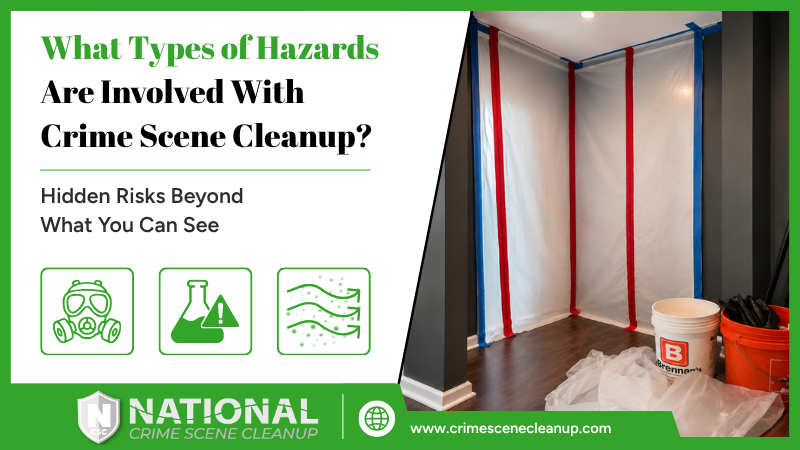
Containment barriers and negative air pressure systems help stop contamination from spreading into unaffected areas. CDC environmental control guidance identifies source containment and ventilation control as critical steps for limiting indoor airborne contamination.
Knowing what types of hazards are involved with crime scene cleanup helps explain why standard cleaning equipment cannot safely handle these environments.
How Long Do Crime Scene Hazards Remain Dangerous?
Contamination can remain dangerous for extended periods when cleanup is incomplete.
Several factors affect severity:
- Temperature
- Humidity
- Air circulation
- Type of biological material
- Length of exposure
- Type of affected surface
Decomposition-related contamination becomes more severe over time because bacteria and odor compounds continue spreading through the structure.
Final Thoughts on What Types of Hazards Are Involved With Crime Scene Cleanup
The reality behind what types of hazards are involved with crime scene cleanup extends far beyond what you can immediately see. Biological contamination, airborne particles, chemical residue, hidden fluids, and sharp objects all create serious health and safety risks inside the property.
Professional remediation protects your health, prevents contamination spread, and restores the space safely. National Crime Scene Cleanup responds to trauma scenes, biohazard incidents, unattended deaths, and forensic cleanup situations across the United States. If you need immediate assistance or have questions about scene safety, contact our team.
