Florida Biohazard Cleanup Laws: A Complete Guide
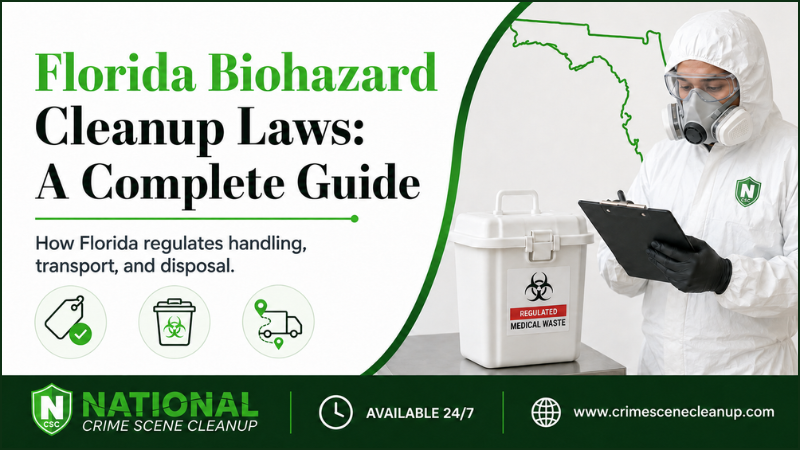
A crime, unattended death, accident, or other biohazard event can leave blood, bodily fluids, sharps, and contaminated materials inside a Florida property. Once the immediate emergency ends, you still need to determine what can be restored, what must be removed, and how regulated waste must be handled.
Florida biohazard cleanup laws apply different requirements based on the material, the people handling it, and what happens after it leaves the scene. Biohazardous material, biomedical waste, and hazardous waste are also separate categories, so one set of rules does not cover every situation.
Understanding these distinctions helps protect you from exposure and prevents contaminated materials from entering the wrong waste stream. Our trained Florida biohazard cleaners can assess the property and manage the cleanup requirements that apply.
What Are the Main Florida Biohazard Cleanup Laws?
Florida regulates biomedical waste through Section 381.0098 of the Florida Statutes and Chapter 64E-16 of the Florida Administrative Code.
These two authorities serve different purposes:
- Section 381.0098 establishes agency authority, legal definitions, permit requirements, tracking systems, inspections, and penalties.
- Chapter 64E-16 provides operating rules for segregation, packaging, labeling, storage, transportation, and treatment.
The requirements that apply to a scene depend on the material, how it was generated, and what happens to it after removal.
Which Florida Agency Regulates Each Part of the Process?
The Florida Department of Health and Florida Department of Environmental Protection divide responsibility for biomedical waste.
| Authority | Primary responsibility | Cleanup connection |
|---|---|---|
| Florida DOH | Packaging, transport, storage, and treatment | Regulates generators, transporters, and treatment facilities |
| County health departments | Permits, inspections, and local administration | Process applications and inspect regulated operations |
| Florida DEP | Incineration and final disposal | Oversees the environmental side of disposal |
| OSHA | Occupational exposure | Protects covered employees who handle blood and bodily fluids |
The Florida Department of Health biomedical waste program provides current permit applications, transporter information, county contacts, and operating-plan resources.
What Does Florida Consider Biomedical Waste?
Florida defines biomedical waste as solid or liquid waste that may threaten people through infection. The term applies to specific biological materials, not everything that appears contaminated or hazardous.
Regulated biomedical waste can include:
- Human blood and blood products
- Certain human body fluids
- Nonliquid human tissue and body parts
- Disposable sharps
- Materials saturated with liquid or dried blood
- Disposable devices contaminated with regulated body fluids
- Certain laboratory or veterinary waste containing human disease-causing agents
The material’s condition affects how it must be handled. A sealed tile surface that can be decontaminated in place presents a different waste issue from blood-saturated carpet and padding that must be removed.
Which Body Fluids Are Covered?
Florida includes blood, semen, vaginal secretions, cerebrospinal fluid, and certain fluids surrounding organs or joints within its regulated definition. An unidentified fluid must be treated as regulated when its identity cannot be determined.
Urine, vomit, feces, saliva, sweat, and tears are not considered biomedical waste under Chapter 64E-16 unless visibly contaminated with blood. These substances may still require professional remediation even when they fall outside that legal category.
Are Human Remains Considered Biomedical Waste?
Human remains handled through authorized funeral, investigative, or autopsy procedures are excluded from Florida’s biomedical-waste requirements. Separate laws govern their custody and disposition.
Contamination left at the property must be evaluated separately. After authorities release the scene, blood-saturated materials, contaminated disposable items, and sharps may require regulated handling.
Is Biohazardous Material the Same as Hazardous Waste?
No. Biohazardous material, biomedical waste, hazardous waste, and solid waste describe different concepts.
| Term | Basic meaning | Example |
|---|---|---|
| Biohazard | Broad safety description | Blood contamination |
| Biomedical waste | Regulated infectious-waste category | Blood-saturated absorbent material |
| Hazardous waste | Regulated chemical waste | Certain solvents or toxic chemicals |
| Solid waste | Discarded material outside another regulated category | Uncontaminated debris |
One scene can contain several waste categories. Blood contamination and chemical residue from tear gas, for example, require separate classification and disposal decisions.
The Florida DEP hazardous waste program regulates applicable chemical waste under Florida’s authorized hazardous-waste program.
Do Florida Biohazard Cleanup Laws Require Professional Cleanup?
Florida does not use one law that declares every biological spill inside a private residence illegal to clean. However, trauma, death, and crime scene contamination can create regulated waste and exposure risks that professionals are trained to control.
Professional cleanup is necessary when:
- Blood has saturated carpet, furniture, drywall, or subflooring.
- Contamination involves an unattended death or traumatic injury.
- Sharps or contaminated broken objects are present.
- Biological material has moved beyond the visible area.
- Employees, tenants, guests, or customers could be exposed.
- Contaminated building materials must leave the property.
- Biological and chemical hazards exist together.
Moving or scrubbing affected materials can transfer contamination to clean surfaces and expose you through broken skin or mucous membranes. These risks reflect how bloodborne pathogens are spread through direct contact, sharps injuries, and contaminated materials.
How Does Professional Scene Assessment Support Legal Compliance?
A professional assessment determines what can stay, what must be removed, and which waste requirements apply. Waste cannot be packaged or routed correctly until the contamination and affected materials have been evaluated.
National Crime Scene Cleanup identifies the material present, the surfaces it reached, the depth of absorption, and the potential for secondary spread. This biohazard remediation planning supports containment decisions before affected materials are moved.
What Happens to Contaminated Materials?
Salvageable surfaces remain at the property after professional cleaning and decontamination. Materials that cannot be restored must be removed and managed according to their classification.
A professional cleanup generally involves:
- Restricting access to the affected area.
- Establishing containment.
- Locating visible and hidden contamination.
- Separating sharps from other materials.
- Cleaning salvageable surfaces.
- Removing materials that cannot be restored.
- Packaging removed waste by classification.
- Arranging compliant transportation and treatment.
The specific process changes with the scene. An unattended death affecting a subfloor requires different controls from a blood spill contained to a nonporous surface.
What PPE Requirements Apply During Biohazard Cleanup?
PPE must match the exposure risk and work being performed. Disposable gloves alone do not protect against every route of contact.
Professional teams may need protective clothing, eye protection, face protection, respirators, or more advanced equipment. Understanding the four levels of PPE shows how protective equipment changes based on respiratory, skin, and environmental hazards.
Florida waste rules and OSHA requirements serve different purposes. Florida regulates applicable waste management, while OSHA requires covered employers to protect employees from occupational exposure.
What Are Florida’s Biomedical Waste Packaging Rules?
Biomedical waste must be separated and packaged where it is generated. Non-sharps waste generally goes into sealed, impermeable red bags that meet the standards in Chapter 64E-16.
Packages must display the international biological hazard symbol and approved wording, such as “Biomedical Waste,” “Biohazardous Waste,” or “Infectious Waste.” Sharps require rigid, leak-resistant, puncture-resistant containers rather than ordinary plastic bags.
How Long Can Biomedical Waste Be Stored in Florida?
Florida generally limits biomedical-waste storage to 30 days. At the generating facility, that period begins when the first non-sharps item enters a red bag or sharps container, or when a container holding only sharps is sealed.
Storage areas must restrict access, remain sanitary, and use surfaces that resist liquid absorption. The 30-day rule applies to packaged waste, not untreated contamination inside a property.
What Are the Legal Requirements for Transporting Biohazard Waste?
Florida regulates how biomedical waste moves from the generator to an authorized storage or treatment facility. The main transportation requirements include:
- Waste must be properly separated, packaged, and labeled before a registered transporter accepts it.
- The transporter must provide the generator with a pickup receipt.
- Biomedical waste may be delivered only to a facility authorized to receive it.
- Transport vehicles must prevent leaks and remain enclosed and secured.
- Applicable vehicles must display the business name, registration number, telephone number, and required biohazard placards.
- Tracking must identify the transporter and provide assurance that the receiving facility accepted the waste.
A generator transporting less than 25 pounds of its own biomedical waste on one occasion may qualify for an exemption from transporter registration, fees, and placarding. The exemption does not remove the requirements for proper packaging or delivery to an appropriate destination.
Do Biohazard Cleanup Companies Need a Florida License?
Florida does not issue one universal credential called a biohazard cleanup license. A company’s requirements depend on whether it generates, transports, stores, or treats biomedical waste.
Florida DOH instructs trauma-scene cleanup companies to address the following requirements:
- A biomedical waste generator permit or exemption
- Biomedical waste transporter registration
- Written biomedical-waste operating procedures
- Initial training before employees handle biomedical waste
- Annual refresher training
- Waste-management records retained for three years
- Vehicle and transportation standards
- Applicable OSHA workplace protections
The appropriate county health department processes permit applications and conducts inspections. Professional certification documents industry training, but it does not replace state permits, transporter registration, or employee-protection requirements.
How Do Florida Rules Differ From Other States?
Biomedical-waste rules change across state lines. Each state defines regulated waste and assigns generator, transporter, tracking, and disposal responsibilities differently.
For example, New York medical waste disposal laws consider the material’s source and setting when distinguishing regulated medical waste from other trauma-scene debris. A process used in New York should not be assumed to satisfy Florida requirements.
Properties operating in multiple states must follow the law where the waste is generated and transported.
What Should You Do After Finding Biohazard Contamination?
Avoid contact and keep other people away from the affected area. Do not move furniture, remove flooring, handle sharps, or carry contaminated materials through the property.
Take these immediate steps:
- Leave the affected area.
- Keep children, pets, employees, and visitors away.
- Close the room if you can do so without entering contamination.
- Avoid fans, vacuums, and equipment that moves air or debris.
- Do not place contaminated materials in household trash.
- Follow law-enforcement instructions if the scene remains under investigation.
- Contact National Crime Scene Cleanup for an assessment.
If blood or bodily fluids contact broken skin, your eyes, nose, or mouth, seek medical guidance. A healthcare professional must evaluate personal exposure.
Frequently Asked Questions
What are the key biohazard cleanup laws in Florida?
Section 381.0098 of the Florida Statutes and Chapter 64E-16 of the Florida Administrative Code provide Florida’s main biomedical-waste requirements. They address definitions, packaging, storage, transportation, treatment, permits, and tracking.
What are the legal requirements for biohazard disposal in Florida?
Biomedical waste must be classified and managed under the requirements that apply to it. This includes proper packaging, labeling, transportation, treatment, and delivery to an authorized facility.
Which companies provide biohazard cleanup services compliant with Florida laws?
National Crime Scene Cleanup provides professional biohazard cleanup throughout Florida. A compliant provider should follow applicable generator requirements, transportation rules, employee-safety procedures, and approved disposal practices.
What is considered hazardous waste in Florida?
Hazardous waste includes discarded materials regulated because of listed chemical components or hazardous characteristics. It differs from biomedical waste, which Florida regulates based on potential infection risks.
What is the statute 381.0098 in Florida?
Section 381.0098 is Florida’s primary biomedical-waste statute. It defines regulated waste, assigns authority to Florida DOH and DEP, and establishes standards for permits, transportation tracking, inspections, and enforcement.
Key Takeaways About Florida Biohazard Cleanup Laws
Florida’s requirements extend beyond cleaning visible contamination. The material must first be assessed so each part of the cleanup follows the correct safety and waste-management process.
- Section 381.0098 and Chapter 64E-16 form Florida’s primary framework for biomedical waste.
- Blood, regulated body fluids, blood-saturated materials, and contaminated sharps may qualify as biomedical waste.
- Florida DOH oversees applicable packaging, transportation, storage, and treatment, while Florida DEP regulates incineration and final disposal.
- Biohazardous material, biomedical waste, hazardous waste, and ordinary solid waste are not interchangeable categories.
- Cleanup companies may need generator permits or exemptions, transporter registration, employee training, and written operating procedures.
- Professional assessment determines what can be decontaminated in place and what must be removed through an appropriate waste stream.
You should not handle contamination from a crime scene, unattended death, suicide, or major blood loss yourself. National Crime Scene Cleanup can assess the affected area, control exposure risks, and manage removed materials under the requirements that apply. Reach out to our team for confidential assistance in Florida.
