How Do Crime Scene Cleaners Follow Biohazard Cleanup Procedures?
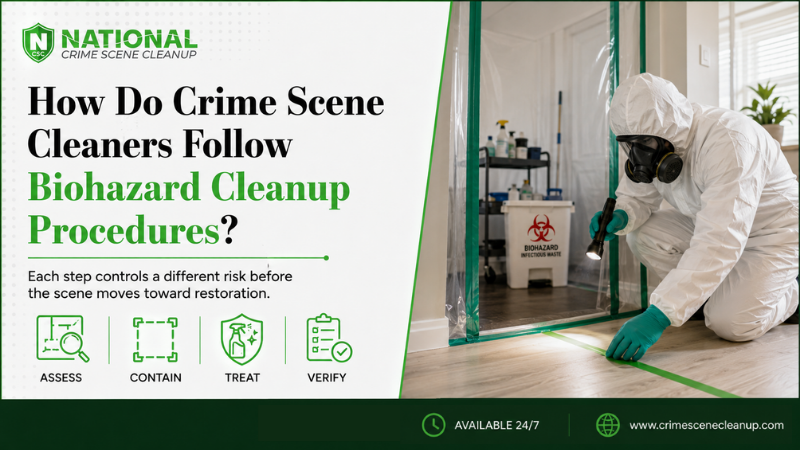
A crime scene may look contained even when blood or bodily fluids have reached flooring, furniture, or objects moved through the property. Removing the visible stain does not reveal where the contamination traveled or whether the affected materials can be safely treated.
Crime scene cleaners follow biohazard cleanup procedures to answer those questions before they act. They assess the scene, control access, remove contamination, clean and disinfect suitable surfaces, manage waste, and verify the completed work. National Crime Scene Cleanup provides biohazard cleaning services for affected homes, vehicles, workplaces, and other properties across the United States.
What Are Standard Biohazard Cleanup Procedures for Crime Scenes?
Standard procedures give crime scene cleaners a controlled order of work, but the exact plan changes with the scene. The contaminant, affected materials, exposure routes, property layout, and local waste rules determine how each phase is handled.
| Cleanup phase | What crime scene cleaners determine | Primary purpose |
|---|---|---|
| Assessment | What is affected and how far it spread | Define the scope |
| Containment and PPE | How to control movement and exposure | Protect people and clean areas |
| Removal and treatment | What can be treated or must be removed | Address contamination |
| Waste and verification | How materials leave and how work is checked | Complete the defined scope |
These phases apply the exposure-control, disinfection, and disposal principles behind professional biohazard cleanup standards.
Step 1: Assess the Crime Scene and Define the Cleanup Area
Assessment defines where cleanup should begin and end. Crime scene cleaners use the scene conditions to identify the hazards and likely extent of contamination.
The inspection may account for:
- Blood, bodily fluids, tissue, or decomposition matter
- Needles, broken glass, damaged flooring, or unstable materials
- Fluid movement through seams, cracks, baseboards, or subfloors
- Footprints, equipment paths, or touched objects outside the main area
- Odor patterns that indicate absorbed material
A structured biohazard remediation assessment determines what requires treatment or removal and which areas can remain outside the cleanup zone.
Visible contamination is only the starting point
A small bloodstain on carpet can reach a larger area of padding, while a shoe can transfer material from one room into a hallway. Crime scene cleaners trace those likely paths instead of treating only what looks stained.
Technicians also look beyond biological material. The hazards involved with crime scene cleanup may include hidden sharps, drug residue, chemical irritants, or structural damage. Identifying those hazards early changes the equipment and work practices the scene requires.
Step 2: Establish Containment and Control Movement
Containment separates the affected area from spaces that do not require remediation. Crime scene cleaners establish boundaries and travel paths before moving tools, debris, or contaminated materials.
A controlled setup may include:
- A restricted work zone where remediation occurs
- A transition area for removing or decontaminating equipment
- A clean area for unused supplies and records
- A planned route for taking packaged waste out of the property
Technicians keep clean and used tools separate and change protective equipment when crossing defined boundaries. This prevents equipment, shoe coverings, or removed materials from contaminating an unaffected room.
Containment must match the actual scene
A localized incident may require controlled access and surface protection. More complex conditions can require additional isolation or air-control measures, but negative air pressure is not an automatic requirement for every blood cleanup.
The assessment determines which controls the scene needs. Using too little containment can enlarge the affected area.
Step 3: Select PPE for the Identified Exposure
Personal protective equipment must match the hazards found during assessment. Crime scene cleaners consider fluid contact, splash potential, sharps, airborne particles, chemical residue, and the physical work involved.
Depending on the scene, PPE may include:
- Disposable gloves selected for the task
- Protective clothing or coveralls
- Eye and face protection when splashes can occur
- Shoe or boot protection
- Respiratory protection when the assessment requires it
The OSHA Bloodborne Pathogens Standard requires covered employers to use engineering and work-practice controls to minimize occupational exposure and provide appropriate PPE when exposure remains.
PPE removal is part of contamination control
Protective equipment can spread biological material when a technician removes or discards it incorrectly. Used PPE must stay within the controlled removal process and enter the correct decontamination or waste stream.
PPE is only one part of OSHA bloodborne pathogens cleanup. Exposure planning, training, safe work practices, and post-exposure procedures also protect employees who handle blood or other potentially infectious materials.
Step 4: Remove Biological Material and Unsalvageable Items
Crime scene cleaners remove biological material before disinfecting the underlying surface. They use methods that limit splashing, aerosolization, sharps injuries, and transfer to nearby materials.
This phase follows a controlled order:
- Collect visible biological matter with appropriate tools.
- Place sharps directly into puncture-resistant containers.
- Inspect beneath affected surface materials when evidence supports deeper penetration.
- Remove porous materials that cannot be adequately decontaminated.
- Package removed material at or near the point of removal.
Porosity affects what can be restored
Crime scene cleaners remove only what the contamination requires. Material type, penetration depth, and surface condition guide that decision.
| Material | Main concern | Possible response |
|---|---|---|
| Sealed tile or metal | Surface contamination | Clean and disinfect |
| Finished wood | Fluid in seams or damaged coating | Treat or remove selectively |
| Carpet and padding | Absorption below the visible stain | Remove affected material |
| Drywall or insulation | Deep absorption | Remove affected sections |
After a fatality, the cleanup area does not automatically include the entire property. The scope of biohazard cleanup after a death depends on where biological material traveled, what it contacted, and whether it entered porous or structural materials.
Step 5: Clean Before Applying Disinfectant
Cleaning removes blood and other organic material before disinfection begins. The CDC’s 2023 guidance on chemical disinfectants states that large blood spills require cleaning before an appropriate disinfectant is applied because remaining soil can interfere with treatment.
Product selection and contact time determine effectiveness
Crime scene cleaners select an EPA-registered product whose label covers the intended organism, surface, and use site. The EPA’s current list of antimicrobial products effective against bloodborne pathogens directs users to follow that label, including the required concentration and contact time.
Technicians also account for surface compatibility, ventilation, required rinsing, and chemical safety. A quick spray and immediate wipe may not meet the label directions.
Detailed cleaning reaches overlooked surfaces
Crime scene cleaners move through the work zone in an order that keeps completed surfaces separate from unfinished areas. Detailed cleaning may include:
Attention may extend to:
- Floor edges, seams, and transitions
- Undersides and backs of fixed objects
- Baseboards and nearby walls
- Furniture joints and hard surfaces
- Reusable tools and equipment
- Contact points along entry and exit paths
Odor treatment follows source removal. Deodorizing equipment cannot correct contamination left inside carpet padding, wood, or drywall.
Step 6: Package and Dispose of Biohazard Waste
Crime scene cleaners classify removed material before selecting the container and disposal route. Sharps enter puncture-resistant containers, while material that may release fluid requires leak-resistant containment and controlled handling.
Residential disposal rules vary by location
State and local requirements determine how regulated waste moves from a residential scene to treatment or disposal. The EPA explains that medical-waste treatment and management requirements vary and that many states regulate or license treatment technologies.
The cleanup plan must identify the applicable packaging, transporter, treatment method, and records. A household trash bag is not a default disposal method for crime scene waste.
Step 7: Verify the Completed Cleanup Scope
Final verification checks the work against the scope established during assessment. Before dismantling containment, crime scene cleaners may:
- Confirming that visible biological material has been removed
- Checking that affected porous materials were treated or removed as planned
- Reviewing disinfectant use and contact-time records
- Inspecting seams, edges, and previously hidden surfaces
- Confirming that reusable equipment was decontaminated
- Reconciling waste containers with disposal records
No single test proves that every possible pathogen is absent from an entire property. ATP testing can identify residual organic material under appropriate conditions, but it does not identify a specific pathogen or replace inspection, material removal, and correct disinfectant use.
Remediation and reconstruction are separate stages
Remediation addresses contamination. Reconstruction replaces flooring, drywall, trim, cabinets, or other materials removed during that work.
A property may be ready for repairs before it looks fully restored. Documentation should distinguish completed remediation from remaining construction.
Frequently Asked Questions
What are the OSHA regulations for biohazard cleanup?
OSHA’s Bloodborne Pathogens Standard applies to employees with occupational exposure to blood or other potentially infectious materials. Covered employers must use an exposure-control plan, universal precautions, engineering and work-practice controls, appropriate PPE, training, housekeeping procedures, and regulated-waste controls.
What is the proper procedure for a blood spill?
Restrict access, assess the exposure, use suitable PPE, remove the biological material, clean the surface, and apply an appropriate disinfectant for its full label contact time. Extensive blood, hidden sharps, porous materials, or contamination connected to a traumatic event requires professional assessment.
Can homeowners clean a crime scene themselves?
You should not enter or disturb a scene with significant blood, bodily fluids, decomposition, sharps, or contamination that may have reached porous materials. Keep people and pets away, avoid touching affected items, and wait for law enforcement to release the property when an investigation is active.
Biohazard Cleanup Procedures Keep the Work Controlled
Crime scene cleaners adapt biohazard cleanup procedures to the hazards and materials present. The main points are:
- Assessment defines the cleanup boundary.
- Containment controls the movement of people, tools, and waste.
- Cleaning must remove biological material before disinfection.
- Product labels determine correct disinfectant use.
- Verification checks the work against the original scope.
National Crime Scene Cleanup responds across the United States with discreet support for affected homes, vehicles, and workplaces. If you need help after a traumatic or hazardous event, contact us 24/7 to discuss the scene and the next appropriate step.
