What Happens After a Crime Scene? A Step-by-Step Guide for Property Owners
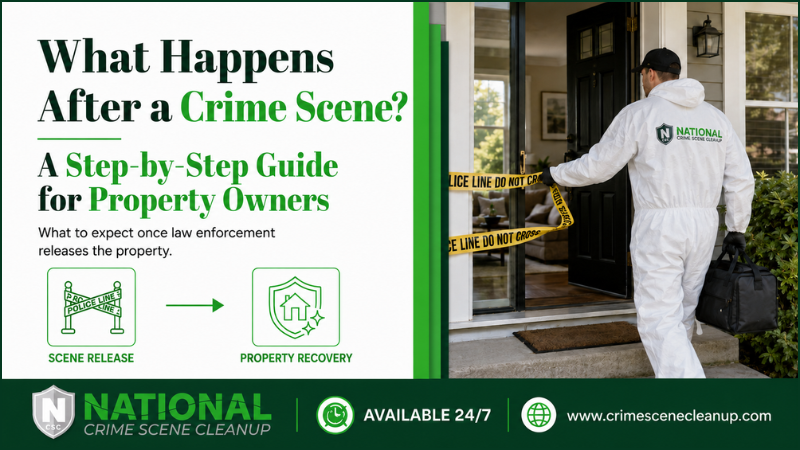
When police leave a crime scene, the property may still contain blood, fingerprint powder, damaged materials, and other hazards. The end of evidence collection does not mean the space is clean or ready for repairs.
Understanding what happens after a crime scene helps you protect the investigation and take control of the property safely. Once law enforcement releases the location, professional crime scene cleanup services can assess the damage, address contamination, and prepare the space for restoration.
What Happens After a Crime Scene Is Reported?
First responders protect life and secure the location. Investigators then document the scene, collect evidence, and decide when an authorized person can regain access.
The response depends on what occurred. A burglary may require photographs and fingerprint processing, while a violent death may also involve forensic specialists and a medical examiner or coroner.
1. First Responders Secure the Area
Police establish boundaries to protect people and keep evidence from being moved or contaminated. The controlled area may include one room, an entire building, a vehicle, or an outdoor location.
Do not cross police tape or enter through another opening. Property ownership does not override law enforcement’s control of an active scene.
2. Investigators Document and Process the Scene
Investigators record the original conditions before collecting anything. The National Institute of Justice identifies photography, measurements, evidence collection, and chain-of-custody documentation as central parts of crime scene processing.
Evidence may include:
- Blood and other biological samples
- Fingerprints and footwear impressions
- Weapons, ammunition, or damaged objects
- Fibers, glass, soil, and other trace material
- Phones, computers, or surveillance recordings
Processing can alter the property. Investigators may remove an object, cut out a section of carpet, apply fingerprint powder, or open an area needed for examination.
3. Law Enforcement Releases the Property
The agency in control releases the scene when it no longer needs exclusive access for its current on-site work. Detectives can still interview witnesses, test evidence, review records, and prepare the case after that handoff.
Ask the investigating officer or agency to confirm the release. Also ask whether any rooms, belongings, or vehicles remain restricted and whether investigators may need access again.
What Does Crime Scene Release Mean for the Property?
Crime scene release returns control to an authorized person. It does not certify that the property is clean, decontaminated, or safe to occupy.
Law enforcement focuses on evidence rather than property remediation. Officers may remove items connected to the case while leaving behind conditions that require separate cleanup.
What Can Investigators Leave Behind?
Conditions after a crime scene investigation vary with the incident and the methods used to process it. Common examples include:
- Blood, bodily fluids, or biological material
- Contamination beneath carpet or flooring
- Fingerprint powder or other processing residue
- Broken glass, sharps, or damaged belongings
- Opened walls, doors, or windows
- Odors connected to biological material
Not every risk is visible. Fluids can reach carpet padding, subflooring, unfinished wood, furniture seams, or wall edges, which is why the hazards involved in crime scene cleanup extend beyond what you can see from the doorway.
Who Is Responsible After Police Leave a Crime Scene?
The person or organization that owns, manages, or controls the location usually arranges cleanup. Responsibility can depend on the property type, lease terms, workplace duties, insurance policy, and local requirements.
| Location | Who Commonly Arranges Cleanup | What to Confirm First |
|---|---|---|
| Private home | Homeowner or authorized family member | Release status and insurance requirements |
| Rental property | Owner, landlord, manager, or renter | Lease terms and property responsibility |
| Business | Owner, employer, or property manager | Access limits and insurance procedures |
| Vehicle | Owner, insurer, or authorized representative | Evidence status and title control |
The legal and financial details can become complicated when several parties share control. A clearer breakdown of who is responsible for cleaning up a crime scene after police helps owners, renters, and property managers identify the questions they need to resolve.
Can Insurance or Victim Compensation Help?
Property insurance may cover eligible cleanup and damage, but the policy and incident determine coverage. Contact the insurer early and ask what photographs, reports, estimates, or invoices it requires.
Crime victim compensation may also reimburse certain crime-related expenses. The federal Office for Victims of Crime explains that compensation programs operate in every state and several U.S. territories, although eligibility and covered costs vary.
What Should You Do After the Crime Scene Is Cleared?
Your first steps should protect access, preserve documentation, and avoid contact with affected materials. Follow this order after law enforcement confirms the release:
- Ask whether any areas or belongings remain restricted.
- Keep children, visitors, employees, and animals away.
- Contact your insurer and request its documentation requirements.
- Take photographs only from a safe, permitted location.
- Arrange a professional contamination assessment.
- Save estimates, invoices, photographs, and agency information.
Do not wash surfaces, lift carpet, move affected belongings, or begin demolition. Those actions can spread biological material, destroy useful documentation, or damage property that could have been preserved.
What Steps Do Crime Scene Cleanup Companies Follow?
Crime scene cleanup moves from assessment through controlled remediation and final review. Each step addresses a separate part of returning the property to usable condition.
1. Assessing the Affected Area
Our technicians locate visible contamination and determine where fluids may have traveled. We consider the incident, affected materials, nearby rooms, access points, and possible structural involvement before defining the work area.
Surface type affects the plan. Sealed metal and glass can often support surface treatment, while carpet padding, mattresses, unfinished wood, and drywall can absorb fluids below the surface.
2. Controlling Access and Cross-Contamination
We isolate the work area so shoes, tools, airflow, or handling do not carry material into clean spaces. Barriers, controlled entry points, and surface protection may form part of the setup.
Technicians also select appropriate levels of personal protective equipment based on the hazards and the work being performed. The necessary protection changes with the scene rather than following one fixed setup.
3. Removing Biological Material
Technicians remove visible biological material before final disinfection. Applying a chemical directly over blood or other organic matter does not complete the process.
The CDC’s 2024 environmental-services guidance calls for removing visible organic matter before final cleaning and decontamination. This order allows the disinfectant to reach the underlying surface.
4. Cleaning, Disinfecting, and Treating Odors
We clean salvageable materials and apply disinfectants according to the target organism, surface, contact time, and product label. The EPA’s registered disinfectant resource organizes products by the pathogens listed on their labels.
No single chemical works for every material or contamination level. Odor treatment also comes after the biological source has been addressed because fragrance or deodorizer cannot correct contamination below a surface.
5. Removing Materials That Cannot Be Restored
Porous materials may require removal when biological fluids have penetrated beyond effective treatment. Examples can include carpet padding, insulation, upholstery, unfinished wood, or sections of drywall.
Removal should stay limited to affected materials. Targeted remediation is how crime scene cleanup works without unnecessary property damage while still addressing contamination that has reached beneath the surface.
6. Reviewing the Area Before Repairs
We review the defined work area and document what we treated or removed. Repair work can then replace finishes or structural materials without covering unresolved contamination.
| Stage | Main Purpose | Typical Work |
|---|---|---|
| Investigation | Preserve evidence | Photography, measurements, evidence recovery |
| Biohazard remediation | Address contamination | Removal, cleaning, disinfection, waste handling |
| Property repair | Restore the space | Drywall, flooring, paint, reconstruction |
A room may look unfinished after successful remediation because contaminated flooring or drywall had to be removed. Cleanup makes the area ready for repair. It does not always include reconstruction.
How Long Does Crime Scene Cleanup Take?
Cleanup can take several hours or multiple days. The size of the affected area, material types, depth of contamination, odors, accessibility, and required removal determine the schedule.
For example, a small area on a sealed surface usually requires less work than fluids beneath flooring or contamination across several rooms. These site conditions explain how long crime scene cleanup takes more accurately than a single standard timeframe.
Who Specializes in Biohazard Cleanup After an Investigation?
Crime scene cleanup technicians address properties affected by blood, bodily fluids, and related biohazards. Their work begins after law enforcement releases the location and remains separate from evidence collection, medical examination, routine cleaning, and reconstruction.
A crime scene cleanup technician needs training in contamination control, material-specific treatment, safe work practices, and regulated waste handling. National Crime Scene Cleanup coordinates this specialized work for homes, rental properties, businesses, and vehicles across the United States.
Frequently Asked Questions
Can I enter a crime scene after police leave?
Enter only after the agency in control confirms the release and explains any restrictions. The absence of officers or police tape does not prove that you have permission.
Can cleanup begin while the criminal case remains open?
Yes. Cleanup can generally begin after law enforcement formally releases the property, even when evidence testing or other casework continues.
What products are used for crime scene decontamination?
Professionals select EPA-registered disinfectants and supporting cleaning products according to the organism, surface, contamination level, and label directions. Physical removal and cleaning must occur where required before disinfection.
What does crime scene cleanup typically cost?
Cost depends on the affected area, materials, depth of contamination, waste volume, required removal, and odor conditions. A scene-specific assessment provides a more useful estimate than a national flat price.
Can I hire a service to restore the property after an investigation?
Yes. National Crime Scene Cleanup can assess and remediate the location after law enforcement releases it. Separate repair work may follow if contaminated flooring, drywall, or other materials require removal.
What Happens After a Crime Scene: Key Takeaways
What happens after a crime scene follows a handoff from investigation to property recovery. Once law enforcement releases the location, the authorized owner or representative can arrange cleanup and any repairs that follow.
- Confirm the release and any remaining restrictions before entering.
- Keep people and animals away from affected areas.
- Contact the insurer before moving or cleaning anything.
- Address contamination before beginning property repairs.
- Preserve photographs, estimates, invoices, and agency information.
You do not need to inspect or handle the affected area yourself. Contact National Crime Scene Cleanup for clear next steps and professional help after law enforcement releases the property.
