What Gets Removed During Biohazard Cleanup and Why?
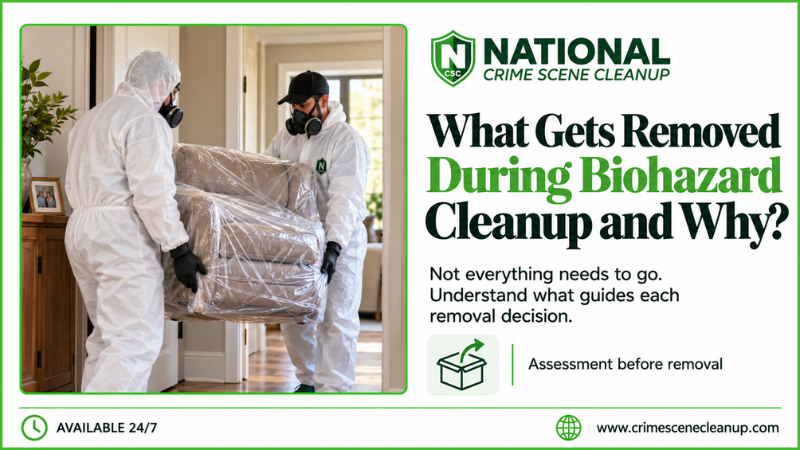
We remove biological waste and materials we cannot adequately decontaminate during biohazard cleanup. That does not mean emptying your home or discarding every item near the incident.
What gets removed during biohazard cleanup depends on the contamination and the condition of the affected property. A clear assessment separates necessary disposal from treatment options.
At National Crime Scene Cleanup, our biohazard remediation includes explaining the proposed removal scope before work begins. You should understand why an item needs to go and what the remaining area requires.
Does Everything Need to Be Removed During Biohazard Cleanup?
No. We assess affected materials individually, so an incident in one room does not automatically require clearing that room of belongings.
An intact metal bed frame can support treatment even when the mattress above it requires disposal. We check the frame’s joints and other contact areas before deciding what can stay.
After a death, we also determine if the whole home needs cleaning by assessing how far contamination traveled. The number of rooms in your home does not establish the removal scope.
What Materials Do We Remove During Biohazard Cleanup?
We remove the biological material itself and affected property that cannot support adequate treatment. The assessment determines which of the following categories apply to your property.
| Material or item | Why removal can be necessary |
|---|---|
| Blood and bodily fluid residue | We need to remove deposits from affected surfaces before completing the appropriate treatment |
| Residual tissue and decomposition matter | Biological material remains at the property after authorized scene release |
| Carpet and padding | Fluids enter absorbent layers that we cannot adequately decontaminate |
| Mattresses and upholstered furniture | Contamination reaches inaccessible padding or other internal components |
| Flooring and subfloor materials | Affected layers require removal to address contamination or reach the area beneath |
| Drywall and insulation | Biological material enters damaged or absorbent layers unsuitable for treatment |
| Personal belongings | The item’s construction or condition prevents adequate restoration |
| Contaminated sharps | Needles or sharp debris require collection and protective containment |
| Used cleanup supplies and disposable PPE | The work generates contaminated waste that requires appropriate handling |
Can We Remove Only Part of an Affected Material?
Yes, when selective removal gives us enough access to address the contamination. The boundary follows our findings rather than an automatic requirement to replace the entire room’s finishes.
With blood contaminated carpet, we assess where the affected area ends and whether contamination reached the flooring below. Each layer requires its own decision, so the carpet’s removal boundary does not automatically establish the subfloor’s boundary.
Wall openings can also serve an access purpose beyond removing directly contaminated material. We identify that purpose in the scope so you understand the difference between contamination removal and access needed for treatment or repair.
How Do We Decide What Gets Removed During Biohazard Cleanup?
We decide by establishing where contamination reached and whether the affected material supports treatment. Our assessment follows the inspection and work planning approach described in the 2023 IICRC S540 standard.
We evaluate these conditions before recommending disposal:
- Direct contact. Which surfaces contacted biological material?
- Penetration. Did fluid pass into absorbent layers or through openings?
- Access. Can we reach the affected components for treatment?
- Material condition. Do damaged finishes or deteriorated layers limit the available methods?
- Concealed areas. Do the findings justify inspection beneath or behind the visible surface?
Tell us about belongings someone already moved or any earlier cleanup attempts. Those details help us reconstruct the exposure history without relying only on what remains visible.
Why Can’t We Disinfect Every Contaminated Item?
We cannot rely on disinfection when the selected method cannot reach the contamination or does not suit the material. Applying a product to an exposed surface does not establish that treatment reached an item’s interior.
For retained surfaces, we choose suitable bloodborne pathogen disinfectants and follow the label directions, including the required contact time. We also complete the cleaning and surface preparation the selected procedure requires.
A hard exterior does not guarantee that every component can stay. For example, a cabinet can have a cleanable outer coating while damaged particleboard or an inaccessible joint creates a different treatment problem.
We explain that limitation before recommending removal. The relevant question is whether we can address the affected components, rather than whether the visible finish looks washable.
How Do We Handle Contaminated Furniture Removal?
We follow a removal plan suited to the furniture and your property’s access. Our biohazard cleanup procedures also account for the surfaces that remain after an item leaves.
The removal sequence generally includes these steps:
- Inspect the affected assembly. We check beyond removable covers or cushions to establish whether the frame and supporting layers also need attention.
- Explain the proposed work. We distinguish permanent disposal from moving an item temporarily for inspection or access.
- Prepare the removal route. We account for doorways, stairs, and shared entrances, then select suitable containment for the item.
- Remove the item and address exposed surfaces. We inspect the newly accessible area and discuss additional findings before expanding the agreed work.
Why Does the Removal Route Matter?
The route matters because moving affected material can transfer contamination into clean areas. A leaking mattress or exposed upholstery needs controlled handling before it passes through a hallway.
We plan that movement to limit how biohazard contamination spreads through contact with floors or doorways. Tell us about narrow stairs and building access restrictions when you arrange the assessment.
Can You Keep Personal Belongings After Biohazard Cleanup?
Yes, when the assessment supports retaining or suitably treating the item. Tell us which belongings matter to you before work begins, without entering the affected area to collect them.
Personal items present different treatment limits:
- Photographs and documents can suffer damage from liquid treatment.
- Electronics can contain affected components that we cannot access without dismantling the device.
- Jewelry can combine hard surfaces with absorbent materials or delicate settings.
- Clothing and bedding require an assessment of the exposure and an appropriate treatment method.
Identify important objects as specifically as possible, including where you last saw them. A description of a particular photograph album helps us discuss that item before removal starts.
We explain when an object needs further evaluation and discuss treatment limits before you approve removal.
Does Odor Mean More Belongings Need Removal?
No. Odor prompts investigation, but it does not identify which objects require disposal.
A smell throughout a room can originate beneath a mattress or inside a flooring assembly. Removing unrelated belongings would leave that source unresolved.
To remove biohazard odor from a house, we address the biological source and assess materials that retain odor. Air treatment cannot replace access to contamination that remains inside an affected material.
What PPE Do We Use During Biohazard Material Removal?
We select PPE for the expected exposure and the task. The hazards involved with crime scene cleanup can include sharp debris and splash risks that require different protective measures.
To reduce bloodborne exposure, our protection can include:
- Gloves suited to the material and handling task.
- Protective clothing that provides an appropriate barrier.
- Eye and face protection for expected splashes.
- Protective footwear.
- Respiratory protection when the identified hazards require it.
Although the 4 levels of PPE describe protective ensembles, routine scene cleanup does not automatically require one complete level. We match the equipment to the conditions and reassess it when opening materials reveals a new hazard.
How Do We Dispose of Contaminated Materials?
We classify the waste before selecting its packaging and disposal route. State medical waste requirements vary, so the correct handling depends on the material and where the waste originates.
Our disposal plan addresses several distinct requirements:
- Sharps containment. We use containers designed to resist punctures.
- Leak control. Materials that can release fluid require suitable containment.
- Bulky debris. Furniture and building materials need packaging appropriate to their size and classification.
- Transportation. We arrange movement that follows the requirements for the waste category.
- Facility acceptance. We confirm that the receiving facility accepts the material.
These biohazard cleanup requirements determine how removed property leaves the site. A red bag alone does not establish that every item meets the applicable handling requirements.
Biological contamination also does not automatically make every removed object federally classified hazardous waste. If the scene includes chemical hazards, we evaluate those separately rather than combining different waste categories.
What Should You Confirm Before Material Removal Begins?
Confirm which materials we propose to remove and how we will handle changes to the agreed scope. Your agreement should distinguish remediation from replacement or reconstruction.
Before work begins, clarify these points:
- Which rooms and materials the estimate covers.
- Which belongings we plan to discard or retain for treatment.
- Which items require temporary movement.
- How we will explain newly exposed contamination and proposed changes.
- Whether the agreement includes replacement finishes or other repairs.
For example, removing a contaminated flooring section does not automatically include replacing the flooring throughout a connected room. Matching an older finish can affect your repair choices without changing which material required biohazard removal.
Keep the removal record with your repair plans. That documentation helps you distinguish the cleanup work from decisions about rebuilding the space.
Get a Clear Plan for Biohazard Material Removal
What gets removed during biohazard cleanup depends on the affected material and the limits of suitable treatment. Contaminated absorbent layers often require disposal, while other items can remain after assessment and appropriate treatment.
You should also understand why an item moves and whether the work includes putting it back or replacing it. Clear removal decisions help you plan the next stage without assuming the whole property needs clearing.
National Crime Scene Cleanup provides biohazard remediation across the contiguous United States, with representatives available 24/7. You can describe your situation to discuss your property and arrange an assessment.
Frequently Asked Questions
How long does biohazard cleanup take?
The affected materials and access requirements determine the schedule. We explain the expected cleanup time after assessment and distinguish it from any additional drying or reconstruction.
Should I bag contaminated items before you arrive?
No. Leave affected items in place and keep people away from known contamination while you arrange an assessment. You do not need to package furniture or open flooring before we arrive.
Does insurance cover items removed during biohazard cleanup?
Coverage depends on your policy and the circumstances of the loss. We can provide information about the proposed cleanup, while your insurer determines which removal or replacement costs qualify.
Does dried blood still require assessment?
Yes. Dryness does not establish that a surface received adequate treatment or show whether earlier fluid contact reached underlying materials.
Is the room ready to use once you remove contaminated items?
Not automatically. We still need to complete the remaining work in the agreed scope, and material removal can leave openings or other conditions that require repairs before normal use.
