How a Biohazard Cleanup Assessment Defines the Work
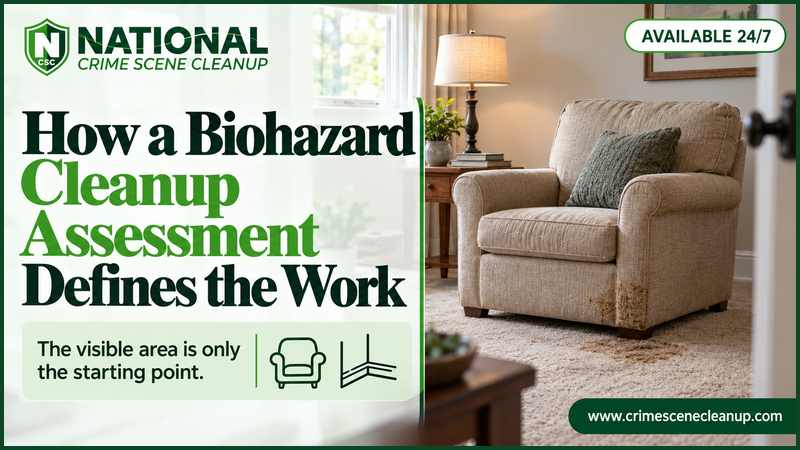
A biohazard cleanup assessment determines which areas need work and what that work involves. The visible stain gives us a starting point, but it cannot establish the full cleanup scope.
At National Crime Scene Cleanup, our professional biohazard cleanup begins with evaluating your property’s conditions. We explain the proposed tasks and any inspection limits before you approve the work.
What does a biohazard cleanup assessment include?
A biohazard cleanup assessment connects the incident history with an inspection of the property. We use those findings to develop a scope of work that identifies the affected areas and the tasks needed to address them.
The IICRC trauma and crime scene cleanup standard connects inspection of blood and other potentially infectious material with work planning. That inspection accounts for the materials involved and any complications that affect access.
What steps are involved in evaluating a biohazard scene?
We evaluate the scene before choosing the cleanup methods. The assessment follows this sequence:
- Confirm scene access. We establish whether authorities have released the affected area and identify the person who can authorize work.
- Review the incident history. We ask where the incident occurred and what happened afterward, including any earlier cleanup attempts.
- Inspect accessible conditions. We locate biological material and identify additional hazards, including sharp debris or unstable surfaces.
- Record unresolved conditions. We identify concealed components and explain what further access would require.
- Prepare the proposed scope. We connect the findings to specific work locations and explain the tasks you are approving.
You don’t need a complete account of the incident to contact us. Tell us which details you know and where uncertainty remains.
How do we determine where cleanup begins and ends?
We determine the cleanup boundary by assessing where biological material reached. The number of rooms and the size of the original stain do not establish that boundary.
An inspection can cover more space than the eventual treatment area. A location that warrants checking does not automatically require cleanup.
Direct contact and movement through the property
We assess biohazard contamination spread by examining relevant transfer routes. Information about movement helps us identify contact that may no longer leave a visible mark:
- Footwear that crossed the incident area and continued elsewhere.
- Affected belongings someone carried or dragged into another room.
- Handles or fixtures touched after contact with biological material.
- Cleaning equipment someone used across multiple surfaces.
Penetration beneath a visible surface
We evaluate the construction around the affected area to decide whether further inspection is necessary. An open flooring joint or damaged finish can provide a route into materials underneath.
A floor covering can conceal padding or a subfloor with a different contamination boundary. We assess each exposed layer rather than use the surface stain to assume the condition below.
Before opening a material, we explain the purpose of that access. The scope should distinguish removing contaminated property from opening an otherwise unaffected section to reach the area behind it.
Odor observations and nearby rooms
Odor directs our investigation, but smell alone cannot establish fluid contact or identify an infectious organism. We assess the odor source separately from the question of which rooms need biological decontamination.
To remove biohazard odors, we need to address the source and any materials retaining the smell. The assessment determines whether the proposed work needs additional odor treatment after source removal.
How do assessment findings determine treatment or removal?
Material condition and access to contamination determine what gets removed during biohazard cleanup. We evaluate affected components individually before recommending disposal.
| Assessment finding | What we evaluate | Effect on the proposed scope |
|---|---|---|
| Residue on an intact hard surface | Access to all affected areas and compatibility with treatment | Cleaning and disinfection of suitable surfaces |
| Fluid inside absorbent padding | Whether a suitable method can adequately reach the interior | Removal when we cannot adequately decontaminate the material |
| Contamination at a seam or opening | Evidence of penetration into another layer | Further inspection before confirming additional treatment |
| Affected furniture with inaccessible joints | Whether we can reach the contaminated components | Component treatment or removal according to the findings |
| Contamination within part of an assembly | Whether selective removal provides sufficient access | A defined removal area based on the affected components |
Treatment methods also affect the work
Treatment requirements determine the work sequence and the time each task needs. We follow biohazard cleanup procedures that include removing biological residue before disinfection.
The plan must allow us to complete the selected product’s contact time, which means keeping the surface wet for the required period. Preparation and any label-required rinsing also affect how we organize treatment.
How do scene conditions affect the work setup?
Scene conditions determine the containment and handling measures needed for the job. These supporting tasks belong in the scope alongside direct treatment.
A protected removal route through an unaffected corridor serves a different purpose from decontaminating that corridor. We identify the reason for the protection so you understand why the work extends outside the incident room.
Hazards determine protective equipment
Exposure risks guide our protective equipment and handling controls. Our approach to OSHA bloodborne pathogens cleanup treats human blood as potentially infectious without waiting for a confirmed diagnosis.
The levels of PPE describe combinations of protection, but no single ensemble suits every scene. We match protection to the planned task, including splash potential and any hazards that require respiratory protection.
Access determines how we organize the job
The building layout affects how we move contained materials and keep essential routes available. We account for these conditions during planning:
- Doorway widths and stair access for bulky items.
- Shared spaces that other occupants must use.
- Elevator restrictions or building management requirements.
- Water and electrical service needed for the planned work.
Applicable biohazard cleanup requirements also determine waste handling responsibilities. The disposal plan must account for the material’s classification and the rules where your property is located.
What should the written cleanup scope explain?
The written scope should identify specific work rather than rely on a broad description such as complete cleanup. You should be able to connect each task to an area or affected item:
- Work locations. Name the rooms or defined sections the agreement covers.
- Material decisions. Identify items for treatment, temporary movement, further evaluation, or disposal.
- Supporting controls. Describe the containment and removal access the job requires.
- Inspection limits. Record what remains unconfirmed and whether further investigation needs approval.
- Completion checks. State how we will review the finished work.
- Repair responsibilities. Clarify whether the agreement includes replacing removed finishes or other reconstruction.
Keep the approved scope with the estimate. That record gives you a reference when reviewing the completed work or discussing an additional recommendation.
How do we plan to check the completed work?
We plan completion checks around the agreed tasks and the materials that remain. The review accounts for approved scope changes as well as the original work.
Where appropriate, our ATP testing procedures help evaluate residual organic material at selected surface locations. The result applies to the sampled area and does not identify a specific pathogen.
Testing does not replace inspection of newly exposed surfaces or evaluation of inaccessible components.
Why can the scope change after cleanup begins?
Newly exposed conditions can require a scope change. The original assessment should identify where limited access prevents us from confirming the full extent of the work.
Before expanding the agreed scope, we explain the change in this order:
- Identify the new finding. We describe its location and how it became accessible.
- Explain the consequence. We connect that finding to the limits of the original treatment plan.
- Describe the additional work. We specify the affected material and the proposed response.
- Update the estimate or schedule. We explain the practical effect and obtain authorization for the expanded work.
Additional findings can also introduce a different hazard that requires us to pause the affected task. We reassess the controls before continuing rather than apply the original plan to changed conditions.
How much does a biohazard cleanup assessment cost?
Confirm assessment pricing with us when arranging the visit. Ask what the evaluation includes and whether additional investigative access would carry a separate charge.
Confirm whether any assessment charge is separate from remediation or credited toward authorized cleanup. The cleanup estimate should identify the proposed work and its associated charges.
The work estimate should identify the tasks that drive the price. Labor for access or handling can matter more than the room’s floor area.
What does the assessment tell you about the timeline?
The assessment provides a basis for estimating the cleanup schedule. We explain which tasks must finish before the next stage can begin.
Equipment operating periods and any required drying can extend the schedule beyond hands-on cleaning. Building access windows also affect when we can complete the agreed tasks.
Confirm whether the estimated finish means remediation is complete or the space is ready for normal use. Outstanding repairs can affect that return date even after we finish addressing contamination.
How do you schedule a professional biohazard cleanup assessment?
Contact National Crime Scene Cleanup with your location and a brief description of the situation. Our representatives are available 24/7 to discuss arrangements across the contiguous United States.
Have the information already available to you ready for the call:
- Property location and access. Provide the address and any restrictions that affect the visit.
- Incident information. Describe known affected areas and whether anyone disturbed the scene.
- Authorized contact. Identify who can approve work and how we can reach that person during the job.
- Belongings requiring discussion. Identify important items by description and location so we can discuss treatment limits before disposal decisions.
Leave affected materials in place while arranging the assessment. Don’t enter the area to gather details or prepare items for our arrival.
When authorities still restrict the scene, follow those instructions. We can discuss arrangements before release, but the call does not authorize access.
Key takeaways about defining the cleanup work
A biohazard cleanup assessment establishes the basis for the work:
- Inspection findings define the treatment area.
- Material condition and access guide removal decisions.
- Newly exposed conditions require review before expanding the scope.
- The written agreement should distinguish cleanup from repairs.
Contact our team to discuss your property and arrange an assessment with National Crime Scene Cleanup.
Frequently asked questions
Can you determine the full cleanup scope from photographs?
Photographs help us prepare for the visit. We still need to evaluate conditions that an image cannot establish, including concealed components.
Does an assessment mean the whole property needs cleanup?
No. We recommend work for the areas the findings support, rather than automatically include every room.
Does the assessment identify which pathogens are present?
A routine scene assessment does not identify specific pathogens. We assess potential exposure without relying on appearance to determine whether human blood contains an infectious organism.
Who offers biohazard cleanup assessments near me?
National Crime Scene Cleanup serves properties across the contiguous United States. Contact us with your location to discuss arrangements for your area.
Can I arrange an assessment for a rental property?
Yes. Tell us who can authorize property access and who controls decisions about belongings so we can coordinate the visit.
Does insurance determine which materials need cleanup?
Our inspection findings guide the cleanup recommendation. Your insurer separately determines coverage under your policy.
