Can Biohazard Contaminated Furniture Be Saved?
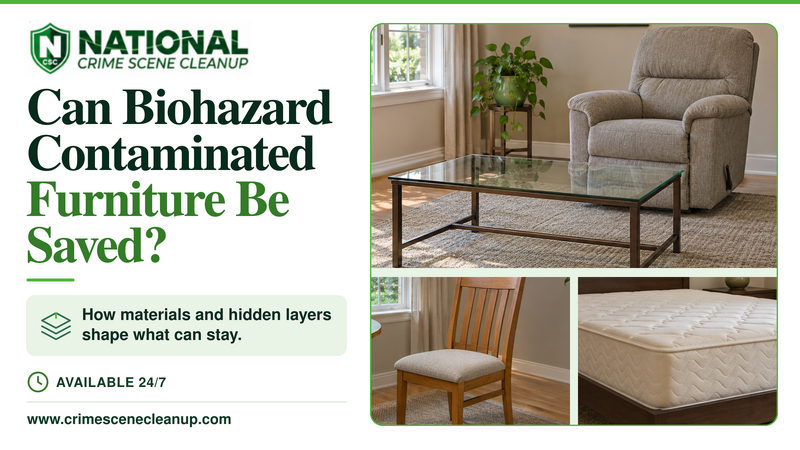
Yes. We can sometimes save biohazard contaminated furniture when we can adequately treat the affected parts. If blood or other biological material reaches a part we can’t treat, we may need to remove that component or recommend discarding the piece.
Our biohazard cleanup service can help you make that decision before you commit to replacing an item. Let us know early if there’s a particular piece you hope to keep.
What Makes Biohazard Contaminated Furniture Salvageable?
The construction of a piece can change the recommendation even when two items have similar-looking marks. This comparison shows what would change the decision for four common pieces.
| Furniture | What we check | What that means for keeping it |
|---|---|---|
| Glass table with blood on top | Whether fluid stayed on the glass or reached the underside and base | We may keep the table if we can reach and treat all affected surfaces |
| Dining chair with an affected detachable seat | Whether fluid crossed from the seat into its fasteners or the frame | We may keep the frame and replace the seat if the frame is unaffected or we can adequately treat it |
| Recliner with fluid beneath the seat | Whether fixed padding or the reclining mechanism blocks access | We recommend removing the recliner if we can’t adequately treat the affected interior |
| Mattress with fluid in the foam | How far fluid entered the mattress and whether it reached the foundation | The mattress may need removal. We make a separate decision about the foundation |
How Do We Assess Contaminated Furniture?
A biohazard cleanup assessment puts the furniture in the context of the incident. We use the ANSI/IICRC trauma and crime scene cleanup standard to guide the inspection and plan the work.
- Establish where the piece was during the incident. A chair in the same room can remain unaffected if nothing reached it. We look for evidence of direct contact or transfer before including it in the cleanup.
- Identify the point of contact. A splash on a chair arm can affect a different part of the furniture from liquid that fell through a gap in the seat. The contact point helps us decide where to start the inspection.
- Identify where we need more access. We record areas we can’t see, such as the inside of a fixed seat. If opening the furniture could change the decision, we explain the proposed access and get approval before proceeding.
- Account for existing wear or damage. An old water ring or worn patch can look like a recent change. Information about the condition of the piece before the incident helps us interpret what we see during the inspection.
What Are Signs of Biohazard Contamination on Upholstered Furniture?
We interpret visible changes alongside what happened at the property. A mark can direct the inspection, but its size alone tells us little about what’s underneath.
- Discoloration along stitching or around a tufted button. We check whether the mark follows a point where stitching or a fastener passes through the fabric.
- Residue on the underside of a loose cushion. We inspect the seat surface that was in contact with that side of the cushion.
- A line of discoloration along the lower fabric edge. If liquid pooled on the floor, we look for contact near the bottom of the piece.
- A stained dust cover under a sofa. The fabric on the underside can hide the condition of the rails directly above it.
Does a Lingering Odor Mean the Furniture Needs to Go?
No. A smell near a chair can come from affected flooring beneath it. When we remove biohazard odor from a house, we trace the source before deciding whether the furniture needs treatment.
When Can We Keep Part of an Upholstered Piece?
We can sometimes keep the rest of a piece when an affected component comes away independently. Whether that option makes sense depends on the condition of the remaining piece and how much we’d have to take apart.
What Changes When Upholstery Is Fixed in Place?
Fixed upholstery can make it harder to inspect the structure without altering the furniture. A removable cushion lifts off, while fabric stapled around a frame may need to come away before we can see where the fabric meets the wood.
The way the cover opens matters, too. A zipper gives us access to the cushion insert. If we recommend replacing the insert, we still need to evaluate the cover independently.
Can You Keep One Section of a Sectional Sofa?
Yes, if we can establish which modules the contamination affected. We examine the faces where the sections meet and the underside around the connectors before deciding where one affected section ends.
We also check how the remaining modules fit together. If removing one section leaves an unfinished edge or changes how the other sections connect, you may need a compatible module to use the sofa as originally arranged.
When Does Reupholstery Make Sense?
Reupholstery makes sense once we’ve addressed the contamination in any parts you plan to keep. Its role is to restore the furniture’s fabric or padding so you can use the piece again.
If a matching fabric is important, tell us before we disturb the upholstery. Replacing one panel can change the appearance of the piece even when the surrounding fabric can stay.
Can Wood Furniture Be Saved After Contact With Bodily Fluids?
Sometimes. A sound finish can keep fluid on an accessible surface, where we may be able to treat it. We check whether that finish continues over the edges and around hardware openings.
An exposed end or chipped corner can behave differently from the finished face. A dresser with a smooth laminate top may still have an unfinished particleboard edge underneath. If that edge swells after contact with liquid, the board itself may have absorbed it.
We also consider what the finish can tolerate. A treatment that suits one sealed surface may damage another coating. If you know the piece has a delicate finish or has been refinished, that information can help us evaluate the options.
How Do We Treat Furniture That Can Stay?
We remove biological residue before disinfecting suitable surfaces. Cleaning makes the affected surface accessible to the disinfectant, and the product label sets the conditions for its use.
Which Disinfectants Can We Use?
We select EPA-registered disinfectants whose labels cover the affected surface and the microorganisms we need to address. We follow the label’s contact time, which is how long the surface needs to stay wet.
The EPA’s guidance on soft surface textiles covers outer fabrics in clinical and institutional settings. It excludes the backing and stuffing beneath those fabrics, a distinction that matters when evaluating a claim for upholstered furniture.
A furniture care tag helps us assess what the fabric can tolerate. For instance, a tag that limits water-based cleaning tells us something about material compatibility. The disinfectant label answers the separate question of what use the EPA has registered.
What Do We Check Before the Furniture Returns to Use?
Our biohazard cleanup procedures include checking the completed work against the agreed scope. For furniture, that can include reviewing seams and surfaces we exposed after moving or opening a piece.
We follow any product directions for what happens after application, such as rinsing where the label calls for it. If any restrictions apply after treatment, we explain those before you resume normal use.
Will the Piece Look the Same After Cleanup?
That depends on the condition of the material. A liquid can leave discoloration or damage a finish, and those cosmetic effects can remain after we address the contamination.
Ask what change in appearance you can reasonably expect from the proposed treatment. A faint mark may matter less on the underside of a piece than on the visible face of a cabinet door.
How Do We Remove a Contaminated Mattress or Bulky Piece?
When a piece needs to be removed during biohazard cleanup, the work extends beyond the spot where the furniture sits. Here’s what happens between the removal decision and disposal.
- Plan the route. We check door widths and the space to maneuver in hallways or shared areas. A piece that fits through a doorway may still need a different approach if there’s a tight turn immediately outside it.
- Contain the material before moving it. A flexible mattress can bend as we carry it, and wet material can release liquid if it shifts. We choose containment suited to the item’s size and condition.
- Check what the piece covered. Once the furniture is out of the way, we look for contact on the surfaces that were underneath or against it. We explain any newly exposed areas that need work.
- Confirm the waste destination. We classify the material and confirm that the receiving facility can accept it. The biohazard cleanup requirements that apply to packaging and disposal depend on the waste and the rules where it originated.
What Protective Equipment Do We Use?
We choose protection based on how the work could expose us. The PPE levels describe combinations of skin and respiratory protection.
Moving wet furniture can create splash risks, so that task may call for eye or face protection alongside gloves and protective clothing. We also evaluate whether the work presents an inhalation hazard that calls for respiratory protection.
What Should You Do Before We Assess the Furniture?
Leave the furniture in place and keep people and pets away from the affected area. Knowing how bloodborne pathogens are spread helps explain the risk of handling a piece if blood reaches broken skin or the eyes.
If authorities have restricted access, we can discuss the items with you while you wait for the area to be released. We begin the on-site assessment once we have clearance to enter.
You can help us prepare with information you already have. Share what you know from outside the affected area.
- Identify the pieces that matter to you. Give us a short description and where you last saw each one.
- Tell us what changed after the incident. If someone moved a cushion or carried a chair out, share where it went.
- Mention any earlier cleaning. Tell us which parts someone wiped or treated so we can account for changes to visible evidence.
- Let us know who can approve the work. If someone else owns the furniture, tell us who can make decisions about the item.
What Should the Estimate Say About Furniture?
An itemized estimate should help you see what you’re authorizing for each piece. Ask how it records the following decisions.
- Temporary movement. Identify any pieces we’ll move to reach another surface or to continue the inspection.
- Treatment. Specify which piece or component the proposed work covers.
- Permanent removal. Identify what will leave the property for disposal, including whether that means a component or the whole piece.
- Repair or replacement. Clarify whether the price includes work to restore the finish or make the piece usable again.
- Changes after inspection. Confirm how we’ll document additional work and what needs your approval before we proceed.
What Records Should You Keep if Furniture Needs Disposal?
Keep an itemized record of what leaves the property. An estimate documents proposed work, while a record of the completed job helps you identify what we actually removed.
Use descriptions that make sense later, especially if you own similar pieces. A room and a short identifying detail can distinguish a chair from the rest of a matching set. If only part of a piece leaves, the record should identify that component.
Keep any existing receipts or product information with those records if you’ll need to identify a replacement. For a sectional, for example, the model and configuration can help identify the module you need.
Get Help Deciding What Furniture Can Stay
If you’re dealing with biohazard contaminated furniture, tell us which pieces you want to keep before cleanup begins. We’ll explain the recommendation for each item and flag any decision that depends on further inspection.
Contact National Crime Scene Cleanup to discuss your property. We’re available 24/7 across the contiguous United States.
Frequently Asked Questions
Can I use a regular upholstery cleaning service for biohazard contaminated furniture?
Arrange a biohazard assessment first. Standard upholstery cleaning focuses on the fabric, while the work after a biohazard incident depends on where biological material reached and what treatment is appropriate.
Can a waterproof mattress cover protect the mattress underneath?
Yes, if the barrier stayed intact and fluid remained on the outside. We check the closure and any exposed edges before deciding whether the mattress underneath needs attention.
Can leather furniture be saved after contamination?
Sometimes. A smooth, coated area and a worn or perforated area can react differently to the same exposure. We look at the condition of the coating and whether fluid entered any openings.
Can I donate or sell a piece if I’m unsure whether it was affected?
Wait until we’ve assessed the item and addressed any contamination. Moving it before you have that answer can transfer material to another space or expose someone handling the furniture.
Can you tell from a photo whether furniture can be saved?
A photo can help us identify the piece and see its visible condition. We may need an on-site inspection to establish what reached the underside or interior.
